
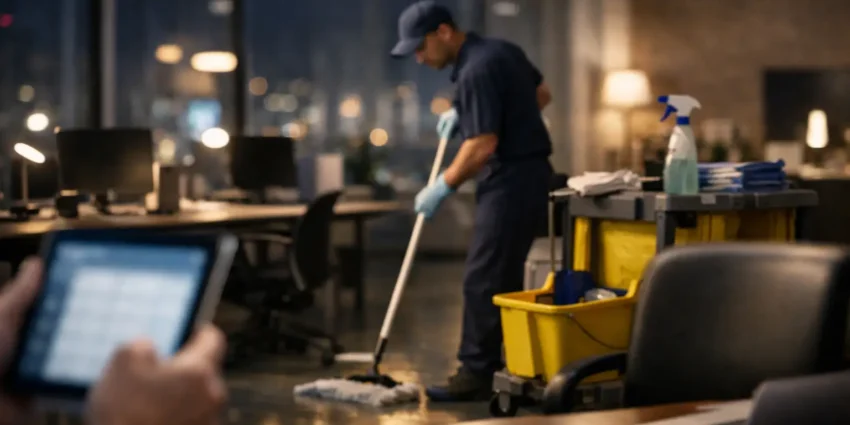
A cleaning crew arriving during a busy workday can create more problems than it solves. Vacuum noise interrupts calls, wet floors affect foot traffic, and cleaners moving through active areas can make employees and customers uncomfortable. Knowing how to schedule after hours cleaning gives your facility a cleaner start each morning without disrupting the work that keeps your business moving.
For offices, restaurants, hotels, warehouses, auto dealerships, and post-construction sites, the best schedule is not simply the latest time available. It is a dependable service window that fits your operating hours, security requirements, staffing patterns, and cleaning priorities. The goal is straightforward: your team arrives to a clean, safe, presentable space, and you do not have to manage the process every night.
Start With Your Facility’s Real Operating Hours
Begin by defining when your building is truly available for cleaning. This is often different from posted business hours. An office may close at 5:00 p.m., but employees may remain until 6:30 p.m. A restaurant may stop seating guests at 10:00 p.m. while kitchen staff finishes closing work an hour later. A warehouse may run overnight shifts, leaving only a short window between crews.
Look at arrival times, departures, deliveries, security lockup, and any activities that continue after customers leave. Cleaning during even a small amount of active traffic can reduce efficiency and create safety concerns. A clear service window helps your cleaning provider assign the right crew and complete the work without rushing.
If your facility has no fully vacant period, consider a split schedule. Restrooms, break rooms, lobbies, and high-touch surfaces may be cleaned after peak traffic, while back offices or production-adjacent areas are handled during a quieter shift change. The right approach depends on your site, not a one-size-fits-all calendar.
Decide What Needs Cleaning Each Visit
After hours cleaning works best when the scope matches the frequency. Daily service may be necessary for busy restrooms, hospitality spaces, restaurants, medical-adjacent offices, and facilities with high employee or customer traffic. A smaller professional office may need full service two or three nights per week, with periodic detail work scheduled separately.
Before setting a schedule, walk through the property and separate routine needs from occasional needs. Routine work may include trash removal, restroom sanitation, vacuuming, mopping, dusting accessible surfaces, and cleaning entry areas. Periodic work may include floor care, interior windows, high dusting, carpet cleaning, deep kitchen cleaning, or post-construction dust removal.
This distinction keeps the nightly visit focused and helps control costs. Scheduling every possible task every night can be unnecessary. On the other hand, cutting routine cleaning too far can lead to overflowing trash, neglected restrooms, and a poor first impression by the end of the week.
Match Frequency to Traffic, Not Just Square Footage
Square footage matters, but traffic usually tells the more useful story. A compact office with 75 employees and shared restrooms may need more frequent service than a larger office with a small rotating staff. A dealership showroom needs close attention to glass, floors, and customer-facing areas, while a warehouse may prioritize break rooms, restrooms, dust control, and safety-related debris.
Ask where dirt builds up first, which rooms receive the most use, and what visitors see immediately. Those answers help set a practical schedule and prevent overpaying for low-use areas.
Set a Reliable Service Window
A dependable time window is more valuable than a vague request to clean “after closing.” Your cleaning provider needs to know when the team can enter, when work must be complete, and whether any areas have restricted access. A recurring window, such as 7:00 p.m. to 10:00 p.m. every Tuesday and Thursday, creates consistency for both your staff and the cleaning crew.
Build in enough time for the work to be done thoroughly. A short window may seem convenient, but it can force rushed service when the facility needs more detailed attention. This is especially true after events, heavy weather, construction activity, or unusually busy days.
If your schedule changes seasonally, communicate that early. Hotels may need different cleaning support during high occupancy periods. Retail and restaurants may extend hours during holidays. Construction sites can shift quickly as trades finish and inspections approach. A provider that understands your calendar can adjust staffing before a last-minute issue becomes a missed cleaning.
Create Clear Access and Security Procedures
After hours cleaning requires trust, but it also requires a documented process. Decide how the crew will enter the building, which doors they may use, where they can park, and who they should contact if there is a problem. Do not rely on verbal instructions that may be forgotten when managers or cleaners change.
Your access plan may involve keys, badges, lockboxes, alarm codes, building access cards, or coordination with onsite security. Each option has trade-offs. Keys are simple but require careful control. Access cards can be tracked but may need reactivation or replacement. Alarm procedures should be specific enough to prevent false alarms without sharing unnecessary information broadly.
Provide instructions for restricted spaces such as server rooms, executive offices, supply closets, cash-handling areas, medication storage, or active construction zones. If a room should not be entered, state that clearly. If an area requires a supervisor’s approval, include a contact process.
A licensed and insured commercial cleaning provider should also have its own employee controls, training, and accountability procedures. That protects your property and gives you greater confidence that after hours access is handled professionally.
Plan for Communication When No One Is Onsite
The most common after hours cleaning problems are usually communication problems. A cleaning team may arrive to find a locked gate, a changed alarm code, an event still in progress, or a water leak that was not reported. Establish one primary contact and one backup contact who can respond if needed.
Give your provider a simple way to receive updates about schedule changes, special requests, or areas that need extra attention. The same process should work in reverse. If the crew finds a maintenance issue, damaged fixture, safety hazard, or supply shortage, you should hear about it promptly.
A short communication log can be useful for multi-tenant buildings, hospitality properties, and facilities with several decision-makers. It creates a record of completed work, special instructions, and issues that need follow-up. You should not need to inspect every room after every visit, but you should have visibility when something requires your attention.
Account for Supplies, Waste, and Building Rules
Confirm who provides consumables such as toilet paper, hand soap, paper towels, liners, and restroom supplies. Some businesses prefer the cleaning company to manage inventory. Others supply products internally. Either can work, as long as reorder levels and responsibilities are clear.
Also discuss trash and recycling procedures. Where should waste be placed? Are there locked dumpsters, compactors, recycling requirements, or pickup restrictions? Restaurants, hotels, and construction sites may have more complex waste needs than a standard office.
Building management rules matter as well. Some properties limit elevator use, require certificates of insurance, designate loading areas, or restrict cleaning equipment during certain hours. Address these details before the first service, not after the crew is turned away at the door.
Review the First Few Visits and Adjust
The first month of after hours service is the time to fine-tune the plan. Check whether the crew has enough time, whether the scope reflects actual use, and whether access instructions are working. Pay attention to recurring concerns, not isolated one-off issues. A single rainy week may create extra floor care needs, while repeated restroom complaints may indicate that frequency or service scope should change.
A good provider will welcome practical feedback and make adjustments without creating confusion. Consistency comes from clear expectations, reliable scheduling, and follow-through, not from assuming the initial plan will fit forever.
For Puget Sound businesses, Armani Janitorial can help build an after hours cleaning schedule around your facility’s operations, priorities, and access requirements. The best schedule is one your employees barely notice because every morning, the work is already done.