
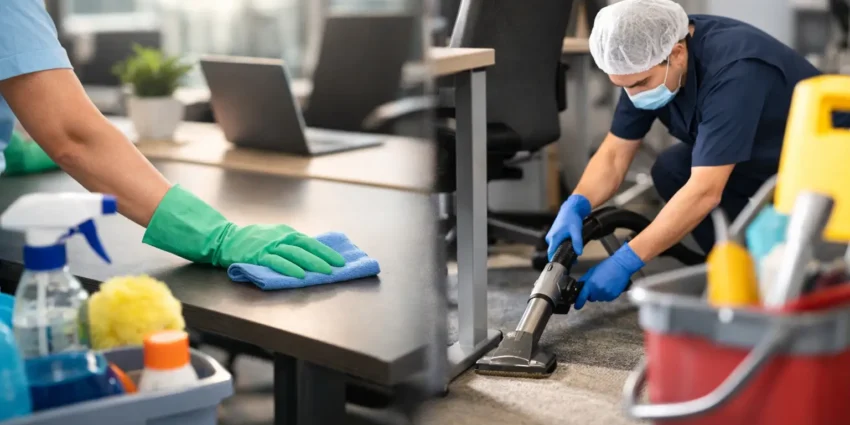
A lobby can look clean at 8:00 a.m. and still have dusty vents, stained baseboards, and buildup hiding in areas guests and employees notice over time. That is why the choice between recurring cleaning vs deep cleaning is not simply about how often a crew visits. It is about matching the right level of service to how your facility operates, what your customers see, and where dirt accumulates.
For businesses across Seattle’s Eastside and the Puget Sound area, the best approach is often both: consistent recurring service to keep daily standards in place, plus scheduled deep cleaning to reset areas that routine maintenance cannot fully address. The right mix protects your workplace appearance, supports sanitation goals, and prevents small cleaning issues from becoming expensive distractions.
What Is Recurring Commercial Cleaning?
Recurring cleaning is the scheduled, ongoing service that keeps a commercial property ready for employees, visitors, tenants, and customers. Visits may be arranged daily, several times per week, weekly, or on another schedule that fits your traffic level and operating hours.
The focus is on the areas that need regular attention to maintain a professional environment. In an office, that may include restrooms, break rooms, desks, floors, trash removal, entryways, and high-touch surfaces. In a restaurant or hotel, it may include guest-facing floors, public restrooms, common areas, and back-of-house spaces that need dependable upkeep.
A recurring cleaning plan is built for consistency. Your team should know when service is happening, what is being addressed, and who to contact if priorities change. For a busy facility manager, that predictability matters as much as the cleaning itself. It reduces last-minute scrambling before a client visit, inspection, event, or tenant walkthrough.
What recurring service handles well
Routine cleaning is effective for managing the normal soil that builds up through day-to-day business activity. It keeps floors presentable, removes waste, refreshes restrooms, and helps shared spaces remain usable and welcoming.
It also supports a better employee and customer experience. A clean workplace signals that operations are organized and that the business cares about the people who spend time there. For offices, dealerships, hospitality properties, and professional service firms, that impression can affect how the business is perceived before a conversation even begins.
However, recurring service has practical limits. A crew working within a regular visit window must prioritize the tasks that keep the facility functioning each week. Detailed work behind equipment, above eye level, inside neglected corners, or on heavily soiled surfaces may require dedicated time and specialized methods.
What Is Deep Cleaning?
Deep cleaning is a more detailed, labor-intensive service designed to remove buildup that routine visits do not always reach. It is not a replacement for regular janitorial work. It is a focused reset for specific rooms, surfaces, or an entire property.
Depending on the facility, deep cleaning can include detail work on baseboards and corners, interior glass, vents, light fixtures, doors and frames, grout lines, upholstery, high shelving, appliances, and areas behind or beneath movable furniture. It can also involve more intensive floor care, such as machine scrubbing or spot treatment where appropriate.
The goal is not just to make a space look better for a day. It is to address accumulated dust, grease, residue, and wear that can make an otherwise well-maintained property feel neglected.
When deep cleaning makes sense
Deep cleaning is especially useful after a busy season, before a major event, after tenant turnover, or when a property has fallen behind on routine maintenance. It is also a smart choice before beginning a new recurring cleaning contract, since it establishes a clean baseline that ongoing service can maintain.
Hospitality operators may schedule deep cleaning between peak seasons or before inspections. Office managers may request it before reopening a space, hosting a company event, or welcoming an important client. Warehouses and auto dealerships may need targeted work in customer areas, restrooms, break rooms, and high-traffic floor zones where daily activity creates visible buildup.
A post-construction environment is another clear example. Construction dust, adhesive residue, dirt, grease, and debris require a different level of attention than standard office cleaning. The property needs to be properly prepared before employees, tenants, or customers move in.
Recurring Cleaning vs Deep Cleaning: The Practical Difference
The easiest way to separate the two is to think about maintenance versus restoration. Recurring cleaning maintains the standard your business wants to present every day. Deep cleaning restores areas that have accumulated grime or need detailed attention beyond the normal service scope.
Recurring cleaning is usually scheduled on a fixed cadence and priced around the facility’s regular needs. Deep cleaning is often a project-based service, with the scope determined by square footage, surface conditions, access, equipment needs, and the amount of detail work required.
Neither option is automatically better. A low-traffic professional office with a small staff may only need weekly recurring cleaning and an occasional detailed service. A high-traffic restaurant, hotel, medical-adjacent office, or public-facing dealership may require frequent recurring visits plus periodic deep cleaning to maintain its standards.
The wrong approach is waiting until the facility looks visibly neglected before requesting help. By that point, stains may be harder to remove, floor finishes can wear down, and employees or customers may already have formed a negative impression.
How to Decide What Your Facility Needs
Start with traffic. The more people who use your property, the faster restrooms, entryways, floors, and shared areas become dirty. A busy office with daily client appointments has different needs than a lightly occupied administrative suite.
Next, consider the type of work performed in the space. Food service, hospitality, automotive, warehousing, and construction-related environments often create dirt, grease, dust, or debris that requires more than basic upkeep. Even within the same building, different areas can require different cleaning frequencies.
Then look at what your customers see. Reception areas, showroom floors, conference rooms, guest restrooms, and entrances carry a greater visual impact than a storage room. That does not mean back-of-house spaces can be ignored, but it helps prioritize the service plan and budget.
Finally, assess your current condition honestly. If staff members are spending time wiping down common areas, emptying trash, or trying to handle restroom concerns, your recurring schedule may be too light. If the facility is generally clean but has dingy corners, stained flooring, or dusty detail areas, a targeted deep clean may be the right next step.
A Better Plan: Use Both at the Right Time
For many commercial properties, recurring service and deep cleaning work best as part of one maintenance plan. Regular visits handle the daily operational needs. Periodic detailed work prevents buildup from undermining the results of that routine service.
A dependable cleaning partner should help you define both scopes clearly. That means discussing the facility’s hours, traffic patterns, sensitive areas, access requirements, and budget before setting the schedule. It also means providing transparent expectations instead of surprising you with unclear add-ons later.
At Armani Janitorial, commercial cleaning plans are built around the way each property actually operates. A consistent schedule, insured cleaning professionals, and a defined scope of work help facility decision-makers avoid the uncertainty that comes with inconsistent service.
Questions to Ask Before Scheduling Service
Before approving either service, ask what tasks are included during each visit and which tasks are considered periodic or project-based. Ask how often the provider recommends detail cleaning for your type of facility, and whether that recommendation changes during busy seasons.
You should also confirm the cleaning window, building access procedures, communication process, and how service concerns are handled. Reliable commercial cleaning should reduce management work, not create another vendor relationship that requires constant follow-up.
Price matters, but the lowest estimate is not always the best value. A clear scope, dependable scheduling, and quality control can prevent missed tasks and avoid the cost of bringing in emergency cleaning after standards have slipped.
A clean facility should not depend on whether someone has time to notice a problem. Establish a recurring schedule that keeps your business ready every week, then plan deep cleaning before buildup becomes visible. That approach gives your team, customers, and property the consistent care they deserve.