
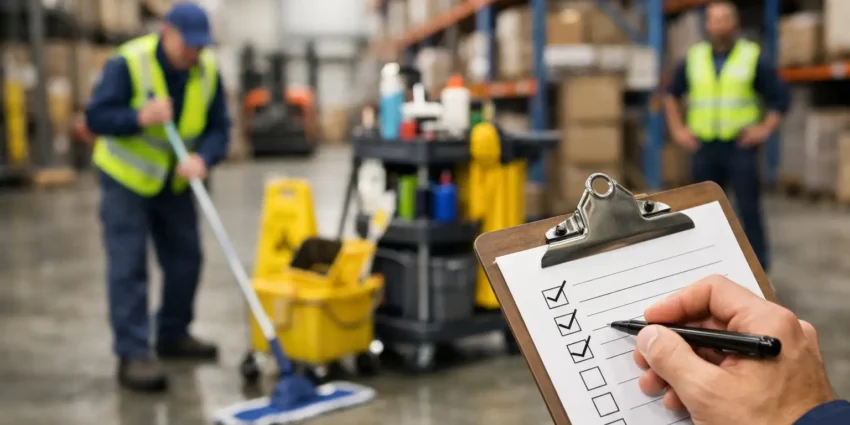
A warehouse can look busy and productive while hiding conditions that slow work down: dust on pallet racking, shrink wrap near traffic lanes, spills beside loading docks, and neglected restrooms that affect morale. A clear warehouse janitorial service checklist gives facility managers a practical way to prevent those issues without interrupting shipping, receiving, or inventory activity.
Warehouse cleaning is not the same as office cleaning. The right schedule depends on your facility’s traffic, floor type, products, equipment, and operating hours. A fulfillment center with constant forklift movement needs more frequent floor attention than a low-traffic storage building. The goal is to set clear expectations, document the work, and make sure cleaning supports safe operations every shift.
Start With a Warehouse Walk-Through
Before assigning tasks, walk the facility with the people responsible for safety, operations, and maintenance. Identify high-traffic areas, recurring messes, restricted zones, and locations where dust or debris can damage inventory or equipment. This step prevents a generic cleaning plan that looks complete on paper but misses the areas your team actually depends on.
Pay close attention to receiving doors, dock plates, break rooms, restrooms, packing stations, battery charging areas, stairways, and emergency exits. These spaces often need different cleaning methods and frequencies. For example, a battery charging area may require attention to residue and safe waste handling, while a packing area may need frequent removal of cardboard scraps, tape liners, and loose fill.
Your walk-through should also establish the best time for service. Some warehouses need cleaning after the final shift. Others benefit from daytime portering that keeps restrooms, entrances, and break areas presentable while a scheduled overnight crew handles floors and deeper work. Dependable cleaning should fit the operation, not compete with it.
Daily Warehouse Janitorial Service Checklist
Daily tasks focus on sanitation, safety, and visible conditions that can affect the workday. The following checklist is a solid starting point for most active warehouses:
- Sweep or vacuum entrances, aisles, packing areas, offices, and other assigned floor surfaces.
- Spot mop spills, tracked-in moisture, grease, and visible marks using products appropriate for the floor material.
- Empty trash and recycling containers, replace liners, and remove waste from designated collection points.
- Clean and restock restrooms, including toilets, urinals, sinks, mirrors, dispensers, and touchpoints.
- Wipe down break room tables, counters, sink areas, appliance handles, and commonly touched surfaces.
- Remove cardboard, stretch wrap, strapping, and other loose debris from work zones and travel paths.
- Check that exits, fire extinguishers, electrical panels, eyewash stations, and safety signage remain clear and accessible.
- Clean entry glass, door handles, reception surfaces, and visitor-facing areas as needed.
Daily floor care deserves special attention. Loose debris can become a slip or trip hazard, catch under rolling equipment, or move through the building on forklift tires. Cleaning teams should never sweep debris into drains, under racking, or behind equipment simply to make an aisle appear clean. The standard should be removal, not relocation.
Restrooms and break rooms also influence how employees view the facility. A warehouse may be an industrial environment, but that does not lower expectations for sanitary, stocked, and usable employee spaces. Daily service should include a quick supply check so paper products, soap, and hand sanitizer do not run out during a shift.
Weekly Tasks That Protect the Facility
Weekly cleaning handles the buildup that daily service cannot fully address. These tasks are especially useful in facilities with high shipping volume, dusty inventory, or multiple shifts.
Floors, corners, and hard-to-reach areas
Schedule detailed sweeping or vacuuming along wall edges, beneath accessible shelving, around loading areas, and in corners where dust and packaging debris collect. Machine scrubbing may be appropriate for sealed concrete, epoxy, tile, or other hard floors, but the equipment and cleaning solution must match the surface. Excess water is a poor trade-off in an active warehouse because it can create hazards and disrupt traffic.
High-touch and employee areas
Disinfect door push bars, railings, time clocks, shared work surfaces, refrigerator handles, microwave controls, vending areas, and locker room touchpoints. These tasks should be completed with the right dwell time for the disinfectant being used. A surface cannot be properly disinfected if the product is wiped away immediately.
Docks and exterior approaches
Clear debris from dock entrances, pedestrian paths, and exterior door areas. Wet leaves, gravel, packaging waste, and tracked-in dirt can quickly become a safety concern in the Puget Sound area, particularly during rainy months. Exterior cleaning may need more frequent attention when weather conditions change.
Monthly and Periodic Deep-Cleaning Tasks
A reliable plan includes work that is not needed every day but should never be forgotten. Monthly or quarterly frequency will depend on warehouse conditions, but the scope should be documented in the service agreement.
Inspect and remove dust from reachable racking bases, ledges, vents, light fixtures, window sills, and ceiling-adjacent surfaces where permitted. Do not assign high-dusting work without the proper access equipment, training, and site approval. Cleaning around elevated racking requires safety controls and coordination with warehouse operations.
Deep-clean restrooms, including partitions, grout lines, floor edges, drains, and walls near fixtures. Shampoo or extract entrance mats and clean stained carpet in office areas. Address interior glass, blinds, and upholstered seating where applicable. Periodic floor scrubbing, burnishing, or degreasing can improve appearance and help extend the life of flooring, but the right frequency depends on traffic and surface condition.
Also review waste areas. Dumpster enclosures, compactor surroundings, recycling stations, and indoor waste collection points can create odor, pest, and housekeeping problems if they are overlooked. Cleaning does not replace a pest-control program or waste-hauling service, but it supports both by reducing residue and loose debris.
Set Clear Safety Boundaries for Cleaning Crews
A checklist should state what cleaners handle and what requires another vendor or internal department. Janitorial staff can manage routine cleaning, but chemical spills, hazardous materials, damaged pallets, leaking batteries, biohazards, and active equipment issues require specific procedures. Never assume a general cleaning crew should respond to a specialized hazard without training and authorization.
Cleaning staff should know the facility’s required personal protective equipment, sign-in procedures, emergency contacts, restricted areas, and traffic rules. If forklifts operate during service, establish clear communication between the cleaning crew and floor supervisors. Cones, wet-floor signs, and visible work zones help, but they are not substitutes for coordinating around moving equipment.
It is also wise to confirm how cleaning chemicals are stored, labeled, and approved. Products should be appropriate for the surfaces being cleaned and used according to manufacturer instructions. A strong chemical odor is not proof of a clean building. Proper application, ventilation, and safe storage matter more.
Use the Checklist to Manage Quality
The value of a warehouse checklist comes from consistent follow-through. Assign a frequency to each task, identify the responsible party, and create a simple way to confirm completion. That may be a paper log, a digital inspection form, or a supervisor walk-through. The format matters less than using it consistently.
Facility managers should inspect results at different times, not only right after the cleaning crew leaves. Look at floor edges, restroom supplies, waste areas, corners near packing stations, and the condition of entrances during normal activity. Those observations show whether the scope and schedule match the real demands of the building.
When problems repeat, adjust the plan instead of accepting poor results as normal. If restrooms run out of supplies before the end of the day, add a daytime restock visit. If dock debris returns within hours, consider more frequent spot service or review how materials are being handled. Transparent communication helps a cleaning provider make practical changes without surprise costs or unclear expectations.
For warehouses across Seattle’s Eastside and the broader Puget Sound area, Armani Janitorial can help build a cleaning schedule around your building’s traffic, operating hours, and priorities. Licensed and insured commercial cleaners, clear scopes of work, and dependable scheduling make it easier to keep standards consistent.
A good checklist should make the next shift easier, safer, and more organized than the one before it. Keep it visible, review it when operations change, and treat cleanliness as part of the facility’s daily performance – not a task left until problems become impossible to ignore.