
A clean office at 8 a.m. does not happen by accident. Neither does a spotless hotel lobby, a sanitized restroom in a busy restaurant, or a dust-free space after construction wraps up. If you are responsible for a commercial property, you already know cleanliness affects how people judge your business before a word is spoken. That is where commercial janitorial services come in.
So, what is commercial janitorial services? In simple terms, it is professional cleaning and upkeep for business properties on a scheduled or ongoing basis. Unlike one-time residential cleaning, commercial janitorial work is built around the needs of workplaces, customer-facing facilities, and high-traffic environments that need consistent attention, dependable scheduling, and clear standards.
What Is Commercial Janitorial Services in Practical Terms?
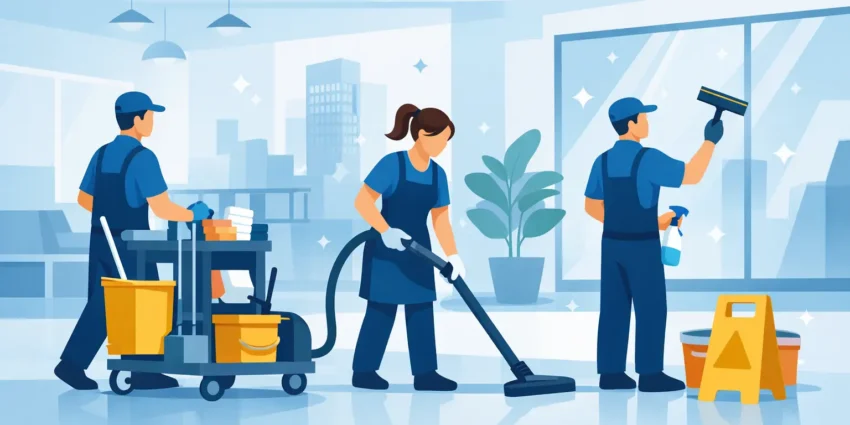
Commercial janitorial services cover the routine cleaning tasks that help a business stay presentable, sanitary, and ready for daily use. This usually includes work such as vacuuming, mopping, trash removal, restroom cleaning, surface disinfection, breakroom cleaning, dusting, and restocking basic supplies when that is part of the service agreement.
The key difference is consistency. Janitorial service is not just about making a space look good once. It is about keeping it clean week after week, often at the same day and time, so your operations run without disruption.
For many businesses, that reliability matters as much as the cleaning itself. Property managers, office administrators, and facility teams do not want to wonder whether a crew will show up, whether corners were cut, or whether extra fees will appear later. A professional commercial janitorial company is there to reduce those headaches, not add to them.
What Commercial Janitorial Services Usually Include
The exact scope depends on the building, industry, and traffic level. A small office suite does not need the same cleaning plan as a warehouse, hotel, auto dealership, or post-construction site. Still, most janitorial programs revolve around a few core categories.
Daily and Recurring Cleaning
This is the foundation of janitorial service. It often includes cleaning floors, wiping surfaces, collecting trash, sanitizing restrooms, and keeping common areas tidy. In office environments, recurring service may also include conference rooms, reception areas, kitchens, and employee breakrooms.
In hospitality settings, the standard is often higher and the schedule more demanding. Lobbies, guest-facing spaces, and restrooms need to stay clean not only for health reasons, but because appearance directly affects guest experience.
Restroom Sanitizing
Restrooms tend to shape how people view a facility. Even if the rest of a building is in good condition, a poorly maintained restroom creates a bad impression fast. Commercial janitorial teams clean fixtures, mirrors, partitions, floors, sinks, and touchpoints while addressing odor control and sanitation.
This is also an area where frequency matters. A lightly used office restroom may be fine with a standard recurring schedule. A restaurant, retail space, or event venue may need more frequent service.
Floor Care
Floors take the most visible wear in most commercial spaces. Carpet, tile, concrete, vinyl, and hard surface flooring all require different care. Routine janitorial work may include vacuuming, mopping, and spot treatment, while deeper floor care can involve buffing, stripping, waxing, or machine scrubbing depending on the material.
This is one of those areas where cheaper service can cost more later. Poor floor maintenance shortens surface life and makes a business look neglected.
Trash Removal and Basic Upkeep
Trash cans, recycling bins, liners, and common-area cleanup may sound simple, but they are part of what keeps a property functioning day to day. Overflowing trash or neglected shared spaces create problems for staff, customers, and tenants quickly.
A dependable janitorial team handles these routine tasks without needing constant follow-up.
Specialty Cleaning
Some commercial cleaners also handle specialty work, such as post-construction cleaning, high-dust cleanup, deep kitchen cleaning support, or detail cleaning for facilities with more demanding needs. This is common in buildings that have recently been renovated, changed tenants, or experienced unusual traffic.
For example, construction cleanup is not the same as standard janitorial service. It requires removal of dust, debris, adhesive residue, and fine particles that settle on surfaces, vents, fixtures, and floors. Not every janitorial provider is equipped for that level of detail.
Who Needs Commercial Janitorial Services?
Any business that wants a clean, safe, and professionally maintained environment can benefit from janitorial service, but the need becomes especially clear in facilities with regular foot traffic, shared spaces, or customer visibility.
Office buildings rely on janitorial crews to keep workspaces organized and sanitary without pulling staff away from their actual jobs. Restaurants and hospitality properties need cleaning that supports both guest experience and health standards. Warehouses and industrial spaces often need dust control, restroom maintenance, and breakroom cleaning to support a safer work environment. Auto dealerships need polished showrooms and clean service areas that reflect the quality of the brand.
Property managers and facility coordinators often outsource janitorial work because it is more efficient than trying to manage in-house cleaning staff. Hiring, training, scheduling, quality control, and supply management all take time. Outsourcing puts those responsibilities on a commercial cleaning partner instead.
Janitorial Services vs. Commercial Cleaning
People often use these terms interchangeably, and that is understandable. In practice, janitorial services usually refer to recurring, ongoing maintenance cleaning. Commercial cleaning is a broader term that can include janitorial work but may also cover one-time or specialized projects.
For example, nightly office cleaning is janitorial service. A deep floor restoration, post-construction cleanup, or move-in and move-out cleaning project falls more under commercial cleaning.
The distinction matters when requesting an estimate. If you need regular support, the provider should build a schedule around your operations. If you need cleanup after a renovation or a one-time reset, the scope and pricing will be different.
Why Businesses Outsource Janitorial Work
Most decision-makers are not looking for cleaning for the sake of cleaning. They are looking for fewer complaints, fewer disruptions, and a property that reflects well on the business.
Outsourcing janitorial services gives businesses access to trained crews, established cleaning systems, and predictable scheduling. It also helps with accountability. When the service agreement is clear, expectations are easier to manage. You know what is included, how often it is done, and who to contact if something needs attention.
There is also a budgeting advantage. A good commercial janitorial company provides transparent pricing and a scope that matches the facility. That helps avoid the common problem of paying for services that are either too limited to work or too broad for what the property actually needs.
That said, not every business needs the same frequency or service level. A professional office may need evening cleaning three times a week. A medical-adjacent space may need daily disinfection. A warehouse may need focused service in restrooms, offices, and employee areas rather than full-building detail cleaning. The right plan depends on use, traffic, and expectations.
What to Look for in a Commercial Janitorial Provider
If you are evaluating vendors, the basics matter. Look for a company that is licensed and insured, communicates clearly, shows up on schedule, and provides a straightforward scope of work. Those are not extras. They are the baseline.
Beyond that, experience in commercial environments matters. Cleaning a home is not the same as cleaning an office, restaurant, hotel, or construction site. Commercial properties have different surfaces, safety expectations, traffic patterns, and service windows. A provider that understands those realities is more likely to work efficiently and stay consistent.
It also helps to ask how the company handles quality control, schedule changes, and special requests. The real test of a janitorial partner is not whether they can clean on a good day. It is whether they stay responsive when your building has changing needs.
For businesses across the Puget Sound area, that often means finding a team that can support recurring office cleaning, hospitality cleaning, and specialty jobs without making the process complicated. Armani Janitorial is one example of a company built around that commercial-first approach.
Why This Service Matters More Than It Seems
Cleaning is often most noticeable when it fails. A missed trash pickup, dirty floors in a lobby, or restrooms that are not properly maintained can affect employee morale, tenant satisfaction, customer confidence, and even safety.
On the other hand, well-managed janitorial service creates a quieter kind of value. Your staff can focus on work. Your customers walk into a space that feels cared for. Your building presents itself the way your business wants to be seen.
That is really the answer to what is commercial janitorial services. It is not just mops, trash liners, and checklists. It is the ongoing work that keeps a commercial property ready for business, day after day, without forcing you to manage every detail yourself.
If your facility runs better when cleaning is handled consistently, professionally, and without surprises, you are not just buying a service. You are buying time, reliability, and one less operational problem to worry about.
One comment on “What Are Commercial Janitorial Services?”