
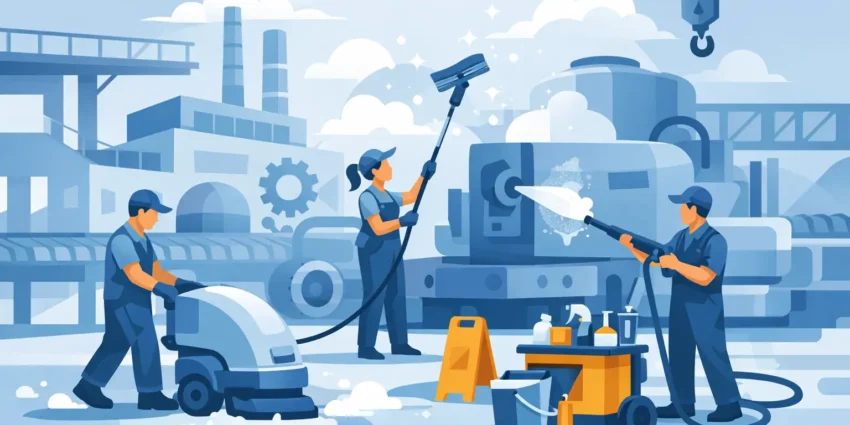
A warehouse floor coated with dust, oil, and packaging debris is not the same cleaning job as a small office lobby. That is the simplest way to understand what is industrial cleaning services. It refers to specialized cleaning work for industrial and heavy-duty commercial environments where standard janitorial service is not enough.
Industrial cleaning focuses on facilities that deal with large equipment, higher traffic, tougher residues, safety-sensitive areas, and stricter operational demands. The goal is not only to make a space look clean, but to help it run safely, stay compliant, protect equipment, and support daily operations without unnecessary disruption.
What is industrial cleaning services in practical terms?
In practical terms, industrial cleaning services are professional cleaning solutions designed for facilities such as warehouses, manufacturing spaces, distribution centers, production areas, auto facilities, and post-construction sites. These jobs often involve dust control, grease removal, floor scrubbing, debris cleanup, sanitation, and detailed cleaning in areas that are harder to access or more hazardous to maintain.
That is the key difference from standard office cleaning. Traditional janitorial work usually covers restrooms, breakrooms, trash removal, vacuuming, mopping, and general surface care in conventional business settings. Industrial cleaning may include those basics, but it goes much further depending on the site.
For example, a property manager may need a loading dock cleaned after constant forklift traffic. A construction supervisor may need fine dust removed from surfaces, fixtures, and floors before turnover. A warehouse operator may need recurring floor care that reduces buildup and helps maintain a safer walking and driving surface.
What industrial cleaning services usually include
The exact scope depends on the facility, but most industrial cleaning services are built around heavier-duty needs. This can include floor scrubbing and degreasing, high-dust removal, pressure washing in appropriate areas, debris removal, detailed surface cleaning, restroom sanitation, breakroom cleaning, and post-project cleanup.
In some environments, the work also includes cleaning around machinery, racking, vents, beams, warehouse shelving, and other surfaces where dust and residue collect over time. In others, the focus is appearance and readiness, especially in facilities that receive customers, inspectors, tenants, or employees every day.
Not every site needs the same level of service. A warehouse may need regular floor maintenance and dust control, while a newly completed commercial build may need a one-time post-construction cleanup to remove dirt, adhesive residue, and leftover debris. A restaurant support area or auto dealership service bay may require a stronger focus on grease, spills, and high-traffic grime.
Where industrial cleaning is used
Industrial cleaning is common in facilities where daily operations create more mess, more wear, or more risk than a typical office environment. Warehouses, manufacturing sites, distribution centers, construction projects, logistics hubs, and service areas are common examples.
But there is overlap with broader commercial cleaning as well. Some businesses operate in spaces that are not fully industrial, yet still need industrial-level cleaning methods in certain areas. Hotels may need heavy-duty back-of-house cleaning. Auto dealerships often have customer-facing showrooms and tougher service areas under the same roof. Large commercial properties may need both routine janitorial service and periodic specialty cleaning.
That is why the right cleaning plan usually starts with the facility itself, not a generic package. The building layout, flooring, traffic patterns, operational hours, and type of residue all matter.
Why businesses hire industrial cleaning professionals
The main reason is simple: the work is more demanding than standard cleaning. Industrial environments often require stronger equipment, trained crews, clear safety procedures, and a service schedule that fits around production, deliveries, staff movement, or project deadlines.
Business owners and facility managers also hire professionals because inconsistent cleaning creates real problems. Dust buildup can affect appearance and air quality. Dirty floors can increase slip risks. Debris left behind after construction can delay occupancy or create a poor first impression. Grease and residue can shorten the life of surfaces and make spaces harder to maintain over time.
Professional industrial cleaning helps reduce those issues by giving businesses a predictable service plan. When a cleaning partner shows up on schedule, works thoroughly, and communicates clearly, managers spend less time chasing vendors and dealing with avoidable problems.
Industrial cleaning vs. commercial janitorial services
This is where many people get confused. Industrial cleaning and commercial cleaning are related, but they are not identical.
Commercial janitorial services usually support day-to-day cleanliness in offices, retail spaces, hospitality properties, and other business environments. The work is often recurring and focused on presentation, sanitation, and routine upkeep.
Industrial cleaning is more specialized. It is built for tougher conditions, larger floor areas, higher debris volume, and surfaces that may need deeper cleaning methods. In many cases, a business needs both. An office attached to a warehouse might need regular janitorial cleaning in the front and industrial cleaning in the back.
There is no sharp line in every case. Some facilities sit in the middle. That is why a site visit matters. A cleaning company should look at the actual conditions and recommend the level of service that fits the space, rather than forcing the site into a one-size-fits-all category.
What to expect from a reliable industrial cleaning provider
A reliable provider should start with a clear walkthrough and estimate. That sounds basic, but it matters. Industrial cleaning is not the kind of service that should be priced blindly or described in vague terms. A good provider will assess the size of the facility, the surfaces involved, the condition of the space, scheduling constraints, and any safety considerations before recommending a plan.
From there, expectations should be simple and direct. The crew should arrive when scheduled, follow the agreed scope, communicate about any issues, and complete the work thoroughly. Pricing should be transparent. If extra services are needed, they should be discussed upfront rather than showing up later as surprise charges.
It also helps to work with a company that is licensed and insured and has experience in commercial environments. Industrial and specialty cleaning require more than labor alone. They require accountability, consistency, and attention to detail.
What affects the cost of industrial cleaning services
Pricing depends on several factors, and this is one area where it truly depends on the site. The square footage matters, but it is only part of the picture. The condition of the facility, the type of debris or residue, access to the area, frequency of service, and after-hours scheduling can all affect cost.
A clean, well-maintained warehouse on a recurring schedule may cost less over time than a neglected site that needs a major reset. A post-construction cleanup may be more labor-intensive because crews have to remove fine dust, adhesive residue, and leftover materials before a space is ready for use. Facilities with heavy grease, high ceilings, or tight operating windows may also require more time and specialized equipment.
For that reason, the lowest quote is not always the best value. A cheaper service that misses details, shows up inconsistently, or leaves work unfinished can create more expense later. For most businesses, reliability and clear scope matter just as much as price.
How to know if your facility needs industrial cleaning
If your space has recurring dust, heavy floor traffic, grease, debris, construction residue, or cleaning demands that go beyond standard janitorial tasks, industrial cleaning is likely worth considering. The same applies if your team is spending too much time managing cleaning issues internally or if your current vendor is not equipped for the work.
Another sign is when cleanliness starts affecting operations. That could mean safety concerns, poor presentation for customers or tenants, or surfaces wearing down faster because buildup is not being removed properly. In those cases, industrial cleaning is not just about appearance. It is part of maintaining the facility.
For many businesses in the Puget Sound area, the right answer is a practical mix of recurring janitorial service and heavier-duty specialty cleaning as needed. That approach keeps everyday spaces presentable while addressing the tougher conditions that standard cleaning alone cannot handle.
A clean facility should make your day easier, not give you one more thing to manage. If your site needs more than surface-level upkeep, the right industrial cleaning plan can bring order, safety, and consistency back to the space.