
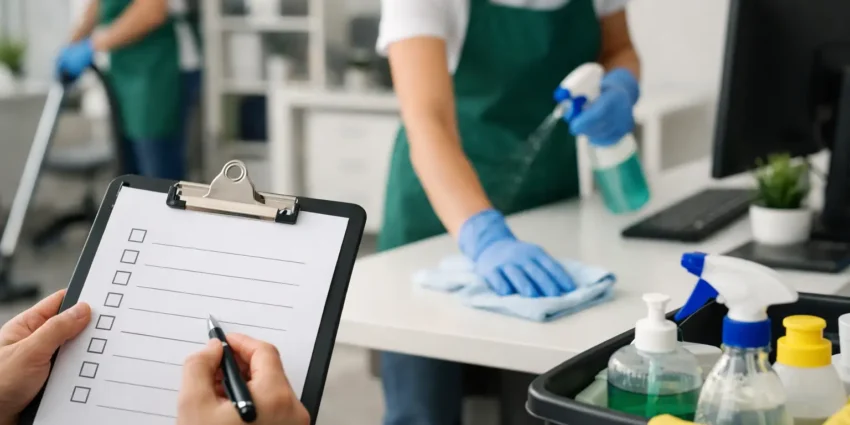
A missed trash pull or neglected restroom can undo a good first impression fast. For office managers and facility teams, a clear office cleaning checklist example helps turn cleaning from a recurring headache into a routine that stays on schedule, on budget, and up to standard.
Why a checklist matters in a commercial office
In a working office, cleaning is not just about appearance. It affects employee comfort, health, safety, and how clients view your business the moment they walk in. The challenge is that office cleaning often gets judged by what people notice first, while many of the most important tasks happen in the background.
That is why a checklist works so well. It creates clear expectations for what gets cleaned, how often it gets done, and which areas need extra attention. It also reduces the back-and-forth that happens when no one is sure whether a task was missed or simply not scheduled.
For busy businesses in Seattle, Bellevue, Redmond, and across the Puget Sound region, consistency usually matters more than complexity. A practical checklist keeps standards visible and makes it easier to spot gaps before employees or customers do.
Office cleaning checklist example by frequency
The right checklist depends on your office size, traffic level, and industry. A small administrative office will not need the same schedule as a medical-adjacent workspace, a sales floor, or a mixed office and warehouse facility. Still, most professional offices benefit from organizing tasks by daily, weekly, and monthly frequency.
Daily office cleaning checklist example
Daily service should focus on high-touch, high-visibility areas. These are the tasks that keep the space presentable and reduce buildup before it becomes harder and more expensive to manage.
Entrances and reception areas should be checked for glass smudges, debris, tracked-in dirt, and full trash bins. Floors should be vacuumed or spot cleaned as needed, especially during wet weather when lobbies collect more moisture and mud.
Work areas usually need trash removal, liner replacement when necessary, and attention to obvious dust or spills. Desks may or may not be included depending on your office policy. Some businesses want only common areas touched, while others want full workstation cleaning after hours. That part should be defined clearly from the start.
Break rooms need daily attention because they affect both sanitation and morale. Counters should be wiped, sinks cleaned, exterior appliance surfaces sanitized, and trash removed. Floors should also be swept and spot mopped when food debris is common.
Restrooms should never be treated as occasional-clean areas in an office setting. Toilets, urinals, sinks, mirrors, dispensers, partitions, and touchpoints need daily cleaning and sanitizing. Supplies such as soap, paper towels, and toilet paper should be restocked during every visit.
Common touchpoints should also be included in daily work. That means door handles, light switches, shared tables, elevator buttons, and other frequently handled surfaces. In higher-traffic offices, these may need more than one pass per day.
Weekly cleaning tasks
Weekly tasks go beyond presentation and help prevent gradual buildup. These are often the jobs people notice only when they stop getting done.
Dusting should be more thorough on a weekly basis, including windowsills, baseboards, ledges, file cabinets, and low-reach surfaces. Upholstered seating in waiting areas may need vacuuming, and conference rooms should get extra detail work around tables, chair legs, and corners.
Interior glass should be cleaned more completely, especially around meeting rooms and entry partitions. Hard floors may need a full mop rather than spot treatment, and carpets should be vacuumed with more attention to edges and under movable furniture.
Kitchen and break room areas often need a deeper weekly reset. That may include sanitizing tables and chairs in more detail, wiping cabinet fronts, and addressing any residue around coffee stations or microwaves.
Monthly and periodic tasks
Monthly work is where long-term cleanliness gets protected. If these tasks are ignored, the office can still look decent at first glance while slowly slipping in quality.
Vents, high dusting, behind-furniture areas, door frames, and less accessible corners should be cleaned on a rotating basis. Floors may need machine scrubbing, buffing, or deeper carpet care depending on the material and traffic. Restrooms may also need descaling and more detailed grout or partition cleaning over time.
This is also the right window to review supply usage, problem areas, and recurring complaints. A checklist should not stay static if the building’s use changes.
Sample checklist structure for an office
A useful office cleaning checklist example is specific enough to be measurable but simple enough to use consistently. In most offices, that means dividing the checklist by area first and then by frequency.
For example, your checklist might include reception, offices and cubicles, conference rooms, break room, restrooms, hallways, and entrances. Under each area, list the expected tasks and assign whether they happen daily, weekly, or monthly. If your building includes shared tenant space, loading access, or showroom areas, those should be broken out separately rather than folded into a general line item.
That level of detail matters because broad phrases like clean office or sanitize common areas leave too much room for interpretation. Clear line items such as empty trash, wipe counters, vacuum carpet edges, sanitize sink fixtures, or clean interior glass are easier to inspect and easier to deliver consistently.
What businesses often leave off the checklist
Many office cleaning plans cover visible surfaces but miss the areas that shape employee experience. Shared phones, copier touchpads, chair arms, door plates, and break room handles are common examples. These do not always look dirty, but they collect heavy use.
Another common gap is weather-related floor care. In the Puget Sound area, rain can turn entry floors into a constant maintenance issue. A checklist that works in summer may not hold up during wetter months unless mat areas, moisture control, and spot mopping get more frequent attention.
Restroom restocking is also easy to underdefine. Cleaning the space without verifying soap and paper products leaves the job unfinished from the user’s point of view.
How to tailor the checklist to your office
The best checklist is not the longest one. It is the one that matches your traffic, layout, and risk points.
If you manage an executive office with frequent client visits, reception, conference rooms, and glass presentation matter more. If you run a busy operations office with staff moving in and out all day, floors, restrooms, and break rooms may need heavier daily service. If your office shares space with light industrial or warehouse activity, dust migration and entry tracking will likely need more frequent control.
Timing matters too. Some businesses want discreet after-hours service. Others need daytime touch-ups in restrooms or common spaces. The checklist should reflect not only what gets cleaned, but when and how often those tasks need to happen for the building to stay functional.
Using a checklist with an outsourced cleaning company
A checklist should support the cleaning relationship, not replace communication. When you work with a commercial cleaning provider, the checklist becomes a baseline for accountability and quality control.
That means the scope should be reviewed before service begins, with clear agreement on task frequency, consumables, access instructions, and any areas that require special handling. It also helps to identify what is not included. For example, interior window detailing, carpet extraction, or post-construction dust removal may be better scheduled as separate specialty services rather than assumed as part of routine janitorial work.
A dependable cleaning partner will not treat the checklist like a formality. They will use it to keep service consistent, avoid surprises, and make sure your building gets the level of attention it actually needs. That is especially important for multi-use commercial spaces where standards can slip quickly without a structured plan.
Signs your current checklist needs work
If employees are raising the same complaints repeatedly, the problem may not be effort. It may be the checklist itself. Repeated odor issues, dirty floors near entrances, understocked restrooms, or dusty shared spaces usually point to either poor frequency or vague expectations.
It is also worth reviewing the checklist if your office has grown, shifted layouts, added staff, or changed operating hours. Cleaning plans should evolve with the business. A schedule that worked for a 10-person office often falls short once traffic doubles.
For many businesses, the goal is simple. You want a workplace that feels clean every day without having to chase down the details. A well-built checklist makes that possible, and the right cleaning team makes it sustainable.
One comment on “Office Cleaning Checklist Example for Daily Use”