
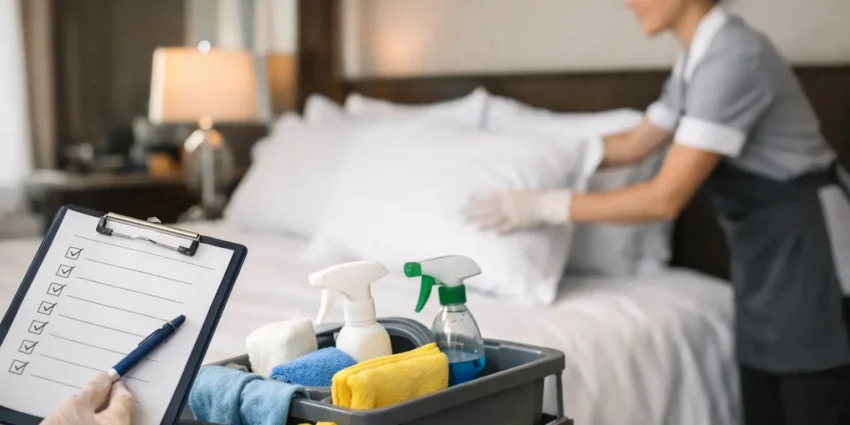
A guest may never see the cleaning team, but they will notice the missed fingerprint on the elevator button, the hair in the shower drain, or the stale smell in a hallway. A dependable hotel cleaning services checklist gives managers a clear way to protect the guest experience, maintain safe conditions, and hold every shift to the same standard.
For hotels, resorts, and other hospitality properties, cleaning is not a single task completed at the end of the day. It is an operating system that supports room readiness, positive reviews, employee safety, and the appearance of the entire property. The right checklist should define what gets cleaned, when it is cleaned, who verifies the work, and how issues are reported before they become guest complaints.
How to Build a Hotel Cleaning Services Checklist
A useful checklist starts with the way your property actually operates. A limited-service hotel with a small lobby has different needs than a full-service hotel with meeting rooms, a breakfast area, a fitness center, and high guest turnover. The goal is not to create the longest possible list. It is to create a practical standard that staff or a commercial cleaning partner can complete consistently.
Separate the checklist by area and frequency. Guest rooms need turnover cleaning and periodic deep cleaning. Public spaces require repeated attention throughout the day. Back-of-house areas need sanitation and safety controls that guests may not see but your team depends on.
Each task should be specific enough to inspect. For example, “clean bathroom” leaves room for interpretation. “Disinfect toilet, sink fixtures, shower controls, door handles, and light switches; remove hair from floors and drains; replenish towels and tissue” gives the cleaner and inspector a clear standard.
Guest Room Turnover Checklist
Guest rooms are where cleaning quality has the most direct effect on satisfaction. Housekeeping should begin by checking the room for left-behind items, damage, maintenance concerns, and unusual odors. Those issues should be documented and escalated before the room is marked ready.
A complete turnover routine includes stripping used linens, removing trash, dusting furniture and ledges, vacuuming or mopping floors, and wiping high-touch surfaces. Pay close attention to remote controls, telephones, switches, thermostat controls, luggage racks, door handles, drawer pulls, and bedside tables. These are often missed when a team is rushed.
Bathroom cleaning should include disinfecting the toilet, shower or tub, sink, counters, mirrors, fixtures, and all touchpoints. Grout, corners, drains, and the floor around the toilet deserve extra attention because they quickly affect how clean a room feels. Replace linens and amenities only after the surfaces and floors are clean to avoid cross-contamination.
Before release, inspect the room from a guest’s perspective. Check that the bed is made neatly, the curtains work, the television and lights operate, the room smells fresh without heavy fragrance, and no cleaning supplies or waste remain behind. A final walk-through catches small details that can otherwise lead to a front-desk complaint.
Public Areas and High-Touch Surfaces
Lobbies, elevators, corridors, restrooms, entrances, and front-desk areas create the first impression. These spaces need cleaning during operating hours, not only after the property is quiet. In the Puget Sound area, rain and damp weather can also bring in water, grit, and leaves quickly, especially at entryways.
A public-area checklist should cover glass doors and windows, entrance mats, floors, seating, trash receptacles, elevator interiors, and visible wall marks. Wipe and disinfect high-touch points on a recurring schedule, including elevator buttons, handrails, door hardware, reception counters, payment terminals, and public restroom fixtures.
Public restrooms should be checked often enough that supplies do not run out between inspections. Restock soap, paper products, and toilet tissue; empty waste; disinfect fixtures and handles; remove standing water; and mop floors as needed. The correct frequency depends on occupancy, events, and the number of guests using the facility. A hotel hosting conferences or weekend events may need checks every hour, while a quieter property may not.
Dining, Meeting, and Amenity Spaces
Cleaning requirements rise when hospitality spaces serve food, host groups, or support recreation. Breakfast areas, bars, banquet rooms, and kitchens require clear separation between routine housekeeping and food-service sanitation procedures. Cleaning staff should know which surfaces need approved food-safe products and which tasks belong to kitchen personnel.
For meeting rooms, clean tables, chairs, touch panels, light switches, waste bins, glass, and floors after each event. Reset the room according to the event plan and report spills, damaged furniture, or AV issues promptly. A clean meeting room is only useful if it is ready when the next group arrives.
Fitness centers need frequent disinfection of equipment touchpoints, benches, mats, water stations, mirrors, and floors. Pool decks, spas, and locker rooms require added attention to moisture control. Standing water, neglected drains, and poorly maintained locker room floors can create slip hazards and unpleasant odors.
Daily, Weekly, and Deep-Cleaning Priorities
A hotel cleaning services checklist works best when it distinguishes between recurring daily work and the tasks that need scheduled deeper service. Asking room attendants to complete every deep-clean item during a fast turnover can lead to rushed work and inconsistent rooms.
Daily cleaning focuses on guest-facing readiness, sanitation, trash removal, restocking, and visible floor care. Weekly work can include detailed vacuuming under furniture, dusting vents and blinds, cleaning baseboards, polishing fixtures, and treating spots on upholstery or carpet. Monthly or quarterly deep cleaning may include carpet extraction, hard-floor maintenance, high dusting, detailed grout work, exterior entry cleaning, and interior window cleaning.
Use occupancy patterns to set the schedule. A high-turnover property may need more frequent carpet care in corridors and elevator areas. A hotel with pets may need additional odor treatment and upholstery cleaning. Older properties may require more attention to grout, ventilation covers, and hard-to-reach dust. The checklist should be flexible enough to address these conditions without lowering the daily standard.
Inspection, Reporting, and Accountability
Checklists are only effective when someone verifies them. Supervisors should complete spot inspections at different times of day and in different room types. Inspect a sample of vacant-ready rooms, occupied stayover rooms, lobby restrooms, corridors, and employee areas rather than reviewing the same spaces every shift.
When an issue is found, document the location, task, condition, and corrective action. This helps management identify recurring problems, whether they involve training, staffing, damaged equipment, supply shortages, or unrealistic time expectations. It also creates a record for service providers and property teams to review together.
A strong inspection process should measure more than whether a task was checked off. Look for quality indicators such as streak-free mirrors, odor control, fully stocked supplies, clean corners, dry restroom floors, and properly maintained entrances. These details show whether the checklist is being completed carefully or simply marked complete.
Supplies and Safety Controls That Support Better Results
The best cleaning process can still fail if teams lack the right supplies, equipment, or instructions. Keep approved chemicals clearly labeled and stored away from guests. Use color-coded cloths or other controls to prevent bathroom tools from being used on guest-room or food-service surfaces. Ensure staff understand dwell times for disinfectants, since spraying and immediately wiping a product may not provide the intended sanitation result.
Maintain working vacuums, mops, floor signs, carts, and waste-handling equipment. Replace worn tools before they spread soil or leave floors overly wet. Safety is especially important in active hotel environments, where a wet hallway or blocked exit can affect guests and employees immediately.
Clear communication matters just as much. Maintenance issues, pest activity, water damage, and lost property should have defined reporting procedures. Cleaning teams are often the first people to notice these conditions, so a reliable escalation process protects the property and prevents avoidable disruptions.
When Outsourced Hotel Cleaning Makes Sense
Some hotels manage all housekeeping internally, while others use a commercial cleaning partner for public areas, deep cleaning, overnight service, event support, or staffing gaps. The right approach depends on occupancy, property size, in-house supervision, and the level of specialty work required.
Outsourced service can be especially helpful when a property needs dependable recurring schedules without adding internal hiring and equipment management. Before selecting a provider, confirm that cleaners are licensed and insured, that the scope of work is written clearly, and that pricing does not leave room for surprise charges. Ask how inspections are handled, how quickly concerns are addressed, and whether the team can work around guest activity and event schedules.
Armani Janitorial helps hospitality properties across Seattle’s Eastside and the broader Puget Sound area maintain clean, presentable spaces with scheduled commercial cleaning built around the property’s operational needs.
A checklist should make cleaning easier to manage, not harder to complete. When every area has a clear standard, a realistic schedule, and accountable follow-through, guests can focus on their stay instead of noticing what was missed.