
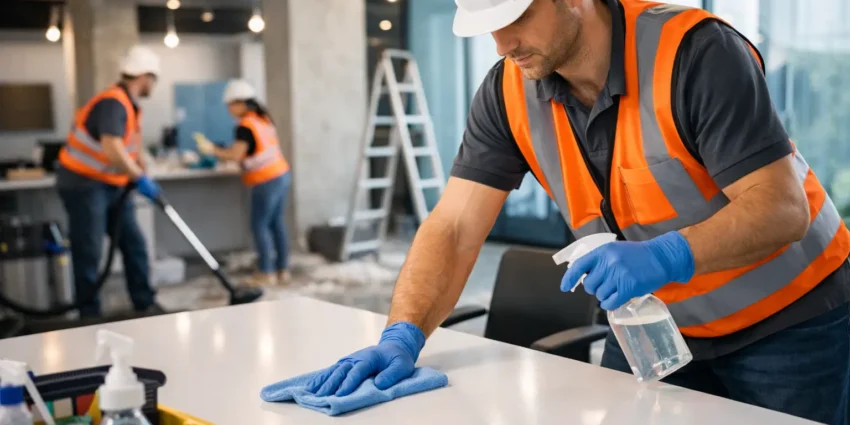
A post construction cleaning example is most useful when it shows what a finished commercial space actually requires before employees, tenants, customers, or inspectors arrive. A new office may look complete after the final trade leaves, but drywall dust can remain in vents, window tracks, light fixtures, cabinets, and flooring edges. Construction debris, adhesive residue, paint splatter, and fingerprints can also affect the first impression of the space.
For commercial property managers and project supervisors, the goal is not simply to make the building look tidy. It is to prepare the site for a safe, presentable handoff without delaying occupancy or creating last-minute cleanup issues. The scope should be clear, scheduled around the project timeline, and priced without surprises.
A Post Construction Cleaning Example: New Office Build-Out
Consider a 12,000-square-foot office build-out in Bellevue. The project includes private offices, open work areas, conference rooms, a break room, restrooms, a reception area, and glass storefront panels. Flooring, millwork, paint, lighting, and appliances have been installed. The general contractor expects a final walkthrough in five business days, and the tenant plans to move in the following week.
The cleaning work is usually divided into phases because the site is not ready for detail cleaning while trades are still cutting materials, painting, or moving equipment. Trying to perform a final clean too early often means paying to clean the same surfaces twice.
Phase One: Rough Cleaning After Major Work
The rough-cleaning phase begins once the largest construction tasks are complete and crews no longer need to leave bulky materials throughout the space. Its purpose is to remove debris that could interfere with final work or create a safety concern.
In this office example, the cleaning team removes cardboard, plastic wrap, scrap material, tape, empty containers, and other non-hazardous jobsite debris identified for disposal. Floors are swept or vacuumed to collect sawdust and drywall dust. Larger dust accumulations are removed from horizontal surfaces, window ledges, baseboards, and accessible fixtures.
This phase does not mean every surface is polished or ready for occupancy. If painters still need access to walls or electricians are completing punch-list items, a detailed finish would be premature. The benefit is a more organized jobsite that lets the contractor identify remaining work and reduces the amount of dust tracked through completed areas.
Phase Two: Detailed Final Cleaning
Once construction is complete, the final-cleaning phase prepares the office for its formal walkthrough and tenant move-in. This is where the difference between basic cleanup and professional post-construction service becomes visible.
For the office build-out, the final scope may include cleaning interior glass and glass doors, removing labels where appropriate, wiping accessible light fixtures, cleaning vents and diffusers, and dusting walls, baseboards, ledges, trim, and door frames. Cabinets, shelves, countertops, appliances, sinks, toilets, and break-room surfaces receive detailed attention.
Floor care depends on the material. Carpet is vacuumed with attention to edges and corners. Resilient flooring may need dust removal, damp mopping, and spot treatment for adhesive or paint residue. Hard surfaces may require a compatible cleaner that removes construction soil without dulling a newly installed finish. A professional team should confirm floor type and manufacturer restrictions before using strong chemicals or abrasive tools.
The team also cleans window tracks, accessible blinds, interior frames, switches, outlet covers, and high-touch surfaces. These details matter because construction dust is fine and mobile. A surface can look clean from several feet away while still leaving dust on a hand, desk, or computer monitor.
What the Final Result Should Look Like
A completed commercial space should feel ready to operate, not merely empty of workers. Reception glass should be free of fingerprints and labels. Restrooms should be clean, sanitized, and stocked if that is included in the agreed scope. Break-room counters and appliances should be ready for employee use. Floors should be free of loose debris, visible dust, and common post-construction residue.
There is an important distinction between cleaning and repair. A cleaning crew can remove dust, smudges, tape residue, and many surface marks. It cannot correct scratched glass, damaged flooring, chipped paint, defective caulking, or installation problems. During the final walkthrough, separating cleaning concerns from construction deficiencies helps the project close out faster and prevents confusion about who owns each task.
For the Bellevue office, the property manager may use a room-by-room walkthrough list with the contractor and cleaning provider. The list should confirm that glass, floors, restrooms, kitchens, offices, common areas, and entry points meet the expected condition. If a trade returns for a repair after cleaning, a small touch-up clean may be needed before turnover.
Areas That Often Need Extra Attention
Post-construction cleaning plans should not assume every facility needs the same service. A medical office, restaurant, warehouse, hotel lobby, and auto dealership have different surfaces, operating requirements, and opening deadlines. Still, several areas are frequently overlooked during commercial projects:
- HVAC vents, returns, and accessible diffusers, where fine dust collects quickly
- Window tracks, door tracks, frames, and ledges that hold debris after installation
- Cabinet interiors, shelving, drawers, and closet areas that may be used immediately
- Restroom fixtures, partitions, mirrors, and floor edges
- High-touch points such as door handles, switches, handrails, and elevator buttons
- Exterior entryways, sidewalks, and glass near active construction access points
Exterior cleaning can be especially important in the Puget Sound area, where rain can turn tracked dust into muddy residue at entrances. If the project has landscaping, pavement work, or exterior window installation still underway, the schedule may need to allow for a final entrance touch-up just before opening.
Setting a Scope That Prevents Surprises
The strongest post-construction cleaning estimates begin with a site visit or a detailed discussion of the project. Square footage is useful, but it does not tell the whole story. The number of restrooms, amount of interior glass, ceiling height, floor types, debris volume, and construction status all affect labor and timing.
A clear scope should state whether debris hauling is included, which areas will receive interior glass cleaning, whether exterior windows are part of the work, and what level of floor care is expected. It should also identify exclusions. For example, hazardous materials, heavy construction waste, high-rise exterior glass, and specialty restoration may require separate services or vendors.
Scheduling matters just as much as the scope. A final clean works best after dusty work is done and before furniture, inventory, or technology equipment fills the space. However, projects rarely move in a perfect line. A dependable provider should be able to communicate clearly when a phased clean, final clean, or touch-up visit makes the most sense.
When a Touch-Up Clean Is Worth Scheduling
A touch-up clean is a smaller visit performed after final construction work, inspections, or furniture installation. It is not always necessary, but it is valuable when several teams will still pass through the space after the main cleaning is complete.
In the office example, movers may leave packaging at the entry, installers may create dust while mounting monitors, and inspectors may track dirt onto newly cleaned flooring. A targeted touch-up can restore the reception area, restrooms, break room, floors, glass, and high-visibility surfaces before employees arrive.
For a tenant improvement project with a tight opening date, this final visit can be the difference between a space that appears finished and one that appears rushed. It is often a practical investment when brand image and first-day operations matter.
A Reliable Handoff Starts With Clear Communication
A post-construction clean should give the project team confidence that the space is ready for the next step. That requires more than sending a crew after work is done. It requires an agreed scope, realistic timing, trained and insured cleaners, and a direct point of contact when conditions change.
Armani Janitorial helps commercial clients across Seattle’s Eastside and the broader Puget Sound area plan cleaning around the real condition of the site. The right final clean leaves facility teams free to focus on occupancy, operations, and the people walking through the door for the first time.