
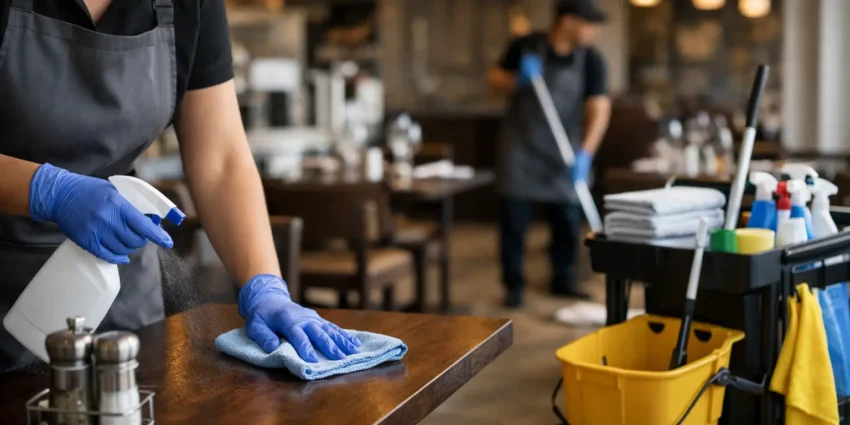
The lunch rush ends, but the work is not over. Grease has collected around the cook line, restrooms have seen heavy use, and the dining room needs to look ready before the next guests arrive. A reliable restaurant cleaning service schedule gives your team clear responsibilities while ensuring deeper cleaning does not get pushed aside during busy shifts.
For restaurant owners and managers, the right schedule protects food safety, supports a better guest experience, and helps prevent expensive maintenance issues. It should also fit your actual hours, staffing levels, kitchen equipment, and service volume. A fast-casual restaurant with steady counter traffic needs a different approach than a full-service dining room, bar, or high-volume hotel kitchen.
Why a Restaurant Cleaning Service Schedule Matters
Restaurants operate under constant pressure. Staff members are focused on prep, service, inventory, guest requests, and closing duties. Without a documented plan, cleaning becomes reactive. The visible areas may receive attention, while floor edges, vents, grease-prone surfaces, and restrooms fall behind.
A consistent schedule separates quick, shift-based tasks from the detailed work that requires more time, equipment, or professional cleaners. This approach helps managers verify that cleaning is completed instead of relying on assumptions at the end of a long night.
It also protects the business in practical ways. Cleaner floors reduce slip risks. Properly maintained restrooms support guest confidence. Regular attention to grease, dust, and food debris can extend the life of flooring, kitchen surfaces, and equipment. For Seattle Eastside and Puget Sound restaurants, wet weather makes entryways and hard-surface floors an especially important part of the plan.
Start With Your Restaurant’s Real Cleaning Needs
An effective schedule starts with a walk-through, not a generic checklist. Look at each area based on foot traffic, food exposure, moisture, and how visible it is to guests. The front entrance, dining room, host stand, restrooms, kitchen, dish area, storage rooms, employee areas, and exterior waste areas all require different frequencies.
Begin by identifying what must be cleaned during every shift and what can be handled after closing. For example, tables, high-touch surfaces, spills, and restroom touchpoints need frequent attention while guests are present. Detailed floor care, deep restroom cleaning, high dusting, wall washing, and behind-equipment cleaning are usually better suited to overnight, early-morning, or scheduled off-hours service.
Your schedule should also account for the days that create the most wear. A restaurant that sees its strongest traffic Friday through Sunday may need an added service visit on Monday morning. A location with private events may need a reset immediately after each event. The goal is to match service frequency to actual conditions, not simply choose the lowest number of visits.
Daily Cleaning Responsibilities
Daily work keeps the restaurant safe and presentable between professional deep-cleaning visits. Assign responsibilities by shift so staff members know what belongs to them, and managers can inspect completed work before the next shift begins.
During operating hours, employees should respond quickly to spills, remove debris from entry mats, wipe tables and chairs between guests, and monitor restroom supplies and appearance. High-touch surfaces such as door handles, payment terminals, menus, condiment stations, and restroom fixtures need regular attention. In the kitchen, food-prep surfaces, dish areas, and visible grease buildup should be addressed according to your food safety procedures.
At closing, focus on restoring the space for the next day. Floors should be swept and mopped, trash removed, dining surfaces wiped down, and restrooms cleaned and restocked. Staff should also check under tables, along baseboards, around beverage stations, and at the front entrance, where crumbs, moisture, and tracked-in dirt tend to build up.
Daily cleaning does not replace specialty service. Staff can maintain the facility, but they may not have the time, tools, training, or access needed for detailed commercial cleaning after a demanding shift.
Build Weekly and Monthly Service Into the Plan
The deeper tasks in a restaurant cleaning service schedule are often the first to be delayed when business gets busy. Putting them on a recurring calendar removes guesswork and helps prevent small cleaning problems from becoming larger operational concerns.
Weekly service may include detailed restroom cleaning, machine scrubbing of hard floors, spot treatment for carpeted areas, cleaning glass and interior windows, wiping doors and walls, and removing buildup from high-contact surfaces. Depending on the restaurant, a weekly visit can also cover dining-room chairs, booths, host stations, bar areas, and employee break spaces.
Monthly or periodic work should address the areas that collect soil slowly but affect cleanliness, air quality, and appearance over time. These may include high dusting, vent covers, baseboards, light fixtures, wall detail work, grout lines, floor edges, and areas behind movable equipment. A professional cleaning partner can recommend the right frequency after evaluating the facility.
Some tasks also depend on the surface type. Sealed tile, concrete, vinyl, carpet, and hardwood-look flooring each require different methods. Over-cleaning with the wrong product can damage finishes, while under-cleaning allows grease and dirt to become harder to remove. A schedule should specify the expected result as well as the task, such as clean, dry, slip-resistant floors with no visible buildup along edges.
Sample Restaurant Cleaning Service Schedule
A workable schedule usually divides duties into three levels: shift cleaning, recurring janitorial service, and periodic specialty cleaning. The following framework can be adjusted around your operating hours.
- Every shift: Clean and disinfect guest tables and high-touch points, manage spills, inspect restrooms, remove visible debris, and keep entrances clear and presentable.
- Every night: Sweep and mop floors, remove trash and recycling, clean and restock restrooms, wipe dining and service surfaces, and inspect the front of house before closing.
- One to three times per week: Perform deeper restroom service, detailed floor cleaning, glass cleaning, dust removal, and cleaning of dining-room fixtures, chairs, booths, and employee areas.
- Monthly or as needed: Complete high dusting, wall and baseboard detail work, floor-edge cleaning, carpet extraction or spot treatment, and specialty cleaning for neglected or hard-to-reach areas.
This framework is a starting point, not a fixed rule. A small coffee shop may only need professional service a few times per week, while a busy restaurant with a bar, patio, and high guest turnover may need daily commercial cleaning. Restaurants with late hours may prefer after-hours service, while breakfast locations often need cleaning completed before early prep begins.
Make Accountability Part of the Schedule
A schedule only works when there is a simple way to confirm that work was completed. Use a location-specific checklist for staff and a defined scope of work for your cleaning provider. Avoid vague instructions such as “clean the dining room.” Instead, clarify which surfaces, floors, fixtures, and detail areas are included.
Managers should also establish a clear point of contact for service changes. If a private event creates unusual traffic, a restroom issue needs urgent attention, or construction work leaves dust near an entrance, the cleaning plan may need a temporary adjustment. Responsive communication prevents surprises and helps keep the facility ready for guests.
When hiring a commercial cleaner, ask about consistent scheduling, insured staff, quality checks, and transparent pricing. A dependable provider should be able to work around restaurant operations without interrupting service or adding unnecessary management work. Armani Janitorial builds recurring service plans around each facility’s needs, with clear scheduling and no hidden fees.
Keep the Plan Flexible, Not Loose
Your restaurant will have busy seasons, slow periods, staffing changes, and occasional special events. Review the schedule every few months and after major operational changes. If floors look worn before the next scheduled visit, restrooms need more attention, or staff are repeatedly covering missed detail work, the service frequency or scope should be adjusted.
The best cleaning plan is one your team can follow and your guests can feel. When the dining room, restrooms, entrances, and work areas are consistently cared for, your staff can stay focused on service and your restaurant can make the right impression from the first step inside.