
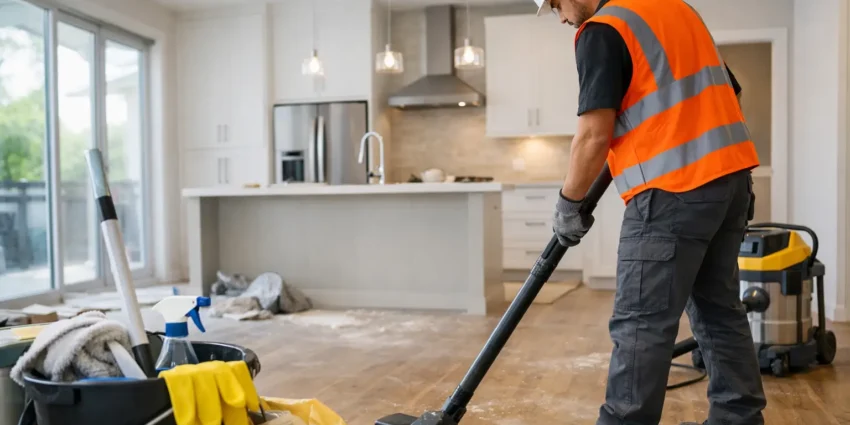
A construction project can look complete long before it is ready for occupants, inspections, or a client walkthrough. Fine dust settles after the trades leave, adhesive remains on new surfaces, and discarded materials can make an otherwise finished space look unfinished. Understanding what is included in builder cleanup helps project managers and property owners set clear expectations before the final handoff.
Builder cleanup, also called post-construction cleaning, prepares a newly built or renovated commercial space for safe, presentable use. The scope can vary by project stage, building type, and contract, but a professional crew should work from a documented plan rather than treating every job as a basic janitorial visit.
What Is Included in Builder Cleanup?
Most builder cleanup services address the dust, debris, residue, and detail work left behind during construction. The goal is to make the property look finished while protecting new flooring, fixtures, glass, and other installed surfaces.
A thorough scope commonly includes removing construction debris and packaging, vacuuming and damp-wiping dust from horizontal surfaces, cleaning interior glass, wiping doors and trim, and cleaning restrooms, break rooms, and other completed areas. Crews also clean floors according to the material and condition, whether that means vacuuming carpet, mopping hard surfaces, or performing a more specialized treatment when approved.
The exact work depends on what remains at the site. A tenant improvement project in an occupied office building may require controlled cleaning around shared hallways and strict scheduling. A newly built warehouse may need extensive dust removal from high ledges, interior windows, and large floor areas. Restaurants, medical offices, hotels, and auto dealerships often require additional attention to customer-facing finishes before opening day.
Builder Cleanup Usually Happens in Phases
Post-construction cleaning is often more effective when it is planned in phases. Trying to complete all work in one final visit can lead to re-cleaning if other trades are still cutting, sanding, painting, or moving materials through the site.
Rough Cleaning
Rough cleaning takes place after major construction activity has slowed and large materials can be removed. It focuses on clearing obvious debris, loose dirt, cardboard, plastic, scrap material, and packaging from work areas.
This phase may also include an initial sweep or vacuum of floors and basic dust removal from accessible surfaces. It is not the final detail clean. Its practical purpose is to make the site safer and more organized for remaining trades, inspections, and finish work.
Final Construction Cleaning
Final cleaning begins once the space is substantially complete and trades are no longer creating significant dust or debris. This is the detailed work most people picture when they ask what is included in builder cleanup.
Cleaners wipe baseboards, door frames, windowsills, cabinetry, countertops, fixtures, and other finished surfaces. They remove dust from vents, ledges, light fixtures where safely accessible, and interior glass. Restrooms are cleaned and sanitized, kitchens and break rooms are detailed, and floors receive the appropriate final cleaning for their surface type.
Final cleaning should also include careful attention to edges and touchpoints. Dust tends to collect in corners, behind doors, along trim, and on top of cabinets. Those details matter because they are visible during a close inspection and can affect how a new space is perceived by tenants, employees, customers, or owners.
Touch-Up Cleaning Before Handoff
A touch-up clean is often scheduled shortly before occupancy, a grand opening, or a client turnover. Even a clean site can collect dust after the final crew leaves, especially if furniture installation, technology setup, punch-list work, or deliveries continue.
Touch-up service focuses on restoring the finished appearance of the property. It may include re-wiping surfaces, removing fresh fingerprints from glass, spot-cleaning floors, checking restrooms, and collecting any small remaining debris. For busy project teams, this final visit can prevent a rushed last-minute scramble before the walkthrough.
Common Areas Included in a Commercial Cleanup
A professional builder cleanup plan should identify the areas to be cleaned, not simply state that the building will be cleaned. In commercial properties, the scope often covers offices, lobbies, hallways, conference rooms, restrooms, break rooms, storage rooms, interior windows, entry doors, and stairwells.
In larger facilities, crews may also clean warehouse offices, employee areas, showroom floors, leasing spaces, and common areas. Hospitality properties may need guest-facing detail work in rooms, corridors, reception areas, and amenity spaces. The right approach is based on the building’s use and the standard expected at turnover.
Exterior work can be included, but it should be specified separately. Entryway sweeping, removal of small debris near doors, and basic cleanup around immediate access points may be part of the service. Pressure washing, exterior window cleaning, landscape debris removal, and hauling large construction waste often require separate planning, equipment, or vendors.
What Builder Cleanup May Not Include
Clear scopes protect both the contractor and the property owner. Builder cleanup does not automatically include every task associated with completing a construction project.
For example, hazardous material removal, paint overspray correction, mold remediation, biohazard cleanup, exterior high-rise glass work, and disposal of large demolition materials are generally outside a standard post-construction cleaning scope. So are repairs for damaged finishes, permanent stain removal, or specialized restoration work caused by construction defects.
Some items also depend on access and safety conditions. High dusting may be possible when safe equipment and clear access are available, but cleaning elevated areas is not the same as working around active lifts, unsecured materials, or unfinished electrical systems. A licensed and insured cleaning provider will identify those conditions before work begins rather than taking unnecessary risks on site.
Why the Cleaning Scope Matters Before You Request an Estimate
A detailed scope leads to a more accurate estimate and fewer surprises. When requesting builder cleanup, share the square footage, type of facility, project timeline, number of floors, flooring materials, window count, occupancy status, and whether utilities are active. Photos and a walkthrough can also help identify dust levels, access challenges, and special surfaces that need protection.
It is also helpful to confirm who is responsible for removing bulky debris before the cleaning crew arrives. Cleaners can work efficiently when the site is ready for cleaning, but piles of lumber, pallets, equipment, or active trade materials can limit access and slow the process.
Scheduling matters as much as the task list. Cleaning too early may mean paying for repeated work. Waiting too long can delay inspections or turnover. The best time is usually after dusty work is complete, major debris has been removed, and the property can be accessed without interfering with final trades.
Choosing a Reliable Builder Cleanup Partner
Construction schedules move quickly, and the final days of a project leave little room for missed appointments or unclear communication. Look for a commercial cleaning provider that can review the site, explain the recommended scope, provide transparent pricing, and coordinate around your turnover date.
The crew should understand that new finishes need careful treatment. Improper products or abrasive tools can damage floors, glass, fixtures, and stainless steel at the point when the building is supposed to look its best. Dependable service also means arriving as scheduled, communicating changes quickly, and addressing agreed-upon details before the project is handed over.
Armani Janitorial provides commercial post-construction cleaning for businesses across Seattle’s Eastside and the Puget Sound area, with service plans built around the condition of the property and the demands of the project schedule.
Before setting a turnover date, walk the space with your cleaning partner and agree on what “ready” means for that property. A clear checklist, safe site access, and a final touch-up plan give your team a cleaner handoff and one less deadline to manage.