
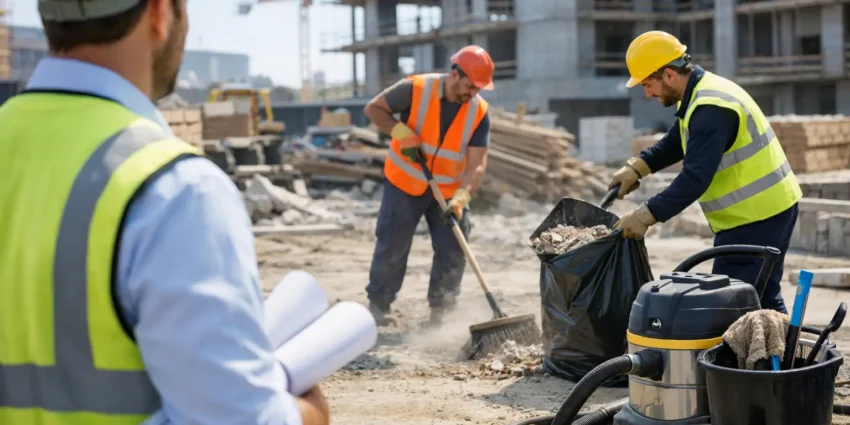
A job can look finished on paper and still feel far from complete once the dust settles. Fine drywall dust on ledges, adhesive residue on floors, smudged glass, and scattered debris can slow inspections, frustrate owners, and make a new space look unfinished. That is why a solid construction site cleaning guide matters – not as an extra step, but as part of turning a project over the right way.
For property managers, general contractors, and facility teams, cleaning after construction is about more than appearance. It affects safety, scheduling, first impressions, and whether the space is actually ready for occupancy. A rushed cleanup often creates rework, while a structured one helps keep the closeout process on time and within budget.
What a construction site cleaning guide should cover
Construction cleanup works best when it is treated in phases. Many site leaders assume cleaning happens at the end, but that approach usually creates bottlenecks. Dust moves from room to room, debris piles up, and final detail work takes longer because the site was never controlled along the way.
A practical construction site cleaning guide starts before final turnover. During active construction, crews need basic debris removal and dust control to keep walkways clear and reduce hazards. After major trades wrap up, the site moves into a rough clean, where larger waste, stickers, packaging, and surface buildup are removed. The final clean is the detailed pass that prepares the property for inspection, photography, punch list review, or occupancy.
That phased approach matters because every stage has different goals. Early cleaning supports safe work conditions. Mid-stage cleaning helps trades finish efficiently. Final cleaning protects the presentation of the completed space.
Start with safety, not just appearance
On an active or recently completed site, safety has to come first. Loose debris, nails, sharp offcuts, dust-covered floors, and blocked pathways create obvious risk. Less obvious issues matter too, including poor indoor air quality from construction dust and slippery surfaces caused by overspray or residue.
Before any detailed cleaning starts, the site should be reviewed for hazards, access limitations, and any materials that require special handling. That includes checking stairwells, entry points, unfinished surfaces, exposed wiring areas, and spaces where multiple subcontractors may still be working. Cleaning too early can be just as disruptive as cleaning too late.
This is also where expectations should be set clearly. A proper post-construction clean is not the same as a standard janitorial visit. It often involves heavier soil, specialty surface care, debris removal, dust extraction, and more coordination with site schedules. When those differences are understood upfront, there are fewer surprises on scope and pricing.
The three phases of post-construction cleaning
Rough cleaning during or after major construction
Rough cleaning removes the bulk waste that makes a site hard to move through efficiently. This can include scraps of wood, plastic wrap, cardboard, tape, caulking tubes, and general debris left behind by trades. At this stage, the goal is not showroom detail. The goal is to clear the space so finishing work and inspections can move forward without unnecessary obstacles.
This phase may also include sweeping, vacuuming heavier dust, and wiping obvious surface buildup from counters, fixtures, and sills. In commercial spaces, it often helps reveal remaining issues that need correction before final cleaning begins.
Final cleaning before handoff
Final cleaning is the detailed phase most people picture, and it is where quality becomes highly visible. Floors are cleaned according to material type. Interior glass is detailed. Labels and stickers are removed carefully. Fixtures, vents, trim, ledges, doors, cabinets, and baseboards are cleaned thoroughly. Restrooms, breakrooms, lobbies, offices, and common areas all need attention.
The challenge here is that construction dust settles everywhere, including places that do not look dusty at first glance. Air vents, light fixtures, tops of doors, shelving, and window tracks all collect fine particles. If these areas are missed, dust continues to circulate after occupancy, which reflects poorly on everyone involved.
Touch-up cleaning after punch list work
Many projects need one more pass after the final clean. Punch list corrections, vendor returns, and move-in activity often leave behind new dust, fingerprints, packaging, and floor marks. A touch-up clean helps restore presentation right before the owner walkthrough or opening day.
This phase is often overlooked in planning, but it makes a noticeable difference. Even a well-cleaned space can lose its polished look after a few last-minute repairs.
Key areas that often get missed
The most common issue in post-construction cleanup is not that crews miss entire rooms. It is that they miss details that owners notice right away. Glass may look clean until sunlight reveals haze. Floors may appear finished until shoe covers pick up fine dust at the edges. Restrooms may be spotless at eye level but still have debris behind fixtures.
High-touch and high-visibility surfaces deserve extra focus. That includes entry glass, reception counters, elevator interiors, hardware, light switches, door frames, and restroom partitions. In office and commercial build-outs, vents and diffusers also matter because they can release dust after the site is occupied.
Flooring needs special care as well. Hard floors, carpet, polished concrete, tile, and specialty surfaces all respond differently to residue and moisture. The wrong method can dull finishes or spread debris instead of removing it. A dependable cleaning plan accounts for the surface, not just the room.
Timing can make or break the result
One of the biggest trade-offs in construction cleanup is timing. If a final clean happens before all dusty work is finished, some of that effort will need to be repeated. If cleaning is delayed too long, inspections, furniture delivery, or occupancy can be affected.
The right timing depends on the type of project and how tightly trades are stacked near completion. Tenant improvements, retail build-outs, office renovations, hospitality refreshes, and warehouse work all move differently. A flexible cleaning partner helps coordinate around that reality instead of forcing a rigid schedule that does not match the jobsite.
This is especially important for commercial properties where turnover windows are tight. Property teams and business owners often need spaces cleaned quickly, but still cleaned thoroughly. Speed helps, but only when it does not cut into quality.
What to look for in a post-construction cleaning partner
Experience in commercial environments matters. Post-construction cleaning is not just heavier housekeeping. It requires crews who understand jobsite conditions, phased cleanups, scheduling changes, and the difference between rough and final cleaning.
Clear communication matters just as much. Site supervisors and property managers need to know what is included, when crews will arrive, what access is required, and how touch-ups will be handled if the schedule shifts. Vague scope leads to frustration. Transparent estimates and dependable scheduling reduce that risk.
Insurance and professionalism should be non-negotiable. On a commercial site, you want licensed and insured cleaners who can work responsibly around finished materials, building systems, and remaining trades. The lowest price is not always the lowest cost if missed details delay handoff or create complaints after occupancy.
In the Puget Sound market, where schedules are busy and expectations are high, dependable execution often matters more than promises. Armani Janitorial focuses on practical post-construction cleaning that helps commercial clients move from build completion to a cleaner, safer, more presentable handoff.
How managers can make cleanup smoother
Even with a professional cleaning crew in place, project teams play a role in getting the best result. Cleanups move faster when access is confirmed, utilities are available, and remaining trade activity is communicated clearly. It also helps to identify priority areas ahead of time, especially if the owner walkthrough will focus on lobbies, offices, restrooms, or customer-facing spaces first.
A short pre-clean walkthrough can prevent a lot of back-and-forth. It gives everyone a chance to confirm scope, flag delicate finishes, and identify any areas that are not ready yet. That simple step can save time and reduce unnecessary return visits.
The best results usually come from coordination, not guesswork. When cleaning is treated as part of project closeout instead of an afterthought, the handoff feels more organized and the finished space reflects the quality of the work that went into it.
A clean site does not just look better. It helps everyone involved leave the project on the right note.
One comment on “Construction Site Cleaning Guide for Managers”