
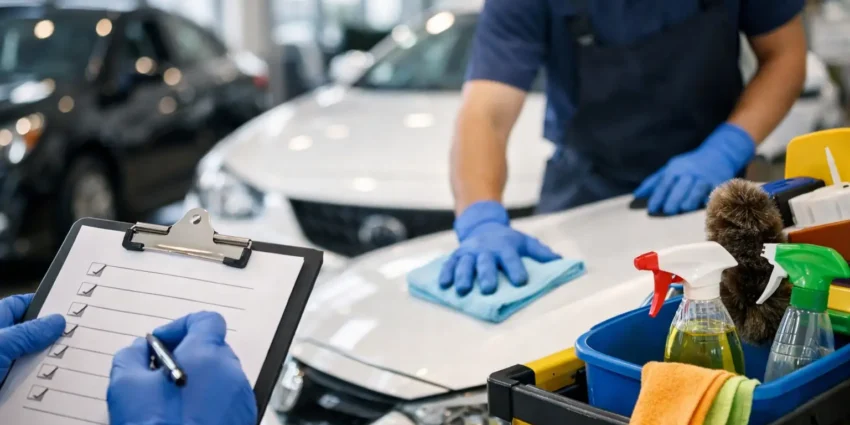
A customer may spend only a few minutes in your showroom before deciding whether your dealership feels trustworthy. Smudged glass, dusty vehicles, overflowing trash, or a neglected restroom can undermine the work your sales and service teams put into every interaction. This auto dealership cleaning checklist helps managers maintain the polished, safe environment customers expect from the moment they arrive.
A dealership is not one space with one cleaning need. It is a combination of a retail floor, office, waiting room, public restroom, service reception area, and active shop. Each area needs a clear standard, dependable scheduling, and attention at the right time of day.
Start With the Customer’s First Impression
The exterior, entry, and showroom set the tone before a salesperson says hello. In the Puget Sound area, rain, road grit, and wet footwear can quickly make these surfaces look neglected. A daily walk-through should happen before opening, after peak traffic, and again before closing.
Check entrance doors for fingerprints, clean the glass inside and out, and make sure door handles are disinfected. Sweep or vacuum entry mats, remove litter from sidewalks and parking areas near the entrance, and address standing water that could create a slip hazard. If weather conditions are severe, these tasks may need more than one pass during the day.
Inside the showroom, focus on details that customers notice at eye level: windows, display screens, sales desks, seating, beverage stations, and the vehicles themselves. Dust can settle quickly on dashboards, center consoles, display stands, and window ledges. Use products appropriate for interior vehicle surfaces, especially around touchscreens and high-gloss trim, so cleaning does not leave streaks or residue.
Daily Auto Dealership Cleaning Checklist
A practical daily checklist keeps responsibilities clear and makes missed tasks easier to catch. The following areas should receive routine attention, with frequency adjusted for traffic, weather, and dealership hours.
- Showroom and sales floor: Vacuum carpets and rugs, damp mop hard floors, spot-clean glass, dust furniture and displays, empty trash, disinfect touchpoints, and remove fingerprints from vehicles on display.
- Customer lounge and waiting area: Wipe tables, clean coffee and refreshment areas, sanitize chair arms and shared surfaces, straighten reading materials, vacuum upholstery as needed, and remove food waste promptly.
- Restrooms: Refill soap, paper towels, tissue, and sanitizer; clean and disinfect toilets, sinks, counters, faucets, door handles, and floors; then inspect for odor, leaks, and damaged fixtures.
- Service reception and cashier areas: Clean counters, payment terminals, pens, clipboards, key drop boxes, customer seating, and glass partitions. Trash should be removed before it becomes visible or creates odor.
- Employee offices and break rooms: Empty wastebaskets, disinfect shared tables and appliance handles, wipe counters, clean floors, and maintain supplies. A clean back-of-house area supports staff morale and reduces the chance of mess moving into customer spaces.
- Service bays and technician walkways: Remove loose debris, address spills using approved procedures, sweep walkways, empty designated waste containers, and keep exits, eyewash stations, and access points clear.
Daily cleaning is not only about appearance. It also supports safer movement through the facility, especially where rainwater, oil, grease, and tire residue can reach walking surfaces.
Build a Weekly Detail-Cleaning Routine
Daily service keeps the dealership presentable. Weekly work handles the buildup that is easy to overlook during a busy sales weekend or service rush. Assign these tasks to a recurring schedule rather than waiting for a problem to become visible.
Deep vacuum showroom carpets, including edges and under movable furniture. Machine-scrub hard floor areas when traffic and flooring type warrant it. Clean interior glass partitions, low walls, baseboards, vents, and window tracks. Dust high shelves, signage, decorative fixtures, and areas behind reception desks.
Restrooms deserve a deeper weekly inspection. Clean grout lines and partitions, polish fixtures, remove mineral buildup where needed, and check dispensers and drains. A restroom can appear acceptable at a glance while still holding odors or residue that customers immediately associate with poor facility care.
In the customer lounge, clean upholstery, wipe down vending equipment, sanitize refrigerator handles, and inspect the condition of furniture. Stained seating, worn floor mats, and grimy charging stations are small issues that can make a waiting period feel longer than it is.
Service Bay Cleaning Requires a Different Standard
Service departments need more than routine janitorial care. The right approach protects employees, keeps walkways clear, and respects the materials used in an automotive environment. Oil, fluids, metal shavings, brake dust, and chemical residues should never be handled like ordinary office dirt.
Use clearly labeled containers for waste and follow the dealership’s procedures for hazardous materials. Cleaning staff should know which spills require immediate escalation and which products are approved for bay floors and equipment areas. Water-only mopping can spread oily residue, while the wrong degreaser can damage surfaces or create a safety issue.
Bays should be swept consistently, but production schedules matter. Cleaning crews need access without blocking technicians, moving tools, or interfering with vehicles. Many dealerships benefit from scheduled evening or early-morning service, plus a simple daytime response plan for spills and high-traffic areas.
This is where a commercial cleaning provider should be flexible. A cleaning plan that works for a quiet office may not work for a service lane handling dozens of vehicles each day.
Do Not Forget High-Touch and High-Visibility Areas
Customers and employees interact with more surfaces than most facility checklists capture. These touchpoints deserve regular disinfection, particularly during cold and flu season or when the dealership has heavy weekend traffic.
Pay close attention to door hardware, sales desk phones, keyboards, payment devices, tablet screens, key fobs, coffee machine controls, refrigerator handles, water dispensers, and restroom fixtures. The goal is not to coat every surface with harsh chemicals. It is to use appropriate products and procedures that clean effectively without damaging electronics, finishes, or vehicle interiors.
High-visibility areas also include exterior signage, customer shuttle waiting points, service lane windows, and child play areas, if your dealership has them. These spaces are easy to miss because they sit outside the main showroom routine, but they are part of the customer experience.
Set Clear Ownership and Inspection Standards
A checklist only works when someone owns it. Your facility manager, office manager, or designated service leader should know what is completed daily, what is completed weekly, and who to contact when a condition needs immediate attention.
Use a simple inspection process rather than relying on assumptions. Walk the customer route from the parking lot to the showroom, restroom, lounge, and service counter. Look for streaked glass, full trash cans, odors, worn mats, slippery floors, and empty dispensers. This route-based inspection identifies issues in the order a customer experiences them.
Document recurring concerns. If a restroom runs out of supplies every Saturday afternoon, adjust the replenishment schedule. If the entrance floor stays wet during a rainy week, add mat service or increase cleaning frequency. The best cleaning plan responds to how your dealership actually operates, not a generic schedule copied from another facility.
When to Use a Professional Cleaning Team
In-house staff can often handle quick touch-ups, but recurring commercial cleaning brings consistency to the full facility. It is especially useful when your team is already focused on sales, customer service, inventory, and repair work. A professional team can provide scheduled cleaning, detailed restroom care, floor maintenance, high-dusting, and specialty work without pulling employees away from their primary responsibilities.
Ask for a scope that separates daily, weekly, and periodic tasks. Pricing should be clear, schedules should fit dealership operations, and the cleaning company should be licensed and insured. If you operate a large showroom, high-volume service department, or multiple locations, confirm that the provider can adjust staffing and frequency as business changes.
For dealerships across Seattle’s Eastside and the broader Puget Sound area, Armani Janitorial can build a dependable cleaning schedule around your hours, customer traffic, and facility needs. The right standard is simple: every customer should walk in feeling that your dealership is organized, cared for, and ready to earn their business.