
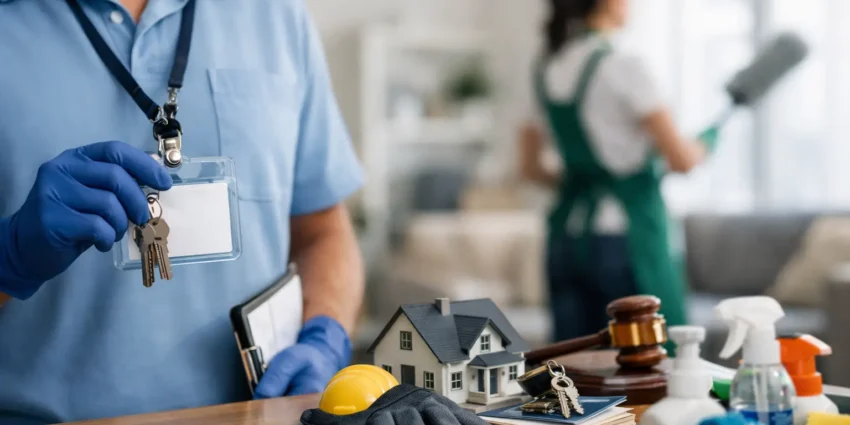
A cleaning crew often works when your team has gone home, with access to workspaces, inventory, equipment, guest areas, and sensitive surfaces. That is why choosing licensed bonded insured cleaners is more than a box to check on a vendor form. It is a practical decision that helps protect your facility, your people, and your daily operations.
For office managers, property managers, hospitality operators, and site supervisors across the Seattle Eastside and Puget Sound area, dependable cleaning should not come with unanswered questions. You need to know who is entering your building, what happens if something goes wrong, and whether your provider can consistently meet the schedule you agreed on.
What Licensed, Bonded, and Insured Actually Means
These terms are often grouped together, but they cover different parts of a commercial cleaning company’s responsibility. Asking about all three gives you a clearer picture of how a provider operates.
Licensing confirms a legitimate business operation
A licensed cleaning company has completed the required business registration and licensing steps to operate in its service area. Requirements can vary by city, county, and state, so a license is not a universal measure of cleaning quality. It does, however, show that the company is operating as a legitimate business rather than an informal side job.
For commercial clients, that matters during vendor onboarding, lease compliance, and contract review. A properly established provider is generally better prepared to provide estimates, invoices, service agreements, and clear points of contact. Those basics make it easier to manage a long-term cleaning relationship.
Bonding offers protection against dishonest acts
A janitorial bond is designed to provide a form of financial protection if an employee commits certain dishonest acts, such as theft, while working at a client site. The exact coverage depends on the bond and its terms, which is why it is reasonable to ask a cleaning provider what their bond covers and how a claim would be handled.
Bonding does not mean a problem is expected. It means the company has taken an additional step to address a concern that naturally comes with after-hours building access. For businesses with computers, merchandise, tools, records, keys, or guest property on site, that added accountability can bring real peace of mind.
Insurance addresses accidents and damage
Insurance is often the most immediate concern for commercial property managers and business owners. General liability coverage can help respond to third-party bodily injury or property damage claims. Workers’ compensation coverage helps protect workers who are injured while performing their duties.
Consider a few realistic situations: a cleaner slips on a wet entryway, a vacuum damages a wall finish, a cleaning solution affects a specialty floor, or equipment is accidentally damaged during a post-construction cleanup. No one plans for these events, but a professional provider should be prepared to respond responsibly if they occur.
Insurance limits and coverage types matter. A warehouse with expensive equipment, a hotel with public guest areas, and a small professional office do not carry the same exposure. Ask for a current certificate of insurance and verify that the coverage aligns with your facility’s requirements.
Why Licensed Bonded Insured Cleaners Reduce Operational Risk
Commercial cleaning is not simply about emptying trash and wiping visible surfaces. A reliable crew works around your business operations, often in spaces where cleanliness, safety, and presentation affect customers and employees every day.
When you hire a provider that is properly licensed, bonded, and insured, you reduce the risk of being left to manage a preventable problem on your own. You also have a more accountable business partner if service questions, access issues, or incident reporting needs arise.
This is especially relevant for facilities that cannot afford disruption. A restaurant may need dependable kitchen and dining-area cleaning before the next shift. An office may require a consistent evening schedule so employees arrive to a clean workspace. A hotel, resort, or casino needs careful work that supports guest expectations without interfering with operations. Post-construction sites need crews that understand how to remove dust, debris, and residue safely before turnover.
The right provider helps make these responsibilities easier to manage. They should communicate clearly, arrive when scheduled, use appropriate cleaning methods, and address concerns quickly. Credentials support that professionalism, but they should be part of a broader standard of service rather than the only reason to hire a company.
Credentials Matter, but Consistency Matters Too
A company can have the right paperwork and still fail to deliver reliable service. That is why commercial clients should evaluate credentials alongside day-to-day performance.
Start with the scope of work. A detailed estimate should identify the areas to be cleaned, the expected frequency, and any specialty services such as floor care, hospitality cleaning, restroom sanitation, or post-construction cleanup. Vague promises can lead to inconsistent results and disagreements about what was included.
Then look at scheduling. For many facilities, the best cleaning service is the one that arrives at the same day and time, completes the agreed work, and does not require repeated follow-up. A flexible schedule is valuable when your hours change, but consistency is what prevents cleaning from becoming another task on your team’s list.
Pricing also deserves direct attention. The lowest estimate is not always the best value if it excludes essential tasks, relies on rushed labor, or leads to unexpected charges later. Transparent pricing gives you a realistic understanding of what the service includes and helps you budget with confidence.
Finally, pay attention to responsiveness. If a spill, event, inspection, tenant turnover, or construction deadline creates an urgent need, you should know who to contact and what response to expect. A commercial cleaner should treat communication as part of the service, not as an extra.
Questions to Ask Before Hiring a Commercial Cleaner
Before signing an agreement, a short conversation can reveal whether a cleaning company is organized enough for your facility. Ask whether the business is licensed to operate in your area, whether it is bonded, and what insurance it carries. Request current documentation if your building, property owner, or vendor policy requires it.
You should also ask how the company screens and trains its cleaning staff, who supervises quality, and how access keys, alarm codes, and restricted areas are handled. For recurring service, ask whether the same team or a consistent crew lead will be assigned whenever possible. Familiarity with your facility can improve efficiency and reduce missed details.
It is useful to discuss supplies and equipment as well. Find out whether the provider brings commercial-grade products, how they handle specialty surfaces, and whether your facility has preferences for cleaning products or procedures. A medical-adjacent office, food-service operation, auto dealership, or newly completed construction project may require a different approach than a standard office suite.
For larger properties, ask how the provider handles quality checks and service recovery. If a restroom needs extra attention or a high-traffic lobby is not meeting expectations, you need a clear process for reporting the issue and getting it resolved. The goal is not to assume problems will happen. It is to choose a provider that has a practical plan if they do.
The Right Fit Depends on Your Facility
Not every commercial site needs the same level of service or carries the same risk. A small office may prioritize reliable weekly cleaning and secure after-hours access. A property manager may need a vendor that can support common areas, tenant turnovers, and changing schedules. A hospitality operation may need frequent service, detailed presentation standards, and discreet crews who work around guests.
A post-construction project creates another set of needs. Fine dust can settle on ledges, fixtures, floors, and ventilation-adjacent surfaces long after visible debris has been removed. Cleaning crews must have the right equipment, staffing, and timeline discipline to prepare the property for inspection, occupancy, or handoff.
This is where commercial specialization makes a difference. Armani Janitorial works with businesses that need recurring janitorial service and specialty cleaning handled with clear communication, dependable scheduling, and no hidden fees. The purpose is straightforward: keep your facility ready for employees, customers, tenants, guests, or the next phase of your project.
Make Trust Part of the Service Standard
A clean facility reflects on your business, but the cleaning relationship itself should also feel organized and secure. Licensing, bonding, and insurance help establish the foundation. Clear expectations, consistent crews, transparent pricing, and responsive communication are what make that foundation useful over time.
Before choosing a cleaning provider, take a few minutes to verify the details that protect your property and simplify your workday. The right partner will answer directly, provide documentation when needed, and treat your facility with the care it deserves.