
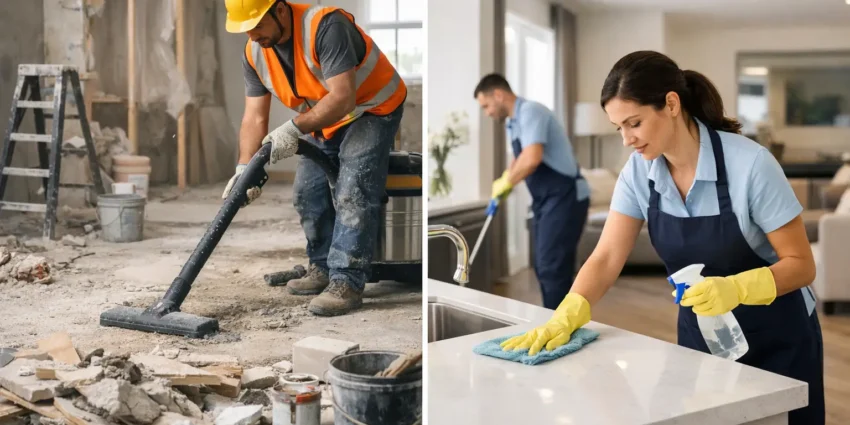
A commercial space can look finished long before it is ready for employees, tenants, guests, or an opening inspection. The difference between post construction cleanup vs final cleaning matters because each service addresses a different point in the project timeline. When the scope is unclear, property managers and site supervisors can end up with dust on every surface, delayed turnover, and a cleaning crew arriving before the jobsite is truly ready.
For a smooth handoff, cleaning should be treated as part of the construction closeout plan, not an afterthought. The right service depends on the condition of the site, the remaining work, the building materials involved, and the standard required before occupancy.
What Is Post-Construction Cleanup?
Post-construction cleanup is the broader process of removing the mess created by construction, renovation, or tenant improvements. It can begin while work is still wrapping up and may occur in multiple phases. The goal is to make the space safe, clean, and presentable after trades have completed their work.
Construction leaves behind more than obvious debris. Fine drywall dust settles into ledges, vents, light fixtures, cabinet interiors, and flooring edges. Adhesive residue, paint splatter, labels, protective film, sawdust, grout haze, and packaging materials can all remain after the contractors leave. In a warehouse, office suite, restaurant, hotel, or dealership, those details affect both the appearance of the space and its readiness for use.
A post-construction cleaning scope often includes removal of loose debris, detailed dusting, vacuuming, cleaning of interior glass, wiping walls and fixtures, cleaning restrooms and break areas, and mopping or treating floors. The exact tasks should match the condition of the property. A newly built medical office, for example, may need intensive dust removal in millwork and ventilation grilles, while a renovated restaurant may require close attention to kitchen-adjacent surfaces, grease residue, and glass.
What Is Final Cleaning?
Final cleaning is usually the last detailed cleaning performed after construction is complete and the site is ready for a finishing touch. It is focused on presentation. The final clean addresses the fingerprints, smudges, light dust, and missed details that can remain after the heavier post-construction work is done.
At this stage, the floors should be clear, permanent fixtures installed, and contractors largely off-site. The space should not be generating new dust from sanding, drilling, or cutting. A final cleaning crew can then focus on making the property ready for a client walkthrough, punch-list review, tenant move-in, grand opening, or occupancy.
Final cleaning commonly includes polishing interior glass, spot-cleaning walls and doors, wiping fixtures, cleaning counters and cabinetry, sanitizing restrooms, vacuuming carpets, damp-mopping hard floors, and addressing any visible dust or debris. It may also include cleaning appliances, elevator interiors, entryways, and other high-visibility areas.
The key point is that final cleaning is not always a separate service. Some contractors and cleaning companies use the phrase to describe the final phase of a larger post-construction cleaning project. Others use it to mean a standalone detail clean after a prior rough clean. The label matters less than a written scope that clearly defines what will be cleaned and when.
Post Construction Cleanup vs Final Cleaning: The Main Difference
The simplest distinction is timing and intensity. Post-construction cleanup handles the broad, heavy-duty cleaning required after building work. Final cleaning handles the finishing details needed to present the completed space.
Post-construction cleanup may require multiple visits because construction activities create new dust and debris as the project progresses. Final cleaning is typically scheduled once the work is complete, the site is accessible, and the remaining items are cosmetic rather than construction-related.
There is also a practical difference in labor and equipment. A larger post-construction project may require debris removal, commercial vacuums with proper filtration, floor care equipment, and teams prepared to work around a closeout schedule. Final cleaning is more detail-oriented. It requires careful inspection and thorough execution, especially in customer-facing areas where small marks are immediately noticeable.
For many commercial projects, the best approach is not choosing one service over the other. It is scheduling both in the right sequence.
When You Need Both Services
A full construction cleanup plan is often divided into rough cleaning, detail cleaning, and final cleaning. This phased approach is especially useful for larger renovations, new builds, and occupied facilities where certain areas must be turned over before the full project is done.
Rough cleaning removes larger debris and prepares the space for the next stage of work. Detail cleaning removes construction dust, residue, and grime after major installations are complete. Final cleaning occurs after the final trades have finished and before the client, tenant, or public enters the space.
This sequence reduces rework. If a cleaning crew performs a detailed final clean before ceiling work, flooring installation, or final touch-up painting is complete, the space may need to be cleaned again. That costs time and money, and it can put pressure on an already tight opening schedule.
For an office tenant improvement in Bellevue or Redmond, a phased plan may allow the contractor to complete the main workspace while cleaners prepare finished conference rooms, restrooms, and reception areas for turnover. For hospitality and retail properties, the final cleaning should be timed as close as possible to opening day without interfering with inspections, furniture delivery, or merchandising.
Questions to Set the Right Scope
Before requesting an estimate, gather clear information about the site. A professional cleaning provider can build a more accurate plan when the project team can answer a few operational questions:
- Is construction fully complete, or are trades still working in the space?
- Are there large debris piles, protective coverings, stickers, or leftover materials to remove?
- What types of flooring, glass, fixtures, and specialty surfaces are installed?
- Does the project require one cleaning visit or multiple scheduled phases?
- Is the goal a construction closeout, inspection, tenant handoff, or public opening?
Photos, floor plans, and a walkthrough are helpful because construction conditions vary widely. Two spaces with the same square footage can require very different levels of labor. A small office with heavy drywall dust may take more detailed work than a larger space that has already received a rough clean.
Avoiding Common Turnover Problems
The most common issue is scheduling cleaners too early. Construction may appear complete, but ongoing punch-list work can create fresh dust, footprints, and debris within hours. Whenever possible, schedule the final clean after sanding, drilling, overhead work, flooring installation, and final paint touch-ups are complete.
Another issue is assuming routine janitorial service can replace post-construction cleaning. Recurring office cleaning is designed to maintain a finished, occupied facility. It is not typically designed to remove grout haze, construction labels, heavy dust buildup, or adhesive residue left after a renovation. Those tasks need a defined post-construction scope and the right tools, products, and staffing.
It also helps to clarify responsibility for waste. Cleaning crews can remove normal construction-related debris when included in the scope, but large material disposal, hazardous waste, and contractor equipment should be addressed separately. Clear expectations prevent delays and unexpected charges.
Finally, inspect the space in stages. A walkthrough before the final clean helps identify areas that are still under construction. A second walkthrough after cleaning confirms that high-visibility details such as glass, floors, restrooms, entrances, and reception areas meet the required standard.
Choosing a Commercial Cleaning Partner
For commercial turnover projects, dependability matters as much as cleaning quality. The provider should communicate clearly, provide a transparent estimate, carry appropriate insurance, and have the capacity to work within the construction schedule. Ask how the company handles scope changes, whether it can support phased cleaning, and what happens if the site is not ready at the scheduled time.
Armani Janitorial approaches post-construction work with the same focus it brings to ongoing commercial cleaning: clear scheduling, thorough execution, and practical service that helps businesses open or hand over their space with confidence. The objective is not simply to make a building look cleaner. It is to remove the final operational obstacle between a completed project and a space that is ready to work.
A well-timed cleanup plan gives your project team room to finish strong. Define the condition of the site, confirm the cleaning phases, and schedule the final detail work when the last trade has truly stepped away. That is when a completed construction project starts to feel like a finished business space.