
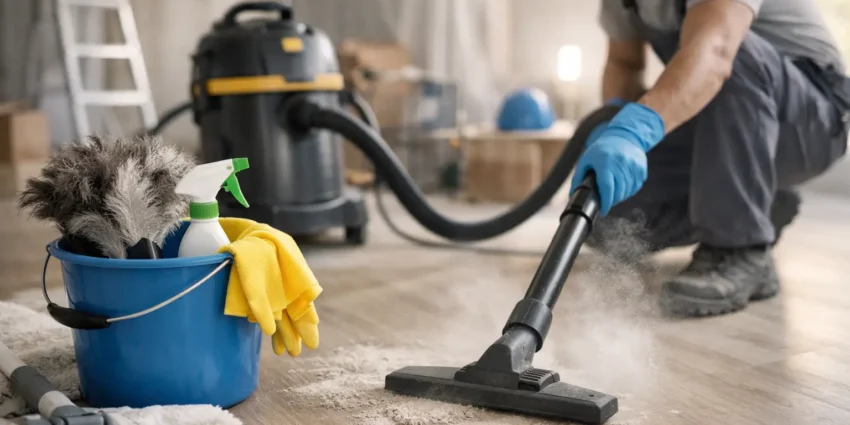
Construction dust has a way of showing up after everyone believes the project is finished. It settles on window ledges, inside cabinets, over HVAC vents, and across floors that looked clean the day before. The best ways to remove construction dust are methodical, not rushed: contain it, capture it with the right equipment, clean from high to low, and repeat the process until the space is ready for occupants.
For office managers, property managers, contractors, and hospitality operators, this is more than a presentation issue. Fine dust can affect indoor air quality, leave a poor first impression, interfere with equipment, and create unnecessary callbacks before a tenant move-in or opening day.
Why construction dust needs a different cleaning process
Post-construction dust is not the same as ordinary office dust. It can include drywall compound, sawdust, concrete particles, silica-containing debris, insulation fibers, paint residue, and fine grit from flooring or tile work. Much of it is small enough to become airborne again when it is swept, dry-dusted, or disturbed by foot traffic.
That is why a quick vacuum and wipe-down rarely solve the problem. Cleaning crews need to remove visible debris first, then address the fine particulate that settles again after the initial pass. The right process also protects finished surfaces. Scrubbing a newly installed floor with the wrong pad or dragging grit across glass can create damage that is far more expensive than the cleaning itself.
Start with safety, access, and dust containment
Before cleaning begins, walk the site with the project lead or facility contact. Confirm that painting, sanding, cutting, grout work, and other dust-producing tasks are complete. Cleaning while active construction continues usually leads to wasted labor and inconsistent results.
Identify areas that need special handling, including server rooms, kitchens, medical spaces, guest rooms, finished flooring, and areas with newly installed glass or fixtures. Make sure electrical work is complete and that wet cleaning will not create a risk around exposed outlets or unfinished systems.
Containment matters most when one portion of a building is opening while another remains under construction. Use temporary barriers, keep doors closed where practical, and avoid moving dust through shared corridors or occupied areas. In commercial settings, scheduling work during off-hours can reduce disruption and prevent dust from spreading through normal operations.
If the project involves suspected hazardous materials, visible mold, lead-based paint, or a significant amount of silica dust, standard post-construction cleaning is not enough. Those conditions may require specialized assessment, containment, and regulatory procedures.
Use HEPA-filtered vacuums before wiping surfaces
A commercial HEPA vacuum is one of the most effective tools for removing fine construction dust. HEPA filtration helps capture small particles rather than sending them back into the room through the exhaust. This is especially valuable for drywall dust, fine sawdust, and debris that collects in corners, baseboards, vents, upholstery, and carpet edges.
Vacuum hard floors, carpet, ledges, window tracks, inside cabinets, and horizontal surfaces before wet wiping them. Use soft brush attachments for delicate fixtures, blinds, and painted surfaces. For carpeted areas, make slow, overlapping passes. A fast pass can pick up visible dirt while leaving embedded fine dust behind.
Do not rely on household vacuums for a large commercial cleanup. Their filters may clog quickly, and some units can exhaust fine particles back into the air. The same concern applies to dry sweeping. A broom can move dust from one place to another, but it does not remove it from the building.
Clean HVAC components carefully
Construction dust often finds its way into supply vents, return grilles, and nearby ceiling surfaces. Vacuum vent covers and surrounding areas with the right attachment, then wipe them with a lightly damp microfiber cloth. Replace HVAC filters if construction activity has loaded them with dust.
Avoid turning on a system that has not been checked after a dusty project. Air movement can redistribute particles throughout a finished office, hotel room, restaurant, or retail space. For extensive contamination within ductwork, facility managers should consult a qualified HVAC professional rather than trying to clean inaccessible components themselves.
Clean from the ceiling down
The most reliable order of operations is high to low. Start with ceilings, exposed beams, light fixtures, sprinkler heads, vents, and high ledges. Then move to walls, doors, trim, windows, counters, cabinets, furniture, and finally floors.
This sequence prevents dust from falling onto areas that have already been cleaned. It also makes inspections more efficient because the team can work through each room in a consistent order. On larger properties, divide the project by zone and complete each zone fully before moving to the next.
Use microfiber cloths and mop heads because they hold fine particles better than cotton rags. Change them frequently. A cloth that is already loaded with drywall dust can leave streaks on glass and spread residue across finished surfaces. For heavily dusty areas, use a damp microfiber method rather than soaking surfaces. Too much water can damage wood, lift dust into paste-like residue, or leave moisture in seams and corners.
Choose cleaning products that match the surface
The goal is to remove dust without harming the new finish. Neutral cleaners are generally suitable for many hard, washable surfaces, but flooring, stone, stainless steel, glass, and specialty coatings can have different requirements.
Glass and mirrors should be vacuumed around the frames first, then cleaned with a lint-free cloth to prevent grit from scratching the surface. Stainless steel should be wiped in the direction of the grain. Newly finished floors may need a manufacturer-approved cleaner, especially luxury vinyl tile, natural stone, sealed concrete, and hardwood.
Be cautious with aggressive degreasers, abrasive pads, and high-alkaline chemicals. They may be appropriate in limited situations, such as removing adhesive residue or heavy construction grime, but only after confirming that the material can tolerate them. When in doubt, test a small, inconspicuous area first.
Plan for multiple passes, not one final clean
One of the best ways to remove construction dust is to recognize that a single pass is rarely the final answer. Fine particles continue to settle after cleaning crews leave a room, particularly if doors open, air systems run, or other trades are still working nearby.
Many commercial projects benefit from a phased approach. A rough clean removes bulk debris, labels, packaging, and obvious dirt. A detailed clean addresses surfaces, fixtures, interior glass, restrooms, kitchens, and floors. A final touch-up takes place after the site has been quiet long enough for residual dust to settle and before the handoff, inspection, or occupancy date.
This approach is often more efficient than trying to deliver a perfect finish during active construction. It also gives the property manager or contractor a clearer view of remaining punch-list items, paint touch-ups, damaged finishes, and incomplete work.
Inspect the details that tenants and guests notice
A final inspection should not stop at open floor space. Check window tracks, door frames, cabinet interiors, baseboards, wall corners, outlets, light switches, restroom partitions, and the tops of fixtures. Run a clean microfiber cloth over ledges and counters. If the cloth comes away dusty, the room is not ready.
Look at floors from multiple angles with lights on. Fine dust can appear as haze on dark flooring, glass, and glossy surfaces. In hospitality spaces, inspect headboards, closet shelves, air vents, and bathroom fixtures. In offices, give extra attention to workstations, conference rooms, break areas, and entryways where first impressions form quickly.
For commercial sites across the Puget Sound area, Armani Janitorial provides post-construction cleaning that follows a practical, detail-focused process built around the condition of the property and the required handoff date. Licensed and insured cleaning support can reduce the burden on site teams while keeping the final cleanup organized and on schedule.
A clean handoff is not just about making a new space look finished. It gives tenants, employees, guests, and customers a healthier, more professional environment from their first day inside.
6 comments