
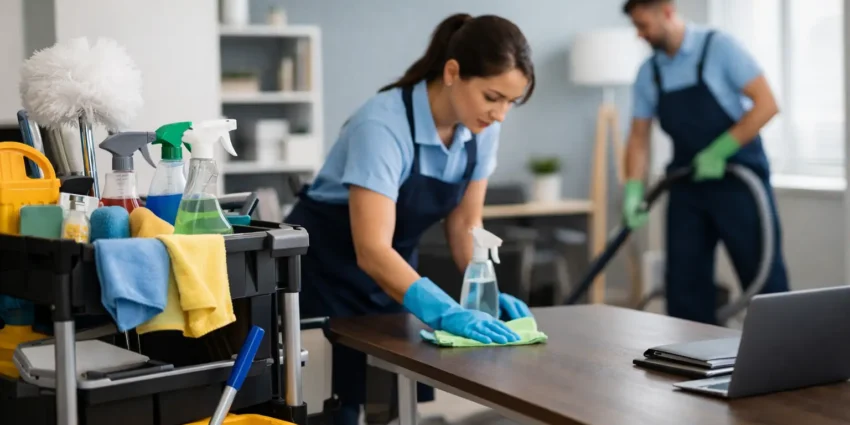
If you are comparing vendors or building a cleaning scope for your property, a clear commercial cleaning services list saves time and avoids missed expectations. It gives office managers, property managers, and site supervisors a simple way to match cleaning tasks to the kind of facility they operate, how often service is needed, and what level of detail the space actually requires.
The challenge is that commercial cleaning is not one service. An office with daily traffic needs a different plan than a warehouse, restaurant, hotel, or post-construction site. Some businesses need dependable recurring janitorial work at the same day and time each week. Others need specialty cleaning that handles heavy dust, grease, debris, or high-touch public areas where appearance and sanitation matter just as much as routine upkeep.
What belongs on a commercial cleaning services list
A useful commercial cleaning services list should do more than name a few tasks. It should define the work clearly enough that both the customer and the cleaning company know what is included, what is optional, and what may require a separate estimate.
For most commercial properties, that starts with routine janitorial service. This usually includes trash removal, dusting, vacuuming, mopping, restroom cleaning, restocking consumables if provided, breakroom cleaning, and wiping high-touch surfaces. These are the core services that keep a workplace presentable, sanitary, and ready for employees, customers, and tenants.
Floor care often sits in its own category because not every floor needs the same treatment. Carpet vacuuming may be part of standard service, but carpet extraction, hard floor scrubbing, stripping, waxing, and buffing are often scheduled separately. A facility with high foot traffic may need more frequent floor attention than a quieter office suite.
Glass cleaning is another common item, especially in lobbies, entry doors, conference rooms, retail-style fronts, and auto dealerships. Interior glass may be included in regular service, while exterior windows often depend on height, access, and safety requirements.
Disinfection and touchpoint cleaning can also be part of the scope, especially in shared workplaces, hospitality settings, and customer-facing businesses. This may include door handles, counters, phones, elevator buttons, railings, and shared equipment. The right frequency depends on traffic volume and how the space is used during the day.
Recurring janitorial services for offices and commercial spaces
For many businesses, recurring service is the foundation of the cleaning plan. Offices, professional suites, medical-adjacent admin spaces, and mixed-use commercial buildings usually benefit from scheduled visits that happen consistently without constant follow-up.
A recurring schedule may be daily, several times per week, weekly, or customized around business hours. The right frequency depends on headcount, visitor traffic, restroom use, food consumption onsite, and the image the business wants to maintain. A busy office with shared kitchens and conference rooms will usually need more frequent service than a small administrative space with limited staff.
Common recurring janitorial services include lobby and reception cleaning, workstation dusting, restroom sanitation, breakroom cleanup, trash collection, floor care, and touchpoint wiping. For property managers, this kind of predictable service reduces complaints and helps common areas stay under control. For business owners, it means less time spent chasing down cleaning issues that should have already been handled.
Consistency matters as much as the task list. A good service plan should be easy to understand, performed on schedule, and priced clearly so there are no surprises when the invoice arrives.
Specialty cleaning services by facility type
Not every commercial property can be cleaned with the same checklist. That is where specialty cleaning services become important.
Hospitality cleaning
Hotels, resorts, and casinos have a higher visibility standard than many other businesses. Guests notice floors, restrooms, lobby surfaces, elevators, and public spaces immediately. Cleaning in these properties is not just about hygiene. It directly affects reviews, customer satisfaction, and brand reputation.
Hospitality cleaning often includes public area maintenance, restroom detailing, floor care, trash removal, glass cleaning, and attention to high-touch zones throughout the property. Scheduling also matters. Service needs to happen with minimal disruption to guests and staff operations.
Restaurant cleaning
Restaurants need cleaning that supports both presentation and sanitation. Dining areas, restrooms, host stands, and entryways need to stay clean for customers, while back-of-house areas often require extra attention to grease, buildup, and floor conditions.
This is one of the clearest examples of why a generic checklist is not enough. A restaurant may need routine front-of-house cleaning along with more targeted service for kitchen-adjacent surfaces or periodic deep cleaning support.
Warehouse and industrial-adjacent cleaning
Warehouses and distribution environments usually deal with dust, debris, forklift traffic, packaging waste, and large floor areas. The cleaning plan should reflect safety and workflow, not just appearance.
In these spaces, priorities often include debris removal, dust control, restroom cleaning, breakroom maintenance, and keeping walkways, entrances, and employee areas in good condition. Some warehouses also need more flexible scheduling to avoid interrupting operations.
Auto dealership cleaning
Auto dealerships combine office, showroom, customer lounge, and service-area needs in one facility. That means the cleaning scope often has to balance polished presentation with practical maintenance.
Showroom floors, glass, restrooms, waiting areas, offices, and service counters all shape the customer experience. A dealership that looks clean and organized reinforces trust before a sales conversation even starts.
Post-construction cleaning on a commercial cleaning services list
Any serious commercial cleaning services list should include post-construction cleaning, because this work is very different from routine janitorial service. After a build-out, renovation, or new construction project, surfaces may be covered with fine dust, adhesive residue, packaging debris, and construction-related dirt that needs detailed removal.
Post-construction cleaning usually includes dust removal from horizontal and vertical surfaces, vacuuming and mopping, cleaning fixtures, wiping walls where needed, detail cleaning of trim and ledges, restroom cleanup, and removal of leftover debris that can be safely handled by the cleaning crew. In many cases, glass and floors also need extra attention because construction dust settles everywhere.
Timing matters here. Cleaning too early can mean the space gets dirty again before turnover. Cleaning too late can delay occupancy or final presentation. That is why commercial site supervisors and property managers usually benefit from a cleaning partner who can coordinate around project schedules and stay within budget.
How to choose the right services for your facility
The best cleaning plan starts with the building itself. Square footage matters, but use matters more. A smaller restaurant can demand more detailed cleaning than a larger office. A warehouse may need fewer touchpoint tasks but more debris control. A hotel lobby may need repeated attention throughout the week because the standard for appearance is simply higher.
It also helps to separate must-have services from occasional extras. Routine tasks should cover what keeps the facility consistently clean and operational. Periodic services should address wear, buildup, and presentation issues that develop over time, such as deep floor care, detailed glass cleaning, or post-project cleanup.
Budget is part of the equation, but so is reliability. A lower price does not help if the crew arrives late, misses items in the scope, or creates more follow-up work for your team. Most commercial customers are not looking for the cheapest possible option. They are looking for dependable service, clear communication, and pricing that matches the work promised.
What to ask before approving a cleaning scope
Before you move forward with any provider, review the service list carefully. Make sure the proposal explains what is included in each visit, what happens on a periodic basis, and what falls outside the standard scope. This is where hidden costs often show up if the details are vague.
You should also confirm that the company is licensed and insured, understands your facility type, and can maintain a schedule that works for your operations. A cleaning company that specializes in commercial environments will usually be better prepared for access procedures, safety expectations, and the need for consistent quality over time.
For businesses across Seattle’s Eastside and the Puget Sound area, that level of clarity matters. Whether the need is recurring office cleaning, hospitality support, or post-construction cleanup, the right service list should make your job easier, not more complicated.
A strong cleaning plan is not about adding every possible service. It is about choosing the right ones, setting clear expectations, and working with a team that shows up ready to do the job right.
One comment on “Commercial Cleaning Services List for Businesses”