A restroom can shape a customer’s opinion of your business in less than a minute. Empty soap dispensers, overflowing trash, odors, or visibly soiled fixtures suggest that the rest of the facility may be receiving the same level of attention. A reliable commercial restroom cleaning protocol prevents those avoidable problems while supporting a healthier, more professional environment for employees, visitors, and tenants.
For busy facility managers, the goal is not simply to make restrooms look clean at the start of the day. The goal is consistent condition throughout operating hours, with a process that is practical for the building’s traffic level, layout, and business type.
What a Commercial Restroom Cleaning Protocol Must Cover
A complete restroom protocol addresses appearance, sanitation, supplies, odor control, and safety. These areas overlap. For example, a persistent odor may be caused by a missed floor drain, residue around toilet bases, a full sanitary waste container, or poor cleaning technique rather than a lack of air freshener.
The right schedule depends on use. A small professional office may need a detailed service once each business day and a quick midday supply check. A restaurant, hotel lobby, medical-adjacent space, warehouse, or high-traffic public facility may require multiple checks and touch-up cleanings during the day. Cleaning too infrequently creates complaints. Cleaning more often than necessary can add cost without improving results. A site assessment helps set a schedule that matches actual traffic patterns.
A written protocol also establishes accountability. It tells cleaning staff what to service, what condition to leave it in, which issues require reporting, and how to avoid cross-contamination between restrooms and other areas of the building.
Start With Safety and Preparation
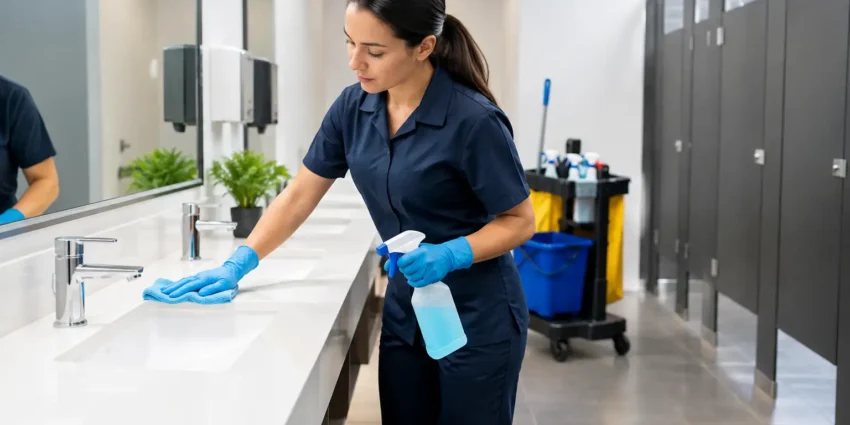
Before cleaning begins, staff should post wet-floor signs at the restroom entrance and wear the appropriate personal protective equipment. At minimum, that usually includes disposable gloves. Eye protection may be needed when using certain chemical products or handling splash-prone tasks.
The restroom should be stocked with color-coded cloths, a dedicated mop and bucket or microfiber floor system, a toilet brush used only for toilets, liners, and properly labeled cleaning products. Dedicated tools matter. Using the same cloth from a toilet area on a sink, counter, or door handle can spread contamination instead of removing it.
Cleaning teams should also review product labels before use. Disinfectants must remain wet on a surface for the stated contact time to work as intended. Wiping a disinfectant off immediately is a common mistake that can leave a surface looking polished without delivering the sanitation result the facility expects. Products should never be mixed, especially bleach with ammonia-based cleaners, because dangerous fumes can result.
Follow the Right Cleaning Order
The order of work makes a measurable difference. Start with cleaner areas and work toward dirtier ones, then clean from high surfaces down to the floor. This reduces the chance of recontaminating areas that have already been serviced.
First, remove trash and replace liners. Check sanitary waste receptacles, paper towel bins, and any disposal areas that could contribute to odor. Then replenish toilet paper, hand towels, soap, feminine hygiene supplies, and other site-specific products. It is more efficient to identify shortages early than to finish cleaning and return with supplies later.
Next, clean and disinfect high-touch points. These typically include entry door handles, stall latches, flush handles or buttons, faucet handles, soap dispensers, paper towel dispensers, dryer buttons, grab bars, baby-changing stations, and light switches. High-touch cleaning deserves attention between full services in busy restrooms, particularly during peak visitor periods.
Move to mirrors, sinks, counters, and fixtures after touchpoints have been addressed. Remove visible soil first, then apply the appropriate disinfectant where required. Mirrors need a streak-free finish, but clean glass is only one part of the result. Soap buildup around dispensers, water spots at faucet bases, and grime along counter edges are details visitors notice quickly.
Clean Toilets and Urinals Thoroughly
Toilets and urinals require separate, dedicated tools. Apply bowl cleaner according to product directions, including under rims and around water lines. Scrub the interior, then clean and disinfect exterior surfaces such as seats, lids, handles, hinges, tank tops, partitions, and bases.
Do not overlook the floor and wall area surrounding fixtures. Splash marks, urine residue, and moisture near toilet bases are common sources of odor and can create slip risks. Urinals need careful cleaning around the flush valve, divider walls, drain area, and lower wall surfaces where overspray may collect.
If a fixture is leaking, loose, clogged, damaged, or repeatedly producing odor after cleaning, the issue should be documented and reported promptly. Cleaning cannot correct a plumbing, ventilation, or hardware problem. Fast reporting helps prevent a minor maintenance issue from becoming a closed restroom or a customer complaint.
Finish With Floors and Drains
Floors should be serviced last. Sweep or vacuum loose debris before mopping, paying close attention to corners, behind doors, around fixture bases, and along walls. Use a clean mop head or microfiber pad and change solution as needed. A gray mop bucket used too long can redistribute soil and leave floors dull or sticky.
Floor drains need regular attention, especially in commercial restrooms with heavy use. Hair, paper debris, and buildup can contribute to slow drainage and unpleasant odors. The required frequency varies by facility. A hotel, restaurant, or high-traffic public restroom may need drain checks more often than a low-use office restroom.
Leave wet-floor signs in place until the floor is dry enough for safe foot traffic. For facilities that operate continuously, daytime cleaning should be planned around traffic whenever possible. A cleaner can still respond quickly to an urgent spill, but scheduled detailed floor care is often safer and more effective during lower-traffic periods.
Build Quality Checks Into the Protocol
A cleaning task is not complete when the cleaner leaves the room. It is complete when the restroom meets the site standard. Supervisory inspections and cleaning checklists help maintain that standard, especially in multi-restroom buildings or facilities with changing occupancy.
A practical final check should confirm that fixtures are clean, dry, and operational; trash is removed; supplies are available; floors are safe; mirrors are streak-free; and odors are controlled. It should also confirm that no supplies, equipment, or caution signs have been left behind unnecessarily.
For property managers and office administrators, a documented checklist provides useful visibility without requiring constant oversight. It can identify recurring problems such as a dispenser that runs out before the next scheduled visit, a stall latch that needs repair, or an area where cleaning frequency should be increased.
Adjust Service for Your Facility Type
Every commercial restroom shares the same basic sanitation needs, but the details change by environment. Office restrooms often benefit from dependable after-hours service and consistent restocking. Restaurants need closer attention to guest-facing presentation, peak meal periods, and odors. Warehouses may have more tracked-in dirt, larger floor areas, and shift-based demand. Hotels and hospitality properties need restrooms that remain guest-ready throughout the day, not only after overnight cleaning.
Seattle-area facilities also deal with wet-weather foot traffic for much of the year. Entry-adjacent restrooms may need additional floor monitoring when rain increases tracked-in moisture and debris. In Bellevue, Kirkland, Redmond, and surrounding Eastside locations, a cleaning schedule that worked during a quiet summer period may need adjustment when staffing levels, visitor volume, or weather conditions change.
When to Call for Additional Service
Recurring cleaning is the foundation, but some situations call for an added visit or a schedule change. Report unusual odor, drain backups, water leaks, vandalism, illness-related contamination, pest activity, or an unexpected increase in traffic as soon as possible. Waiting until the next regular appointment can affect safety, employee comfort, and customer perception.
A dependable cleaning partner should communicate clearly about what was found, what was handled, and what needs facility maintenance attention. Armani Janitorial builds commercial service plans around that kind of consistency, with scheduled cleaning designed to keep businesses presentable without hidden surprises.
The strongest restroom programs are not complicated. They are specific, repeatable, and adjusted when conditions change. When every visit follows a clear commercial restroom cleaning protocol, your facility is better prepared to make the quiet, positive impression that employees and visitors remember.
One comment on “Commercial Restroom Cleaning Protocol That Works”