
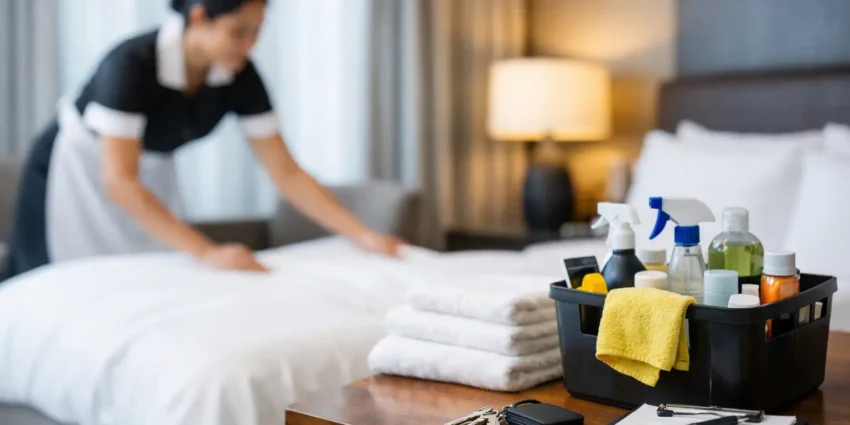
A guest who finds hair in the bathroom, an unmade bed, or a missed trash bin will remember that failure longer than a smooth check-in. This hospitality housekeeping outsourcing guide is built for hotel, resort, and casino operators who need dependable room turnover and public-area cleaning without adding daily staffing headaches.
Outsourcing can give your property more coverage, more flexibility, and a clearer path to consistent standards. It can also create problems if the provider lacks hospitality experience, communicates poorly, or treats a guest room like a general commercial cleaning assignment. The right decision comes down to understanding what to outsource, how to set expectations, and how to measure performance after service begins.
When Outsourced Housekeeping Makes Sense
Hospitality staffing needs rarely stay flat. Occupancy changes by season, events, weekends, group bookings, and unexpected maintenance issues. Hiring enough in-house employees to cover peak periods can leave a property overstaffed during slower weeks. Hiring too few can lead to late room releases, rushed attendants, and guest complaints.
A qualified housekeeping partner can provide scheduled support for daily turnover, deep cleaning, common areas, laundry support, or high-demand periods. This is especially useful for properties that need extra hands during a busy season, have difficulty filling open positions, or want management to spend less time recruiting and supervising cleaners.
Outsourcing is not automatically the best choice for every operation. A large property with stable occupancy, established supervisors, and a strong internal housekeeping department may prefer to retain core functions in-house. A hybrid model often works well: keep leadership and guest-facing inspection roles internal while using a commercial cleaning partner for supplemental staffing, overnight common-area work, deep cleaning, or vacant-room resets.
Define the Scope Before Requesting Estimates
Vague requests produce vague pricing and inconsistent results. Before talking with providers, document the work your property needs completed and the standard expected for each area.
Guest room turnover should specify more than “clean the room.” Include the number and type of rooms, expected daily checkout volume, bed configurations, whether linen service is included, bathroom disinfecting requirements, restocking responsibilities, and room-release deadlines. If attendants must report damage, maintenance issues, forgotten belongings, or minibar discrepancies, outline that process as well.
Public-area cleaning needs the same detail. A lobby, elevator, fitness room, meeting space, restaurant restroom, employee break room, and casino floor each have different traffic patterns and cleaning demands. Identify the areas, service frequency, operating hours, and any work that must happen outside guest-facing hours.
Also clarify who supplies consumables and equipment. Some providers include chemicals, tools, and standard supplies in their price. Others bill separately for laundry, linens, amenities, specialty floor care, or emergency callouts. Clear scope prevents a low estimate from becoming a costly surprise later.
How to Vet a Housekeeping Provider
Price matters, but it should not be the first filter. An unusually low price may reflect rushed labor, insufficient supervision, limited insurance, or a scope that does not match your actual needs. Look for a provider that can explain how it will staff, train, inspect, and communicate with your team.
Ask direct questions about hospitality experience. Cleaning an office after business hours is different from preparing rooms that affect check-in times, online reviews, and guest confidence. The provider should understand room turnaround, cross-contamination controls, linen handling, privacy expectations, and the urgency of addressing an occupied-room request.
A dependable provider should also be licensed and insured, with clear documentation available before work begins. Confirm that its workers are properly classified and that the company carries appropriate liability and workers’ compensation coverage. These details protect the property if an accident, injury, or damage claim occurs.
Staffing stability deserves attention as well. Ask whether the company uses regular crews, how it handles callouts, and who supervises the team on site. A cleaning plan is only useful if the provider can maintain it on a busy Saturday or during a holiday weekend. For Puget Sound hospitality properties, local management and responsive scheduling can make a meaningful difference when occupancy changes quickly.
Set Standards That Can Be Inspected
Housekeeping quality should not be based on a general impression at the end of the week. It needs visible, repeatable standards that supervisors can inspect room by room and area by area.
Start with a practical room checklist based on your property. It should cover bed presentation, bathroom cleaning, dusting, floors, mirrors, trash removal, amenity replacement, appliance checks, and a final scan for odors, stains, and guest belongings. Public-area checklists should cover high-touch surfaces, restroom conditions, entry glass, floors, trash, and supply levels.
The goal is not to create paperwork for its own sake. It is to make sure an attendant, a supervisor, and a hotel manager all define “ready” the same way. Agree on what happens when a room fails inspection, who corrects it, and how quickly it must be rechecked.
Service levels should also include timing. For example, establish when rooms must be available for inspection, how long a response to a spill or guest request should take, and when overnight cleaning is completed. Measurable expectations reduce avoidable disagreements and give both teams a fair basis for accountability.
Build Communication Into the Contract
Good cleaning can still feel unreliable when communication breaks down. Housekeeping staff may find a maintenance concern, a damaged fixture, a lost item, or a room that cannot be serviced because of a late checkout. Those issues need a simple reporting path, not a chain of unanswered calls.
Choose one primary contact on each side and establish how daily updates will be handled. Depending on the property, that may include a start-of-shift room count, an end-of-shift completion report, photos of noted damage, and immediate alerts for urgent issues. The best system is one your front desk, housekeeping supervisor, and cleaning crew will actually use.
Your agreement should state how schedule changes, added services, and emergency work are approved. Transparent pricing is particularly valuable here. You should know the hourly or per-room rate for extra work, any minimum charges, and whether after-hours requests carry different pricing. No one wants to debate costs while managing a sold-out property.
Track Performance During the First 30 Days
The first month is where a new outsourcing relationship proves itself. Do not wait for guest reviews to reveal a pattern. Inspect a reasonable sample of completed rooms each day, review public areas at different times, and document recurring issues by category.
Useful measures include room inspection pass rates, number of re-cleans, percentage of rooms released on time, response time for urgent requests, attendance reliability, and guest complaints related to cleanliness. A single missed item can happen. Repeated misses in the same category point to a training, workload, supply, or supervision problem.
Meet briefly with the provider each week during the launch period. Keep the conversation specific: which standards are being met, where service is falling short, and what corrective action will happen before the next shift. A professional partner should welcome that level of review because it protects the relationship and improves results.
Armani Janitorial approaches commercial and hospitality cleaning with scheduled service, insured teams, and clear expectations designed to reduce operational guesswork. For any provider you consider, consistency and accountability should matter more than promises made during a sales conversation.
Common Mistakes to Avoid
The most common mistake is outsourcing without giving the provider enough information about the property. Room counts alone do not explain guest expectations, building layout, service windows, or the difference between standard turnover and detailed cleaning.
Another mistake is treating the contract as permanent from day one. Start with clear service terms and a review process. If occupancy, amenities, or event activity changes, the scope may need adjustment. A provider that can adapt with notice is more valuable than one that only works under ideal conditions.
Finally, do not separate housekeeping from the rest of the guest experience. Front desk teams need accurate room status. Maintenance needs fast reporting. Managers need visibility into recurring issues. When those teams share information, cleaning becomes a reliable part of operations rather than a last-minute scramble.
The right outsourcing arrangement should make your property feel more controlled, not less. Choose a partner that listens closely, documents the work, shows up as scheduled, and takes ownership of the details guests notice most.