
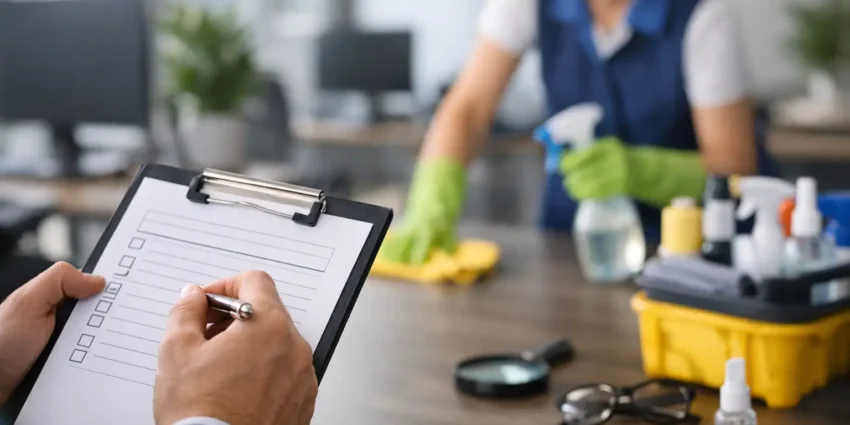
A missed restroom check or a trash bin left full in a client-facing office can do more damage than most managers expect. Small cleaning issues are easy to overlook until they start affecting employee experience, customer impressions, and trust in your vendor. That is why an office cleaning inspection form matters. It gives you a clear way to verify work, catch problems early, and keep standards consistent from one visit to the next.
For busy office managers, property managers, and facility teams, the goal is not more paperwork. The goal is fewer surprises. A strong inspection form helps you confirm that cleaning tasks are being completed on schedule, in the right areas, and at the level your building requires. It also creates a record you can use when discussing service expectations, recurring issues, or scope changes.
What an office cleaning inspection form is meant to do
At its core, an inspection form is a quality control tool. It outlines the spaces that should be reviewed, the tasks that should be completed, and the condition each area should be left in after service. Instead of relying on memory or quick walkthroughs, you have a documented standard.
That standard matters because commercial cleaning is not one-size-fits-all. A small professional office has different needs than a medical-adjacent suite, a warehouse office, or a busy showroom. Some facilities need detailed restroom checks every visit. Others care most about lobby appearance, glass, breakroom sanitation, or day-to-day dust control.
An inspection form brings structure to those priorities. It helps everyone involved understand what clean means in that building.
Why office cleaning inspection forms improve service
Without a formal inspection process, cleaning quality often becomes subjective. One manager may think the office looks fine, while another notices fingerprints on glass, dust on vents, or missed corners in conference rooms. That gap creates frustration quickly.
A well-built office cleaning inspection form reduces that ambiguity. It turns expectations into specific checkpoints. Was the lobby vacuumed? Were restroom dispensers refilled? Were touchpoints wiped down? Was trash removed from private offices and common areas?
This kind of clarity helps in three ways. First, it improves accountability because completed work can be reviewed against a written standard. Second, it supports consistency across shifts, crews, and multiple locations. Third, it makes communication easier when something needs to be corrected.
There is also a practical business benefit. Regular inspections can reveal whether your current cleaning scope still matches your building use. If breakrooms are consistently failing because traffic has increased, the issue may not be poor effort. You may simply need more frequent service or a revised checklist.
What to include in an office cleaning inspection form
The best forms are specific enough to be useful but simple enough that someone will actually use them. If the form is too vague, it will not catch real issues. If it is too long, it often gets skipped or rushed.
Most office inspection forms should include basic site information such as date, time, location, inspector name, and cleaning shift. That creates a clear service record. From there, the form should break the office into zones like reception, workstations, conference rooms, restrooms, kitchens or breakrooms, hallways, and entry points.
Within each zone, focus on observable results. Floors should be clean and free of debris. Trash should be removed and liners replaced as needed. Surfaces should be dust-free and visibly wiped down. Restrooms should be stocked, sanitized, and odor-free. Glass should be free from smudges in key visibility areas.
Many companies use a simple pass-fail system. Others prefer a rating scale such as acceptable, needs attention, or not applicable. Either option can work. It depends on how detailed you want your quality reviews to be and who will be completing them.
A comments section is worth keeping. It gives inspectors room to note damage, supply shortages, access issues, or areas that need follow-up. In commercial facilities, those details often matter as much as the score itself.
The difference between a checklist and a useful inspection form
Not every cleaning checklist qualifies as an inspection tool. A checklist usually tells a cleaner what to do. An inspection form tells a manager or supervisor what to verify.
That distinction is important. If your form simply repeats the task list without measuring outcome, it may not help much. For example, checking a box for wipe desks is less useful than confirming desks are free of dust, spots, and leftover debris in cleared areas. One tracks activity. The other tracks results.
In most offices, you need both. The cleaning team benefits from a scope-based checklist, and management benefits from an inspection form that confirms quality. When those two documents align, service is easier to manage.
How to build a form that fits your facility
Start with the spaces that affect daily perception and health standards the most. For many offices, that means lobbies, restrooms, breakrooms, conference rooms, and high-touch surfaces. If you manage a larger or more specialized property, include additional categories like stairwells, elevator cabs, warehouse office areas, or customer-facing counters.
Then match the form to the service frequency. A nightly office cleaning form may focus on trash, floors, restrooms, and surface disinfection. A weekly or monthly inspection may go further into vents, baseboards, interior glass, and detail dusting. Trying to force all tasks into one form can make the inspection process harder than it needs to be.
It also helps to think about who is using it. A site supervisor may want a more detailed scoring system. A property manager doing a quick morning walkthrough may need a shorter version that highlights high-priority items. The best form is the one that gets used consistently.
Common mistakes that weaken quality control
One common mistake is using a generic form across every property. That sounds efficient, but it often misses the real trouble spots. A law office, a restaurant office, and an auto dealership will not share the same cleaning priorities.
Another issue is inspecting too rarely. If you only review quality when a tenant complains or a customer notices a problem, you are already behind. Regular inspections make small corrections easier and protect the overall relationship.
Some teams also focus too much on scoring and not enough on action. A low score is only useful if someone follows up, corrects the issue, and looks for patterns. If breakrooms fail every week, the answer may involve staffing, timing, supply restocking, or changes in office traffic.
Finally, forms lose value when they are disconnected from communication. A strong inspection process should support faster, clearer conversations between the client, the cleaning team, and the account lead.
Paper forms or digital forms?
Both can work. Paper forms are simple, familiar, and easy to keep on-site. Digital forms are faster to store, search, and share across multiple properties. If you manage one office and prefer a clipboard walkthrough, paper may be enough.
If you oversee several buildings or need faster reporting, digital forms are usually the better choice. They also make it easier to document trends over time. That matters when you are evaluating vendor performance or deciding whether your service plan needs to change.
The trade-off is adoption. A digital system only helps if your team and vendor actually use it correctly. In some cases, a straightforward paper process done every week will outperform a more advanced tool that no one keeps updated.
Using inspections to improve vendor relationships
An office cleaning inspection form should not be treated as a gotcha document. Used well, it strengthens the working relationship between a business and its cleaning provider. Expectations are clearer, issues are easier to document, and corrective action can happen before frustrations build.
That is especially valuable in contract cleaning. Most businesses are not looking to micromanage their janitorial service. They want dependable work, clear communication, and confidence that the job is getting done right. A practical inspection process supports that outcome.
For providers like Armani Janitorial, quality control is part of delivering on-time, on-scope service without unnecessary back-and-forth. When inspections are built around the actual needs of the facility, they help everyone stay aligned.
When to update your inspection form
Your form should change when your building changes. If staffing increases, if tenant use shifts, if you renovate, or if seasonal conditions create new cleaning demands, your inspection criteria should reflect that. Puget Sound weather alone can affect entryways, floors, and moisture control more than many offices expect.
It also makes sense to update the form when recurring comments point to the same gaps. Repeated notes are usually telling you something useful. Either the service scope is incomplete, the standard is unclear, or the area needs more attention than before.
A good inspection form is not static. It should be practical, current, and built around the way your facility actually operates.
The right form will not replace a dependable cleaning partner, but it will make good service easier to maintain. When expectations are documented and reviewed consistently, your office stays cleaner, your standards stay clearer, and your team spends less time chasing preventable problems.