
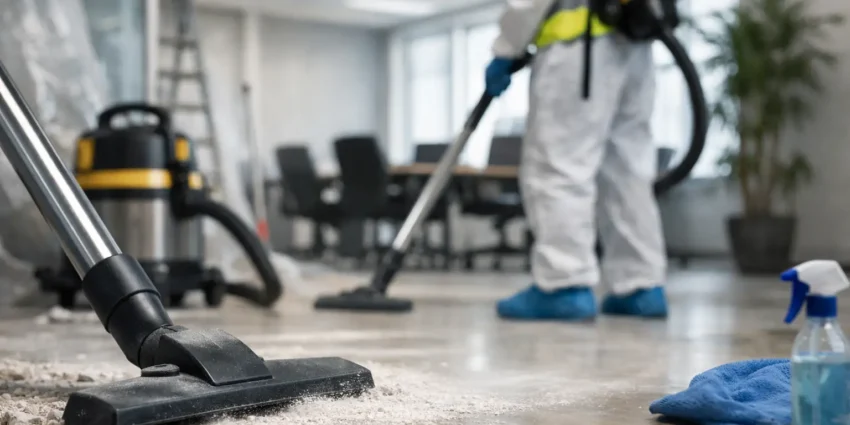
The paint may be dry and the contractors may be gone, but fine dust has a way of hanging around longer than expected. A practical post renovation dust control guide helps business owners and facility managers avoid a common mistake – reopening too quickly and discovering dust on desks, vents, fixtures, and floors days later.
In commercial spaces, renovation dust is more than a cosmetic issue. It affects indoor air quality, settles into HVAC systems, creates extra wear on flooring, and leaves a poor impression on employees, tenants, guests, and customers. For offices, hotels, restaurants, warehouses, and retail environments, proper dust control is part of getting back to business without added disruption.
Why post renovation dust control matters
Post-renovation dust is not limited to visible debris. Larger particles are easy to spot, but the finer material is what causes ongoing problems. Dust from drywall, wood, concrete, insulation, and tile work can drift into corners, ride through air vents, and resettle long after the initial cleanup.
That matters in commercial settings where appearance and safety are tied directly to operations. In an office, dust on workstations and conference tables signals that the space is not fully ready. In hospitality, it affects guest perception immediately. In warehouses and dealerships, dust can settle on products, displays, and equipment. If the HVAC system pulls construction dust through the building, the problem spreads fast.
The trade-off is timing. Some managers want the building turned over as quickly as possible, especially when schedules are tight. But rushing the handoff often leads to repeat cleaning, occupant complaints, and preventable maintenance issues. A more controlled cleanup usually saves time overall.
Post renovation dust control guide: start with containment
The best dust cleanup starts before the final cleaning crew arrives. If renovation work is still underway in parts of the building, containment should be the first priority. Dust barriers, sealed work zones, and controlled access points help keep debris from traveling into occupied or finished areas.
This is especially important in phased commercial projects where one area reopens while another remains under construction. If containment is weak, dust moves through hallways, shared air space, and foot traffic. That turns a localized cleanup into a building-wide problem.
HVAC protection also belongs in this early stage. Return vents near the work area should be evaluated, and filters may need replacement after construction wraps. If dust enters the system, it will continue circulating after the renovation appears complete. For many facilities, that is the main reason dust seems to “come back” after cleaning.
Clean in the right order or dust will resettle
A common issue with post-construction cleanup is cleaning surfaces out of sequence. If floors are cleaned first and high surfaces later, dust simply falls back down. In commercial buildings, the correct order makes a noticeable difference.
Start high and work down. Ceiling fixtures, duct covers, vents, ledges, shelves, tops of partitions, and window frames should be addressed before desks, counters, and lower surfaces. Floors should be one of the last steps, not the first. The same applies to upholstery, break rooms, restrooms, and reception areas.
This sounds simple, but in larger facilities it takes coordination. Different surfaces hold dust differently, and some require dry collection while others need damp wiping. If crews use the wrong method, they can push fine particles into the air instead of removing them.
Focus on the areas businesses notice first
Every facility has dust-sensitive zones that affect operations more than others. In office settings, these are usually workstations, conference rooms, reception desks, baseboards, blinds, and electronic surfaces. In hospitality properties, dust on headboards, trim, lobby furniture, and bathroom fixtures quickly gets noticed by guests. In restaurants, dust near vents, light fixtures, and front-of-house surfaces can affect both presentation and sanitation expectations.
Warehouses and industrial properties come with a different challenge. Dust can collect on racks, exposed pipes, dock areas, and equipment surfaces that are not part of routine janitorial scope. Dealerships face similar issues because showroom lighting and glossy vehicle surfaces make fine dust stand out immediately.
The key is matching the cleaning scope to how the building functions. A general cleanup may remove obvious debris, but commercial reopening often requires detailed attention to customer-facing areas, touchpoints, and airflow-related surfaces.
Don’t overlook floors, vents, and soft surfaces
Post-renovation dust does not stay on hard surfaces alone. Carpet fibers trap fine particles deeply, which means a surface pass may improve appearance without fully resolving the issue. Entry mats, upholstered seating, fabric panels, and drapes can all hold dust and release it later through normal use.
Hard floors have their own risks. Dust and grit can scratch finished surfaces when walked across repeatedly. On tile, LVT, polished concrete, and sealed surfaces, improper cleanup methods can spread residue or dull the finish. This is one reason commercial properties often benefit from specialized equipment rather than a basic wipe-and-mop approach.
Vents and diffusers deserve close attention as well. If they are visibly dusty after renovation, it is a sign that airborne particles traveled farther than expected. Cleaning the room without addressing those points often leads to fast resettling.
Timing matters more than most teams expect
Not all dust settles immediately after the project ends. Depending on the type of work, airflow, and building layout, particles can continue to drop out of the air for a period after contractors leave. That is why the best results often come from a staged approach rather than a single rushed visit.
For example, one pass may target debris removal and major surface dust, followed by a detail cleaning once the air has had time to clear. In active business environments, scheduling also matters. Cleaning after trades are completely finished is ideal, but when that is not possible, the scope should reflect ongoing work conditions.
It depends on the project. A light office refresh creates a different dust profile than drywall work, flooring replacement, or a major tenant improvement. The heavier the renovation, the more important it is to allow enough time for detailed cleaning before occupancy.
Choose methods that support indoor air quality
Dust control is not just about what people see. Fine airborne particles affect comfort and can trigger complaints even when surfaces look clean. That is why effective post-renovation cleanup should support indoor air quality, not just appearance.
HEPA-filtered vacuuming is often the better choice for collecting fine dust from floors, edges, and soft surfaces because it reduces recirculation. Damp wiping is typically more effective than dry dusting on many finished surfaces for the same reason. The goal is capture, not redistribution.
In commercial spaces, this matters for staff comfort and public perception. If employees return to a recently renovated office and notice throat irritation, dusty vents, or residue on their monitors, confidence in the handoff drops quickly. A cleaner building feels finished. A dusty one still feels under construction.
Know when routine janitorial is not enough
There is a clear difference between standard maintenance cleaning and post-renovation dust removal. Routine janitorial service is designed to maintain an already clean environment. After construction, the dust load is heavier, more widespread, and often embedded in overlooked areas.
This is where many businesses run into frustration. An in-house team or standard nightly cleaning crew may handle surface tidying well, but post-construction conditions usually require more detailed labor, the right tools, and enough time to work through the full space properly.
For commercial properties across the Eastside and Puget Sound, that often means bringing in a cleaning partner with experience in post-construction environments. Armani Janitorial handles this kind of work with the same priorities business clients expect everywhere else – dependable scheduling, clear communication, and no hidden fees.
What a strong dust control plan should include
A solid post renovation dust control guide for businesses should account for the full handoff process, not just the final appearance. That includes assessing how much dust the project created, identifying where it likely traveled, protecting HVAC performance, and cleaning in a sequence that prevents rework.
It should also account for your operating environment. A medical-adjacent office, busy hotel, restaurant, or warehouse may need different timing, access coordination, and cleanup detail. There is no one-size-fits-all scope that works for every property.
The right plan is practical. It reduces disruptions, protects finishes, improves air quality, and helps your team reopen with confidence. When the renovation is done, the building should feel truly ready – not almost ready.
A clean handoff does more than remove dust. It lets your staff, tenants, and customers walk into the space and focus on the improvement instead of the mess left behind.