
A missed trash pickup, streaked lobby glass, or dusty reception desk can change how clients and employees view a business before anyone says a word. The difference between office cleaning vs commercial cleaning matters because the service scope affects your budget, schedule, and the condition of your facility. Choosing the right fit helps you maintain a professional space without paying for services you do not need.
Office Cleaning vs Commercial Cleaning: The Core Difference
Office cleaning is a focused type of commercial cleaning. It is designed around the daily needs of office-based workplaces, including corporate offices, professional suites, coworking spaces, medical administration areas, and similar environments where employees spend most of the day at desks, in meeting rooms, and in shared break areas.
Commercial cleaning is the broader category. It covers office spaces, but it also includes facilities with very different cleaning requirements, such as restaurants, warehouses, auto dealerships, hotels, casinos, retail spaces, common areas, and post-construction sites. These environments may require specialized equipment, different products, more detailed safety procedures, or cleaning outside standard business hours.
In practical terms, an office cleaning plan keeps a workplace orderly, sanitary, and ready for staff and visitors. A commercial cleaning plan is built around the actual operation of a facility. That may mean maintaining a guest-facing lobby, managing grease and food debris, cleaning large floor areas, removing construction dust, or working around inventory and equipment.
What Office Cleaning Usually Covers
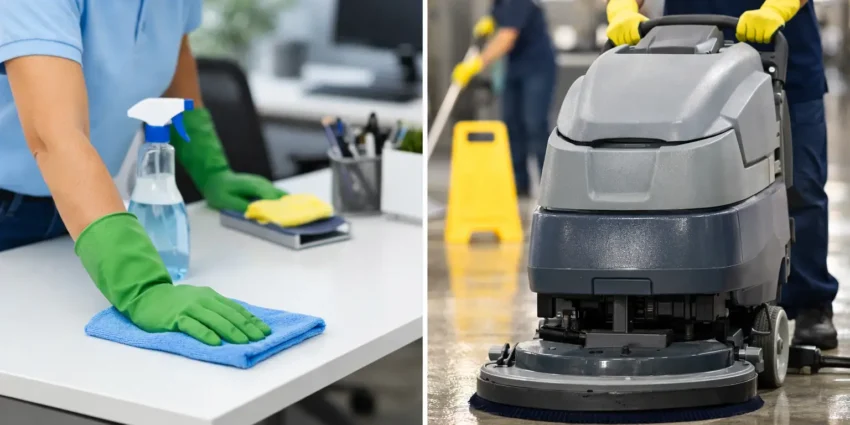
A recurring office cleaning service concentrates on high-use areas that affect comfort, hygiene, and appearance. Most plans include emptying trash and replacing liners, vacuuming carpet, mopping hard floors, dusting accessible surfaces, cleaning restrooms, and maintaining break rooms. Cleaners may also wipe desks as requested, disinfect touchpoints, clean interior glass, and reset conference rooms.
The exact frequency depends on the number of employees, visitors, restrooms, and shared spaces. A small professional office may need service once or twice a week. A busy office with daily client traffic, a shared kitchen, and multiple restrooms may need cleaning every evening.
Office cleaning works best when the building layout and daily routine are predictable. The team can follow a consistent checklist, arrive at the same day and time, and keep the workspace presentable without interrupting employees. It is often the right choice for offices that need dependable ongoing maintenance rather than heavy-duty or specialized cleaning.
Where office cleaning has limits
Office cleaning is not automatically the right answer for every business that has desks. A warehouse office attached to an active loading area may track in dust, moisture, and debris that call for a broader facility plan. An auto dealership may need office areas cleaned, but it also needs attention for showrooms, customer waiting rooms, service departments, and large glass surfaces.
The service becomes more commercial in scope when the cleaning needs extend beyond a conventional office environment. This is where a provider should assess the entire property rather than quote from square footage alone.
What Commercial Cleaning Can Include
Commercial cleaning is tailored to the building type, customer expectations, and operating conditions. A hotel has different priorities from a warehouse, and a restaurant has different sanitation concerns from a construction project. The goal is not simply to make the space look clean. It is to keep the facility safe, functional, and aligned with the standards of the business.
For hospitality properties, commercial cleaning may involve public areas, restrooms, entryways, elevators, back-of-house spaces, and detailed work that supports the guest experience. For restaurants, the focus may include dining areas, floors, restrooms, kitchen-adjacent areas, and schedules that avoid disrupting service.
Warehouses and industrial-adjacent spaces often need dust control, debris removal, floor care, and attention to high-traffic entrances. Post-construction cleaning is another commercial specialty. It addresses fine dust, adhesive residue, dirt, grease, and construction debris so a newly completed space is ready for occupancy, inspection, or final turnover.
Commercial cleaning can also include periodic specialty work. Carpet cleaning, floor stripping and waxing, high dusting, interior window cleaning, pressure washing, and deep cleaning are often scheduled separately from routine visits. These services may not be necessary every week, but ignoring them can shorten the life of flooring, leave a poor impression, or allow buildup to become a bigger expense later.
How to Choose the Right Service for Your Facility
Start with how your space is used, not with the label on your lease. A law office with a reception area, conference room, employee kitchen, and restrooms will usually benefit from recurring office cleaning. A property that combines offices with customer service areas, production space, hospitality operations, storage, or construction activity will likely need a commercial cleaning plan with more flexibility.
Consider foot traffic as well. Facilities with frequent visitors, deliveries, or public access need more attention to entryways, floors, restrooms, and touchpoints than a low-traffic office. In the Puget Sound area, rainy weather can also make entry mats and hard floors a larger maintenance issue for much of the year.
Your operating hours matter just as much. A professional cleaning company should be able to work around your business, whether that means evening office service, overnight hospitality cleaning, or scheduled work when a site is closed. Cleaning at the wrong time can create disruption, while inconsistent timing can leave staff unsure when to prepare the space.
Budget should be transparent, but the lowest quote is not always the lowest operating cost. An under-scoped service may leave your team handling restrooms, trash, spills, or customer-facing areas between visits. A clear estimate should explain what is included, how often service occurs, and which specialty services are priced separately. That prevents surprise charges and helps you compare providers fairly.
Build a Scope That Matches Real Needs
The best cleaning agreements are specific without being rigid. Your provider should understand which areas must be cleaned every visit, which can be handled weekly or monthly, and what requires extra attention after events, bad weather, or construction work.
For example, a standard office may need nightly restroom and trash service but only weekly detailed dusting. A hotel lobby might need several checks during the day, while a warehouse may require regular floor maintenance and targeted deep cleaning in active areas. Neither approach is better in every situation. The right scope reflects the building, the people using it, and the standard your business needs to maintain.
It also helps to identify points of contact and reporting expectations before service begins. When managers know who to call, cleaners have access instructions, and concerns are addressed quickly, the relationship runs more smoothly. Licensed and insured cleaning professionals provide added confidence, particularly in larger facilities or spaces with valuable equipment and public access.
Questions Worth Asking Before You Hire
Before selecting a provider, ask whether the company routinely cleans facilities like yours and whether the proposed schedule is based on your real traffic patterns. Ask how they handle quality checks, missed items, access procedures, and requests outside the normal scope. You should also confirm that pricing is clear, staff are insured, and the company can provide recurring service at consistent times.
A dependable provider will not treat every commercial property the same. They will ask about your restrooms, flooring, employee count, public areas, operating hours, and any special concerns. That consultation is useful because a generic cleaning package can miss the details that create daily frustration for facility managers.
For businesses across Seattle’s Eastside and the broader Puget Sound area, Armani Janitorial builds cleaning plans around the facility rather than forcing the facility into a preset package. Whether the need is recurring office care, hospitality cleaning, or post-construction cleanup, the focus should remain on thorough work, clear communication, and service that stays on schedule.
A clean facility should reduce your workload, not create another task to manage. When the scope fits the space and the cleaning team follows through consistently, employees can focus on their work and visitors can focus on what your business does best.