
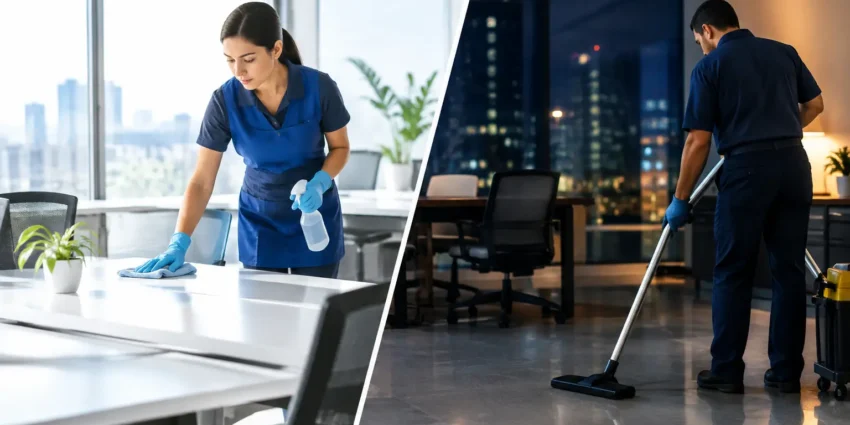
A cleaning schedule should support the way your facility operates, not create another task for your team to manage. When weighing night cleaning vs day cleaning, the better choice depends on your traffic patterns, security requirements, customer expectations, and the type of work being performed. A quiet office may benefit from after-hours service, while a hotel lobby, restaurant, or active property may need cleaning support throughout the day.
The goal is not simply to choose a convenient time. It is to create a dependable cleaning plan that keeps your space safe, presentable, and ready for business without interrupting employees, guests, or operations.
Night Cleaning vs Day Cleaning: The Core Difference
Night cleaning is completed after employees, customers, or tenants have left for the day. It is a common option for offices, dealerships, schools, and many commercial facilities with predictable operating hours. Crews can vacuum, remove trash, sanitize restrooms, mop floors, and complete detailed work with fewer people moving through the space.
Day cleaning takes place during business hours. A daytime cleaner may handle restroom checks, spills, trash removal, lobby touch-ups, supply restocking, and other work that keeps a facility orderly as activity continues. This model is often useful for hospitality properties, medical-adjacent environments, busy offices, retail spaces, and sites with steady public traffic.
Neither schedule is automatically better. The right schedule is the one that protects your operations while meeting the level of cleanliness your staff, customers, and visitors expect.
When Night Cleaning Makes the Most Sense
For many businesses, night service provides the least disruptive way to complete routine janitorial work. Cleaners have better access to common areas, conference rooms, break rooms, and restrooms when those spaces are not in constant use. Floors can dry without employees walking across them, and vacuuming can be completed without competing with calls, meetings, or customer conversations.
Night cleaning also creates room for more thorough recurring tasks. Detailed dusting, full restroom sanitizing, kitchen cleaning, and floor care are often easier to perform when the building is quiet. A professional crew can follow a consistent checklist without having to pause repeatedly for traffic or occupied workspaces.
This option is especially practical for offices in Bellevue, Redmond, Kirkland, and other Eastside business areas where employees work standard weekday hours. A clean workspace is ready when the first employee arrives, rather than being cleaned around the workday.
There are trade-offs. After-hours access needs to be clearly arranged, particularly in buildings with controlled entry, elevators, alarm systems, or sensitive areas. Property managers and business owners should work with a licensed and insured cleaning provider that has reliable access procedures, clear communication, and a consistent crew schedule. Security is not an afterthought when a team is entering your building after closing.
Night cleaning can also be less useful for facilities that become messy during the day. If your restrooms see heavy traffic, your lobby handles frequent visitors, or your break room serves several shifts, arriving to a clean building in the morning may not solve the issues that develop by afternoon.
When Day Cleaning Is the Better Fit
Day cleaning gives businesses a visible, responsive cleaning presence during operating hours. Instead of waiting until evening for a spill to be addressed or a restroom to be restocked, a day porter or daytime janitorial team can handle those needs as they arise.
This approach is valuable where presentation changes throughout the day. Hotels, restaurants, auto dealerships, public-facing offices, and high-traffic commercial properties often need more than one nightly reset. Guests notice overflowing trash, fingerprints on entrance glass, wet floors, and empty restroom supplies immediately. Day cleaning helps prevent small issues from becoming an unpleasant customer experience.
A daytime schedule can also improve communication. When cleaners and facility contacts are present at the same time, requests can be addressed directly. A manager may point out a spill, ask for extra attention in a meeting room, or report a supply issue before it affects employees or visitors.
The main consideration is disruption. Vacuuming, floor mopping, trash collection, and restroom service must be planned carefully around customers and staff. An experienced commercial cleaning team knows how to use appropriate signage, schedule louder tasks during quieter windows, and work efficiently in occupied spaces. Still, some work is simply easier after hours.
Day cleaning may also require a different scope of service. Rather than assigning a team to deep clean the entire building in one visit, the service may focus on ongoing touch-ups and immediate needs. That can be paired with a separate evening visit for detailed cleaning.
Consider the Type of Facility
Your business environment should shape the schedule. Offices usually prioritize low disruption and clean workspaces at the start of each day, making evening service a strong choice. However, larger offices with frequent meetings, shared kitchens, or employee-heavy restrooms may benefit from daytime touch-ups as well.
Hotels and hospitality properties need a different approach. Lobbies, entrances, restrooms, event spaces, and guest-facing areas need attention while visitors are present. Day cleaning supports a polished appearance, while overnight teams can handle deeper floor care, back-of-house cleaning, and other tasks that should not interrupt guests.
Warehouses may need cleaning scheduled around shipping, receiving, production, and employee shifts. Safety matters as much as appearance. Dust, debris, spills, and clutter can affect walkways and work areas, so the schedule should account for when areas can be safely accessed.
Post-construction sites require even more flexibility. Dust and debris can continue to appear after initial cleaning, especially as trades finish work. Cleaning may need to occur in stages, during off-hours, or in coordination with final inspections and tenant move-ins.
Cost, Staffing, and Access Considerations
Price should be transparent, but it should not be the only factor in the decision. The lowest-cost schedule can become expensive if it leaves your team handling spills, complaints, restroom issues, or inconsistent results during the day.
Night cleaning may require after-hours building access and coordination with alarms or security personnel. Day cleaning may involve longer service windows, more frequent visits, or dedicated porter coverage. The scope, frequency, square footage, floor types, occupancy, and level of public traffic all affect the final estimate.
Ask your cleaning provider how they handle key control, alarm procedures, incident reporting, and communication. You should also understand who will be on site, whether the same day and time can be maintained, and what happens if your facility needs an adjustment. Reliable scheduling is especially important for commercial properties with multiple stakeholders.
A Hybrid Schedule Often Delivers the Best Results
For many facilities, the most practical answer is not strictly daytime or nighttime service. A hybrid plan can combine nightly cleaning with targeted daytime support. The evening crew handles the full reset: trash removal, restroom sanitizing, vacuuming, mopping, and detailed cleaning. A daytime porter addresses immediate needs such as entrance appearance, spills, touch-up cleaning, and restroom supplies.
This approach works well for busy facilities where cleanliness is part of the customer experience. It also gives managers more control over priority areas without paying for unnecessary daytime coverage across the entire building.
The right plan should be built around your actual operations, not a generic cleaning package. A walkthrough can identify traffic patterns, sensitive areas, peak business hours, and tasks that need to happen when the facility is empty.
A dependable commercial cleaning partner will recommend a schedule that makes your workday easier, communicates clearly about access and expectations, and delivers the same thorough service visit after visit. Whether your facility needs a quiet overnight reset, active daytime support, or both, the best cleaning schedule is the one your staff and customers never have to worry about.