
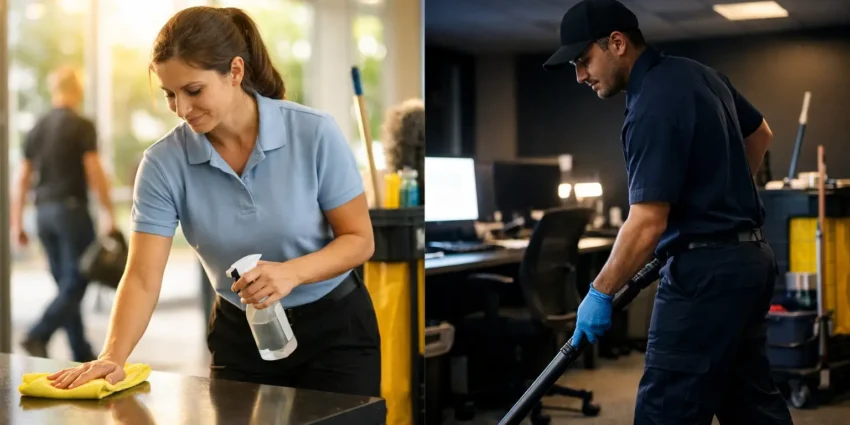
A full trash can at 2 p.m., wet floors near an entryway, and a restroom that needs attention before a client visit cannot wait until closing time. That is the practical difference behind day porter vs nightly cleaning: one keeps your facility presentable while people are using it, while the other restores it after the workday ends.
For many Seattle Eastside and Puget Sound businesses, the right answer is not simply choosing one service over the other. It depends on foot traffic, operating hours, the type of facility, and how much public-facing activity happens during the day. A quiet professional office may need thorough nightly service and occasional daytime support. A hotel, dealership, busy restaurant, medical-adjacent office, or high-traffic commercial property may benefit from both.
What a Day Porter Handles During Business Hours
A day porter is a trained cleaning professional who works on-site during scheduled daytime hours. Their role is not to perform every deep-cleaning task while employees or guests are present. Instead, they handle the ongoing details that affect safety, appearance, and comfort throughout the day.
Typical day porter duties include monitoring and restocking restrooms, removing trash from common areas, cleaning spills, spot-cleaning glass, tidying lobbies, maintaining break rooms, and checking high-touch areas. In a warehouse or auto dealership, a porter may also help keep entrances, customer waiting areas, and employee spaces orderly as traffic changes.
The biggest advantage is responsiveness. If a guest tracks in rainwater, a restroom needs supplies, or a conference room must be reset before an afternoon meeting, the work can be handled promptly. That protects the experience of visitors and staff without requiring an office manager or property manager to stop what they are doing to solve a cleaning problem.
Day porter coverage is especially useful where appearance changes quickly. Hospitality properties, restaurants, multi-tenant buildings, retail-adjacent offices, and facilities with frequent client visits tend to see the greatest return. It is also valuable during rainy Puget Sound months, when entries and floor surfaces need more frequent attention.
What Nightly Cleaning Covers After Hours
Nightly cleaning is scheduled after employees, customers, or guests have left the primary work areas. It allows a janitorial team to complete more thorough cleaning without interrupting operations or working around active foot traffic.
A nightly cleaning program commonly includes emptying trash and recycling, vacuuming or mopping floors, cleaning and sanitizing restrooms, wiping desks or touchpoints according to the agreed scope, cleaning break rooms, and leaving common areas ready for the next business day. The exact service plan should reflect the building, occupancy, and cleaning priorities rather than using a one-size-fits-all checklist.
After-hours service is often the foundation of a commercial cleaning plan because it creates a consistent reset. Employees arrive to clean floors, emptied bins, stocked restrooms, and presentable shared spaces. For an office with predictable occupancy and limited daytime visitors, this may be all that is needed on most days.
Nightly cleaning can also be more efficient for tasks that require open access to floors, workstations, dining areas, or lobby spaces. Crews can work methodically without disrupting meetings, guest service, sales conversations, or production activity. That efficiency helps keep service on time and within budget.
Day Porter vs Nightly Cleaning: The Core Differences
The clearest distinction is timing. A day porter manages conditions as they develop during operating hours. Nightly cleaning performs the scheduled, comprehensive work that prepares the facility for tomorrow.
The service goals are different as well. Day porter service focuses on immediate appearance, supply availability, and quick response. Nightly cleaning focuses on sanitation, detailed floor care, waste removal, and the overall reset of the workspace. Neither service replaces the other in a high-use facility.
Cost structure differs, too. A day porter is usually priced around scheduled coverage hours, frequency, and responsibilities. Nightly cleaning is generally based on square footage, service frequency, facility layout, task scope, and the level of cleaning required. Choosing daytime coverage when a nightly crew would solve the issue can add unnecessary cost. Choosing only nightly service when restrooms and common areas deteriorate by noon can create a different kind of expense: staff complaints, avoidable safety risks, and a poor impression on customers.
How to Choose the Right Cleaning Schedule
Start with what your building looks like at its busiest, not just how it looks at opening or closing. If restrooms remain clean, trash stays manageable, and common areas receive little use during the day, nightly service may be the right fit. If your team is regularly responding to spills, refilling supplies, or apologizing for an untidy lobby, daytime support deserves consideration.
Four questions usually make the decision clearer:
- How many employees, customers, tenants, or guests use the facility each day?
- Are restrooms, entrances, break rooms, or waiting areas visibly affected before the day ends?
- Does your business receive visitors who form an impression of your property during operating hours?
- Would cleaning activity during the day interfere with service, meetings, sales, or production?
An office with 20 employees and limited visitors may need dependable nightly cleaning three to five times per week. A larger office with shared conference rooms, a busy kitchen, and regular client meetings may need nightly cleaning plus a porter for several high-traffic hours. A hotel or casino environment may require continuous or near-continuous daytime attention, supported by an after-hours cleaning crew.
When a Combined Plan Makes Sense
A combined plan is often the most practical option for facilities where cleanliness is part of daily operations, not just end-of-day maintenance. The night crew handles the heavy routine work, while the day porter keeps the property from slipping between cleanings.
Consider a commercial office building. Nightly cleaners vacuum, remove waste, sanitize restrooms, and clean common areas after tenants leave. During the day, a porter checks restrooms, manages lobby appearance, handles small spills, and keeps elevators or shared spaces presentable. The result is consistency from the first visitor to the last employee.
The same approach works well for hospitality and customer-facing businesses. In a hotel, nightly crews can clean public spaces thoroughly while daytime personnel maintain entrances, restrooms, and guest-facing areas. At an auto dealership, a porter can keep the showroom and customer lounge sharp during sales hours, while after-hours cleaning addresses floors, offices, and service-area support spaces.
A combined plan does not need to mean full-day porter coverage. Some facilities need a porter only for a morning rush, lunch period, event window, or a few hours in the afternoon. Flexible scheduling helps align service with actual building use rather than paying for coverage that is not needed.
Build the Scope Around Your Facility, Not a Generic Checklist
The most reliable cleaning programs begin with a walkthrough and a clear conversation about priorities. A property manager may be focused on tenant common areas and restrooms. An office manager may need dependable conference room and kitchen service. A warehouse supervisor may prioritize break rooms, entryways, and debris control. Each facility requires a plan that reflects how people use the space.
Be specific about service times, access procedures, supply responsibilities, and what should happen when an urgent issue arises. Clear expectations prevent gaps and surprise charges later. They also make it easier to measure whether the service is working: cleaner restrooms at midday, fewer staff complaints, better-looking entrances, and a facility that is ready when the next shift or customer arrives.
Armani Janitorial helps commercial clients create scheduled cleaning plans with transparent pricing, licensed and insured staff, and service scopes built around the realities of each property. Whether the need is recurring nightly cleaning, daytime porter support, or both, the goal is the same: dependable work that reduces the daily burden on your team.
The best cleaning schedule is the one your staff and visitors rarely have to think about. When restrooms are stocked, floors are safe, common areas stay orderly, and the building is reset each night, your facility can stay focused on the work it was built to do.
One comment on “Day Porter vs Nightly Cleaning for Your Facility”