
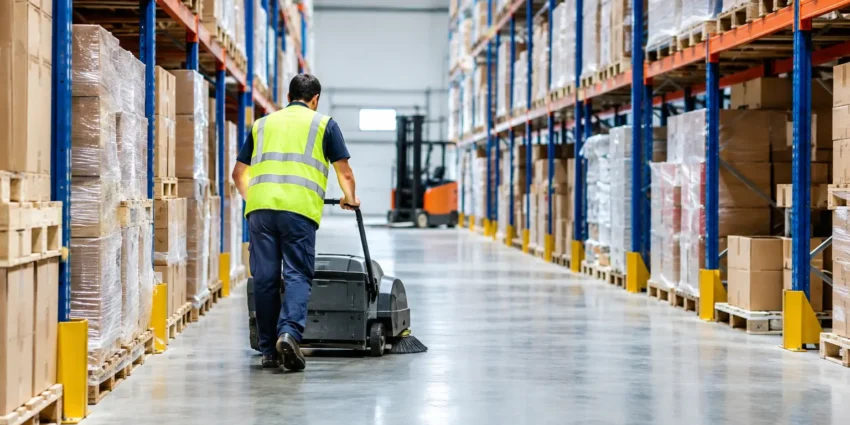
A warehouse aisle can look clear at the start of a shift and become a safety problem by noon. A loose stretch-wrap roll, a leaking pallet, a parked cart, or a layer of tracked-in moisture can interrupt travel, slow picking, and raise the chance of an injury. Knowing how to maintain warehouse aisles means treating them as active work zones, not empty space between racks.
For facility managers and warehouse supervisors, aisle maintenance should support two goals at once: safe movement for people and equipment, and dependable productivity. The best approach is not an occasional deep clean. It is a clear routine that makes aisle conditions visible, assigns responsibility, and addresses small issues before they disrupt operations.
How to Maintain Warehouse Aisles Every Day
Daily upkeep begins with ownership. Employees should know that aisles must remain clear throughout the shift, but the facility also needs a designated person or team to verify conditions. Without a consistent check, clutter can become part of the normal work environment.
Walk the main travel lanes before operations begin, especially high-traffic routes used by forklifts, pallet jacks, receiving teams, and order pickers. Look for debris, broken pallets, fallen product, loose banding, plastic wrap, and items staged outside marked areas. Check that dock-to-storage routes, emergency exits, electrical panels, eyewash stations, and fire equipment are accessible.
Floor conditions deserve equal attention. Fine dust, cardboard scraps, and packing material can create slip hazards or get caught in wheels. Oil, grease, and liquid spills require prompt cleanup with the right materials and process. In the Puget Sound area, rain and wet footwear can also bring moisture into loading areas and main aisles. Mats, floor drying, and more frequent inspections near entrances may be necessary during wet weather.
A quick inspection only works when issues are corrected immediately. If a pallet is staged in an aisle because space is limited, move it to a designated overflow area rather than allowing a temporary obstruction to become standard practice.
Keep Aisles Clearly Defined
Employees are more likely to keep lanes open when the intended traffic pattern is obvious. Floor markings should identify pedestrian walkways, forklift routes, staging zones, cross aisles, and areas that must remain clear. Lines that are faded, chipped, or hidden under grime create uncertainty, particularly for new employees, temporary workers, and delivery drivers.
Review aisle widths against the equipment in use. A path that works for a hand pallet jack may not provide adequate clearance for a forklift carrying an oversized load. Rack configuration, turning radius, load dimensions, and the presence of pedestrians all affect what safe access looks like. If operations change, the aisle plan should change with them.
Keep storage within its assigned footprint. Overhanging cartons, protruding pallets, and products placed at the end of racks can narrow travel lanes without anyone noticing until there is a near miss. Rack-end protection and clearly marked staging boundaries help, but they are not substitutes for daily housekeeping.
Build Cleaning Into the Operating Schedule
Warehouse cleaning cannot always happen at the same time as office cleaning. The right schedule depends on traffic, product type, receiving volume, dust generation, and the hours when aisles can be accessed without interrupting work.
For many facilities, light cleaning should happen daily, with more detailed floor care performed weekly or on a schedule that matches soil buildup. High-traffic receiving and shipping areas may need attention more often than quieter storage aisles. A warehouse handling dry goods may mainly deal with dust and debris, while an automotive, food-related, or light industrial facility may need a more specific plan for oils, residue, or spill response.
Routine cleaning should include removing loose debris, sweeping or vacuuming where appropriate, spot-cleaning spills, and cleaning around rack bases and corners where material collects. Periodic machine scrubbing can improve floor appearance and traction, but only when it is coordinated with warehouse activity. Cleaning wet floors during peak traffic can create new hazards if the area is not properly controlled and dried.
A professional commercial cleaning partner can help establish recurring service at a consistent day and time, with tasks matched to the facility’s actual needs. The goal is reliable maintenance that supports operations, not a one-size-fits-all schedule.
Control Staging and Temporary Storage
Most aisle problems are not caused by carelessness alone. They often start with operational pressure: an early delivery, a delayed pickup, seasonal inventory, or a shortage of available storage locations. When there is no approved place for overflow, the aisle becomes the default option.
Create dedicated staging areas near receiving, shipping, returns, and production zones. Mark them clearly and set practical limits for how long material can remain there. Supervisors should know when a staging area is full and what the next step is, whether that means moving material, adjusting inventory flow, or arranging additional storage capacity.
Temporary does not mean exempt from safety standards. A pallet waiting for pickup can still block a pedestrian route, restrict forklift movement, or obstruct emergency access. Clear escalation rules prevent employees from feeling they have to choose between keeping freight moving and keeping aisles safe.
Make Inspections Specific and Documented
Aisle inspections are more useful when they focus on observable conditions rather than general reminders to “keep the warehouse clean.” Use a short, repeatable checklist that reflects the facility’s layout and risks. It should cover aisle clearance, floor hazards, rack damage, visibility of markings, emergency access, lighting, and material stored outside designated locations.
Documentation does not need to be complicated. A simple digital form, shift log, or supervisor checklist can show when inspections occurred and whether corrective action was taken. This record helps identify recurring problems. If the same cross aisle is blocked every week, the answer may be a layout adjustment or a change to the receiving process, not another reminder email.
Pay close attention after busy periods, inventory counts, maintenance work, and construction activity. These are common times for dust, discarded materials, and unfamiliar equipment to enter warehouse traffic areas. Post-construction dust can travel farther than expected and settle along rack bases, floor edges, and equipment pathways.
Train for Good Habits, Not Just Compliance
Training should explain why clear aisles matter to the people doing the work. A blocked lane can delay a forklift operator, force pedestrians into an equipment route, slow an emergency response, and damage product. When employees understand the operational impact, standards are more likely to hold during busy shifts.
Use real examples from the facility. Show where pallets are allowed to wait, where damaged materials should go, who handles spills, and how to report a floor or rack concern. New-hire orientation is essential, but refresher training is equally valuable when staffing, layouts, or workflows change.
Managers should reinforce the same standard they expect others to follow. If supervisors leave materials in travel lanes “just for a minute,” employees will see aisle rules as optional. Consistent expectations build a cleaner, safer workplace without adding unnecessary friction to daily work.
Address Problems Before They Become Expensive
Minor aisle issues can point to larger facility concerns. Repeated dust buildup may indicate inadequate cleaning frequency or an issue with nearby work processes. Frequent liquid spots may signal leaking equipment. Damaged floor markings can make it harder to enforce traffic separation. Recurring obstructions may show that the warehouse lacks enough staging space.
Treat these patterns as operational information. Adjust the cleaning plan, storage layout, traffic flow, or staffing process based on what inspections reveal. This is often more cost-effective than responding after an injury, product loss, equipment collision, or failed safety review.
For warehouses that need dependable recurring cleaning, Armani Janitorial can help maintain cleaner floors, clearer work areas, and a service schedule that fits the operation. The most effective aisle maintenance plan is the one your team can follow every day, even when deliveries are late, inventory is high, and the warehouse is at its busiest.