
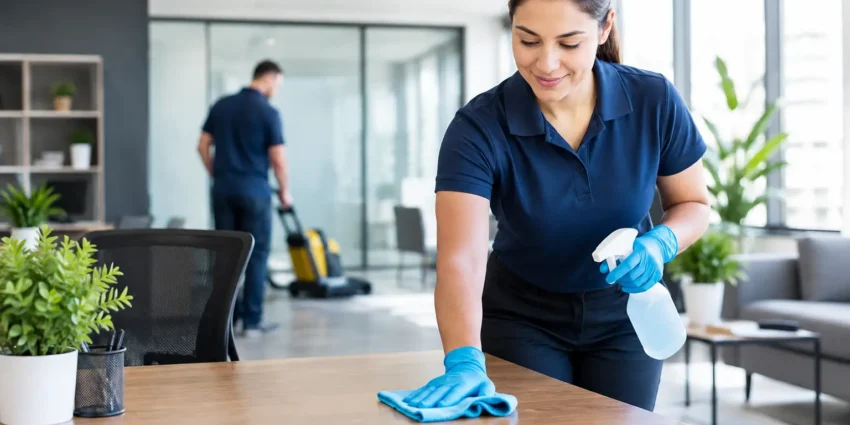
A missed cleaning visit is not a small inconvenience when employees arrive to full trash bins, customers see streaked glass, or a property manager has to call for help before an inspection. Commercial cleaning should remove that uncertainty. The right provider keeps your facility clean, presentable, and ready to operate without adding another task to your team’s workload.
For offices, hospitality properties, restaurants, warehouses, dealerships, and post-construction sites, cleaning needs are not identical. What they share is the need for dependable service, clear communication, and work completed properly the first time. A cleaning plan should fit the way your facility operates, not force your operation to work around it.
What Commercial Cleaning Should Deliver
A professional cleaning service is about more than making a space look tidy. It supports the daily experience of employees, tenants, customers, and visitors. Clean restrooms, maintained entryways, sanitized touchpoints, and orderly common areas signal that a business pays attention to details.
The operational benefits matter just as much. Routine service helps control dust, debris, odors, and waste before they become larger problems. In high-traffic facilities, consistent cleaning can reduce slip hazards, keep floors in better condition, and prevent a buildup of grime that takes more time and money to correct later.
For business owners and facility managers, the real value is reliability. You should know who is responsible, what will be cleaned, when the team will arrive, and how concerns will be handled. A dependable provider does not leave you guessing whether the scheduled work was completed.
A Cleaning Scope Should Match the Facility
A one-size-fits-all checklist rarely works in commercial spaces. An office with daily employee traffic has different priorities than a warehouse with dust and loading activity. A hotel needs close attention to guest-facing areas, while a post-construction site may require detailed removal of fine dust, adhesive residue, and job-site debris.
A useful cleaning scope begins with the way people use the property. Entryways, lobbies, break rooms, restrooms, elevators, conference rooms, and high-touch surfaces often need frequent attention in office and professional settings. Kitchens, dining areas, floors, and restrooms may need more intensive service in restaurants and hospitality environments.
Warehouses and auto dealerships often have their own challenges. Dirt can be tracked in from loading areas, service bays, or outdoor lots. Showrooms need a polished appearance, while back-of-house spaces need practical upkeep that supports safety and daily operations. The best plan separates these priorities rather than treating every square foot the same.
Post-construction cleaning requires another level of coordination. Construction dust can settle on walls, fixtures, vents, floors, and surfaces that appear clean at first glance. Final cleaning should be scheduled around the project timeline and completed with enough detail to prepare the space for turnover, inspection, or occupancy.
Frequency Is a Business Decision
Cleaning frequency should reflect traffic, the type of work performed, public visibility, and the condition standards your business needs to maintain. Daily service is often appropriate for busy offices, hospitality properties, restaurants, and facilities with frequent visitors. Smaller offices may need service two or three times per week, especially if employees are hybrid or the space has limited public traffic.
Less frequent cleaning can lower monthly costs, but it is not always the better value. When restrooms, floors, and shared areas are allowed to decline between visits, the occasional cleaning may take longer and require more intensive work. Employees may also begin handling basic cleaning tasks themselves, which takes time away from their actual responsibilities.
A good provider will discuss these trade-offs honestly. The goal is not to sell unnecessary visits. It is to establish a schedule that keeps the facility consistently clean while staying aligned with your budget.
The Details That Affect Service Quality
Cleaning quality is usually decided by the details behind the service, not just the items listed on a proposal. Businesses should ask how cleaners are scheduled, whether the team has commercial experience, and how quality concerns are addressed. Licensed and insured service is also essential, particularly when crews are working after hours or around valuable equipment, tenant spaces, and customer areas.
Consistency matters. If a cleaning team arrives at a different time every week, your staff may be disrupted or the service may conflict with building access rules. When possible, dependable scheduling at the same day and time makes it easier to plan around cleaning and spot issues before they affect operations.
Communication should be straightforward as well. Facility needs can change quickly because of an event, a tenant move, weather-related messes, construction activity, or an unexpected inspection. A responsive provider gives you a clear point of contact and communicates what can be handled, when it can be completed, and whether the request affects the agreed scope or cost.
How to Evaluate a Commercial Cleaning Provider
Price matters, but the lowest estimate does not always produce the lowest total cost. Inconsistent service can lead to complaints, emergency calls, rushed internal cleanup, and accelerated wear on floors or fixtures. Instead of comparing only the final number, compare what each proposal actually includes.
Look for a clearly defined scope, cleaning frequency, service times, and an explanation of how specialty work is priced. Transparent pricing helps prevent surprise charges and makes it easier to budget. If an estimate is vague about what is included, it may be difficult to hold the provider accountable once service begins.
It is also worth asking whether the company regularly works in facilities like yours. Commercial environments have different expectations than residential properties. A team that understands office access procedures, hospitality standards, warehouse safety considerations, or post-construction cleanup can work more efficiently and with fewer interruptions.
Before making a long-term commitment, consider these practical questions:
- Is the cleaning scope tailored to the building’s traffic, layout, and business type?
- Are service times compatible with your employees, customers, tenants, or construction schedule?
- Is the company licensed and insured for commercial work?
- Will pricing be clear before service begins, including any specialty or one-time work?
- Is there a responsive process for correcting an issue or adjusting service?
The answers will tell you more than a polished sales pitch. A strong cleaning partner should be comfortable discussing expectations in plain language.
Common Areas That Need More Attention Than Expected
Some cleaning issues are easy to overlook because they develop gradually. Entry glass, door handles, baseboards, break room appliances, and restroom partitions can affect the appearance of a facility even when floors have been vacuumed and trash has been removed. High-touch areas also deserve regular disinfection based on the facility’s activity level and health requirements.
Floors deserve special attention because they carry much of the visual and safety burden in a commercial property. Carpet needs routine vacuuming and periodic deep cleaning to manage soil and extend its useful life. Hard floors may need mopping, machine scrubbing, polishing, or refinishing depending on the material and traffic. Using the wrong process can damage the surface, so specialty floor care should be based on the actual flooring, not a generic approach.
Restrooms are another area where consistency matters more than occasional deep cleaning. Supplies must be replenished, fixtures should be cleaned thoroughly, and odor control should be addressed before it becomes a complaint. For customer-facing businesses, restrooms often shape a visitor’s opinion of the entire operation.
A Better Working Relationship Starts With Clear Expectations
The most effective cleaning relationships are built before the first service visit. Walk the facility with the provider, identify priority areas, discuss access instructions, and clarify what success looks like. If a showroom must be ready before opening or a conference room needs special attention before recurring meetings, that should be part of the plan from the start.
It also helps to distinguish routine work from periodic specialty services. Daily or weekly janitorial tasks may include trash removal, restroom cleaning, vacuuming, mopping, and surface cleaning. Deep carpet cleaning, floor refinishing, window cleaning, pressure washing, or post-construction detail work may be scheduled separately. This distinction protects both sides from misunderstandings.
For businesses across Bellevue, Kirkland, Redmond, and the wider Eastside, a local commercial cleaner should make facility upkeep easier, not create another vendor-management problem. Armani Janitorial approaches service with that practical expectation: clear estimates, dependable scheduling, insured crews, and cleaning plans built around the facility.
A clean building will never replace good service, strong products, or capable employees. But it quietly supports all three. Choose a commercial cleaning partner that shows up as promised, communicates clearly, and treats your workplace like the business-critical space it is.
3 comments