
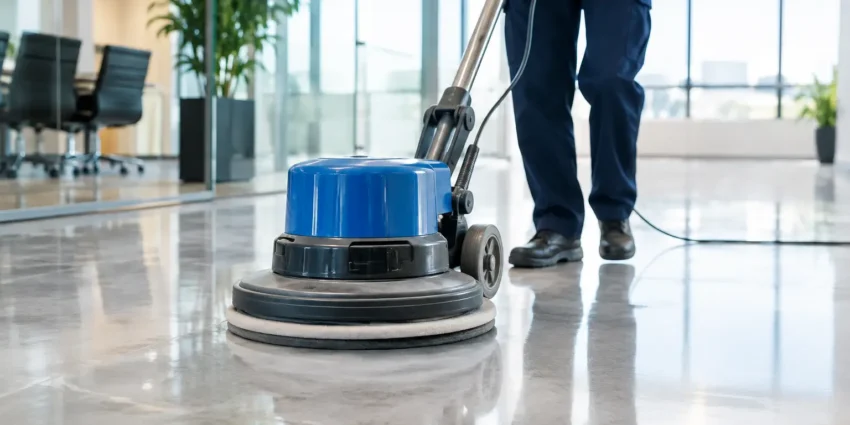
A floor can look clean at 8 a.m. and still become the first thing customers, employees, and tenants notice by noon. Wet entryways, tracked-in grit, scuffed vinyl, and dull tile quickly affect how a business feels. Reliable floor cleaning is not only about appearance. It supports safety, protects the flooring investment, and helps your facility stay ready for daily traffic.
For commercial properties across the Puget Sound area, the right approach depends on the flooring material, the volume of foot traffic, weather exposure, and the type of work happening inside the building. An office lobby, restaurant kitchen, warehouse aisle, and post-construction space should not be cleaned on the same schedule or with the same equipment.
Why Commercial Floor Cleaning Needs a Plan
Floors take the most consistent wear in any commercial environment. Dirt and fine grit work like sandpaper under shoes, cart wheels, and rolling office chairs. Over time, that abrasion can wear down protective finishes, leave permanent-looking traffic lanes, and make even a well-maintained property appear neglected.
A planned cleaning program addresses daily soil before it becomes a larger maintenance issue. Routine vacuuming, sweeping, mopping, and spot treatment remove the debris that causes damage. Periodic machine cleaning and finish restoration handle the buildup that daily service cannot fully remove.
The payoff is practical. Clean floors reduce slip risks, improve the customer experience, and can extend the usable life of carpet, vinyl, tile, concrete, and other commercial surfaces. Replacing flooring early is expensive and disruptive. Maintaining it correctly is usually the more cost-effective choice.
Match the Method to the Floor Type
There is no one-size-fits-all solution for commercial floor cleaning. Using an overly aggressive chemical, excessive water, or the wrong pad can damage a surface instead of improving it. The best method starts with knowing what is underfoot.
Carpet and Carpet Tile
Carpet holds dust, allergens, moisture, and tracked-in soil below the visible surface. High-traffic paths near entrances, elevators, workstations, and hallways often need more attention than the rest of the floor. Daily vacuuming keeps dry debris from settling into the fibers, while periodic extraction helps remove embedded soil and refresh the carpet’s appearance.
Carpet tile offers flexibility because individual damaged sections can sometimes be replaced. Still, replacement should not become the cleaning strategy. Regular care helps prevent staining and matting, especially in offices, hotels, and shared common areas.
Vinyl, VCT, and LVT
Vinyl composition tile, luxury vinyl tile, and sheet vinyl are common in offices, medical-adjacent spaces, schools, retail areas, and break rooms. These surfaces need soil removal without leaving behind residue that attracts more dirt or creates a slippery film.
VCT may also require periodic stripping and waxing, depending on its condition and the desired finish. This service restores protection and appearance, but it should be scheduled thoughtfully. Stripping too frequently can be unnecessary, while waiting too long can make restoration more difficult and costly. A professional assessment can help determine whether a deep scrub and recoat is enough or whether a full strip and wax is warranted.
Tile, Grout, and Stone
Tile is durable, but grout lines are porous and prone to discoloration. Restaurant entries, restrooms, hotel corridors, and locker areas can develop darkened grout even when the tile itself looks reasonably clean. Standard mopping may not reach embedded soil in those lines.
Deep cleaning with the appropriate equipment and solutions can restore a more uniform appearance. Natural stone requires extra care because acidic or harsh products can etch the surface. The right cleaning team will identify the material before selecting chemicals or tools.
Concrete and Warehouse Floors
Concrete floors in warehouses, service bays, loading areas, and industrial settings face a different set of challenges. Dust, tire marks, grease, packaging debris, and heavy equipment traffic call for durable cleaning methods. Auto-scrubbers, degreasers, and targeted spot treatment may be more effective than traditional mopping.
The trade-off is that aggressive products can affect coatings or create runoff concerns if used improperly. A commercial cleaning plan should account for the floor’s finish, safety requirements, and how the area is used during each shift.
Build a Schedule Around Traffic, Not Guesswork
Many facilities clean floors according to habit rather than need. A lobby might be mopped every evening even when rain creates mid-day hazards, while a lightly used storage area receives more attention than a high-traffic corridor. A better schedule follows the actual patterns of the building.
Entryways often need daily service and additional attention during wet weather. Restrooms, break rooms, kitchens, and dining spaces may require more frequent cleaning because moisture and spills create immediate safety concerns. Offices with moderate traffic may need routine vacuuming and spot mopping, plus periodic deep cleaning. Warehouses may benefit from scheduled machine scrubbing that fits around operations and delivery windows.
Seasonal conditions matter in the Seattle Eastside as well. Rain, mud, leaves, and moisture can increase entryway maintenance needs for months at a time. Floor mats help, but they only work when they are properly placed, regularly vacuumed, and cleaned before they become saturated with soil.
A dependable provider should be able to adjust the service plan without making it complicated. That may mean increasing attention to common areas during busy periods, scheduling floor work after business hours, or handling a one-time cleanup after an event, move, or construction project.
Common Floor Cleaning Problems to Address Early
Small issues are easier to correct before they become permanent or create a safety concern. Facility managers should watch for dull traffic lanes, sticky residue, recurring odors, visible grout discoloration, and floors that remain wet longer than expected after cleaning.
Sticky floors often signal leftover cleaner, grease, or an incomplete rinse. Dull floors may point to worn finish, abrasive soil, or an unsuitable cleaning process. Lingering odors in carpet can be caused by moisture, spills, or buildup that surface cleaning does not reach. These issues do not always require replacement, but they do require a more targeted response than another quick mop.
Communication matters here. Your cleaning partner should explain what they are seeing, recommend the appropriate service, and provide clear pricing before work begins. Surprises and vague recommendations create unnecessary headaches for busy property and facility managers.
Support Safety Without Disrupting Operations
Floor care has to work around people, not against them. Cleaning a busy corridor at the wrong time can create congestion and wet-floor risks. Waiting too long to address a spill can create the same problem. The goal is to keep the facility safe while minimizing interference with staff, customers, guests, and deliveries.
That usually means using clear caution signage, controlling moisture, selecting appropriate low-residue products, and scheduling deeper services during lower-traffic hours. In restaurants and hospitality environments, cleaning may need to happen after closing or between service periods. In offices, evening service can keep workspaces ready for the following morning. In warehouses, the schedule should account for forklift routes and active loading zones.
Licensed and insured commercial cleaners bring more than labor to this work. They bring processes designed for occupied facilities, consistent staffing expectations, and accountability when a service detail needs attention.
What to Expect From a Reliable Cleaning Partner
A strong commercial floor care program begins with a walkthrough. The cleaning team should evaluate materials, high-traffic areas, current conditions, access requirements, and the hours when work can be completed safely. From there, the scope should be clear: what is included in recurring service, which deep-cleaning tasks are recommended, and how often each task should occur.
Dependability also shows up in the details. Arriving on the agreed day and time, using the proper equipment, documenting special requests, and responding when priorities change all reduce the management burden on your team. Transparent estimates matter just as much. You should know what the work costs without hidden fees appearing later.
Armani Janitorial approaches commercial floor care as part of the larger condition of your property, not as an isolated task. A clean floor supports the professional environment your employees and visitors expect every day.
When floors are maintained before damage becomes visible, they quietly do their job: they help your business look cared for, operate safely, and make a better first impression from the moment someone walks through the door.