
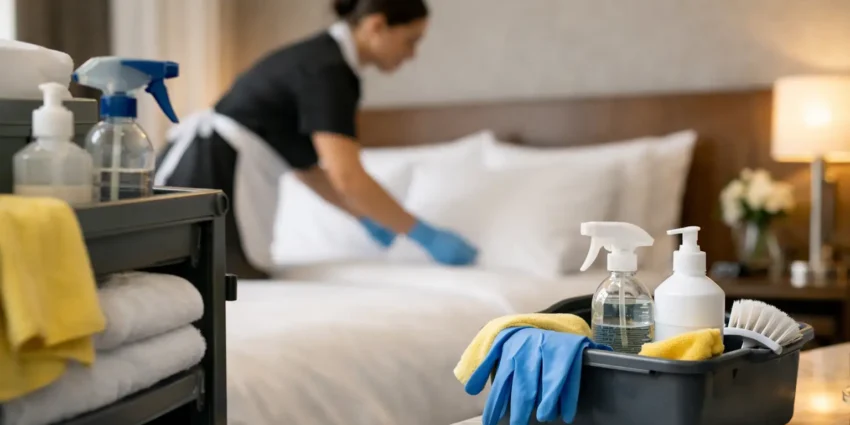
A guest may never see the cleaning schedule behind a well-run property, but they notice the result immediately. A spotless lobby, fresh-smelling restroom, streak-free elevator, and properly prepared room all signal that the property is safe, organized, and ready to serve. This hospitality cleaning standards guide explains the practical systems hotels, resorts, and casinos need to protect guest confidence and keep operations moving.
Why Hospitality Cleaning Standards Matter
Hospitality cleaning is not simply about making a property look tidy. It supports guest safety, employee productivity, online reputation, and the life of the building itself. Dust buildup can affect air quality, neglected restrooms can create complaints, and inconsistent room cleaning can quickly turn into negative reviews.
For managers, the challenge is consistency. A property can look excellent during a walkthrough and still fall short where it matters most: high-touch surfaces, restroom details, guestroom bathrooms, food-service areas, and back-of-house spaces. Clear standards give staff and cleaning partners a shared definition of clean, along with a reliable way to verify the work.
The right standard also depends on the property. A boutique hotel, a large resort, and a casino floor have different traffic patterns, operating hours, and risk areas. The goal is not to apply the same checklist everywhere. It is to build a cleaning plan around how guests and employees actually use the space.
The Core Areas of a Hospitality Cleaning Standards Guide
A strong program starts by separating spaces according to guest visibility, traffic volume, and sanitation needs. This helps cleaning teams focus labor where it has the greatest operational impact.
Guestrooms and Suites
Guestrooms require detailed turnover cleaning between stays, plus scheduled deep cleaning that addresses the areas routine service can miss. Beds, linens, bathroom fixtures, mirrors, floors, furniture, remote controls, switches, handles, and waste containers should all be cleaned according to a documented process.
Presentation matters as much as sanitation. A bathroom may be disinfected, but it will still feel unprepared if there are streaks on the mirror, hair on the floor, water spots on fixtures, or supplies that are not properly stocked. Room attendants and supervisors should use the same inspection standard so there is no uncertainty about what ready for arrival means.
Deep cleaning should be scheduled for upholstery, carpets, drapery, vents, grout, baseboards, behind furniture, and other low-visibility areas. Frequency depends on occupancy, guest behavior, and the age of the property. High-occupancy properties often need more frequent carpet care and detail work than slower-paced locations.
Lobbies, Entrances, and Public Areas
The entrance is a guest’s first physical impression of the property. Glass doors, entry mats, floors, reception counters, seating, elevators, and directional signage should receive attention throughout the day, not only at the end of a shift.
In the Puget Sound area, wet weather makes entry maintenance especially important. Rain, grit, and moisture can be tracked in quickly, creating slip hazards and making polished floors look neglected. A practical plan includes mat service, frequent spot mopping, floor checks, and immediate response to spills.
Public restrooms deserve a separate inspection schedule. They should be checked often enough to maintain supplies, remove waste, clean fixtures, and address odors before guests complain. The required frequency will vary, but busy event spaces, restaurants, and casino areas may require multiple checks during peak periods.
Dining Areas, Bars, and Food-Service Support Spaces
Restaurant and banquet cleaning must support both appearance and food safety. Front-of-house areas need clean tables, floors, menus, seating, windows, and restrooms. Back-of-house cleaning requires careful attention to grease, spills, drains, storage areas, and touchpoints used by staff.
Cleaning teams should understand where their responsibility ends and where kitchen sanitation procedures begin. Clear handoffs prevent missed tasks and help avoid friction between operations staff and the cleaning crew. For example, a janitorial team may maintain floors, waste areas, restrooms, and dining spaces, while culinary staff handle food-contact equipment under separate procedures.
Casinos, Event Spaces, and High-Traffic Floors
Casinos and event venues create a different cleaning challenge because many areas remain active for long hours. Cleaning cannot disrupt guests, block access, or create avoidable noise during service periods. Day porters, discreet spot cleaning, and well-timed overnight work are often more effective than relying on one large nightly service.
These facilities also need a close focus on high-touch points such as gaming surfaces, kiosks, elevators, railings, door handles, ATM areas, seating, and restrooms. The best approach combines routine cleaning with targeted response based on traffic, events, and visible conditions.
Build Standards Around Frequency and Accountability
A written checklist is useful, but it is not enough on its own. Cleaning standards work when every task has a frequency, an owner, and a verification step. Without those three elements, recurring work can become inconsistent over time.
Daily tasks typically cover waste removal, restroom service, vacuuming, mopping, high-touch disinfection, lobby appearance, and visible debris. Periodic tasks may include carpet extraction, high dusting, floor refinishing, upholstery cleaning, exterior glass, deep restroom detailing, and pressure washing where appropriate.
The schedule should reflect the property’s real operating conditions. A hotel with convention traffic may need additional lobby and restroom service before and after event breaks. A resort may need more attention around pools, fitness centers, and outdoor pathways. A casino may need continuous public-area support. Standard service plans should be flexible enough to respond to these demands without creating surprise costs or service gaps.
Supervisory inspections are equally important. A manager should not have to discover a missed detail because a guest reported it. Periodic inspections help catch recurring issues, clarify expectations, and identify whether the schedule needs adjustment.
Use Safe Products and Clear Cleaning Procedures
Hospitality environments require more than a general-purpose cleaner and a quick wipe-down. Teams need to use products that are appropriate for the surface, follow label directions, and allow disinfectants to remain wet for the required contact time. Rushing this step can reduce effectiveness and damage finishes over time.
Color-coded microfiber cloths and mop systems can help prevent cross-contamination between restrooms, guestrooms, kitchens, and public areas. Proper storage matters too. Cleaning chemicals, tools, and equipment should be secured, labeled, and kept away from guest access.
Training should cover safe chemical handling, spill response, wet-floor signage, personal protective equipment, equipment use, and reporting procedures. Licensed and insured commercial cleaning providers should also have clear protocols for incidents, property damage, and after-hours access.
Protect the Guest Experience Without Disrupting It
The best hospitality cleaning often goes unnoticed because it happens at the right time. Vacuuming outside a guestroom early in the morning, blocking a main walkway during check-in, or leaving carts in public view can undermine otherwise excellent work.
Coordinate cleaning schedules with occupancy, events, meal periods, maintenance activity, and quiet hours. Communication between housekeeping, front desk, facilities, food service, security, and the cleaning provider keeps the property prepared for changes. When an unexpected spill, late checkout, or event turnover occurs, teams should know who responds and how quickly.
Reliable scheduling is particularly valuable for property managers who do not have time to chase down missed visits or unclear invoices. A dependable commercial cleaning partner should arrive as scheduled, communicate when conditions change, and provide transparent pricing for agreed-upon work.
Measure What Guests Actually Notice
Cleaning quality should be reviewed through both operational data and real guest feedback. Inspection results, repeat problem areas, supply use, service requests, odor complaints, and online reviews can reveal where standards are slipping.
Pay close attention to patterns. One complaint about a restroom may be isolated. Several comments about dirty elevators, stained carpets, or unprepared rooms point to a process issue. The solution may be more frequent service, a better inspection routine, additional training, or specialty cleaning for surfaces that have been neglected.
For hotels, resorts, and casinos, the most effective cleaning standard is one employees can follow and managers can verify. Armani Janitorial helps hospitality properties across the Seattle Eastside and Puget Sound maintain dependable service schedules, detailed cleaning, and clear communication. When every guest-facing space is consistently cared for, your team can focus less on cleaning problems and more on delivering the stay guests came to enjoy.