
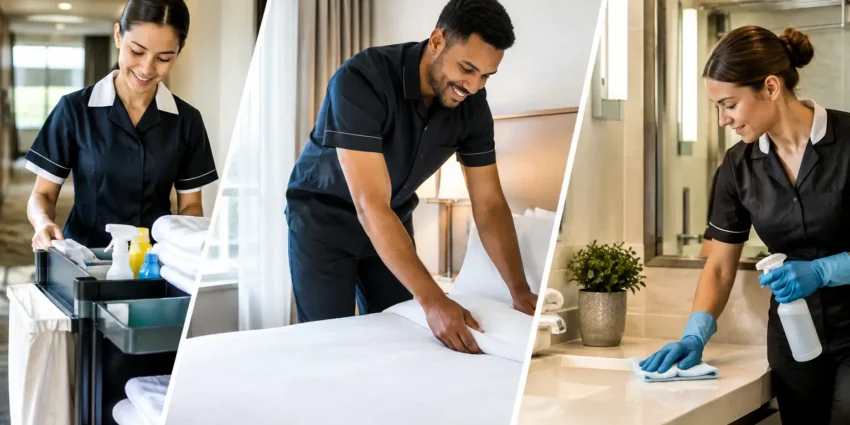
A guest may never see the housekeeping cart, the supply closet, or the inspection notes behind a room release. They will notice a dusty nightstand, a streaked mirror, or a lobby restroom that was missed. This hotel cleaning example shows how a disciplined daily plan turns cleaning from a reactive task into a dependable part of the guest experience.
For hotel managers, the goal is not simply to make spaces look clean at the start of the day. The standard has to hold through check-ins, checkouts, breakfast service, meetings, weather changes, and busy evening traffic. A reliable cleaning program gives staff clear priorities, protects the property’s image, and helps prevent small issues from becoming negative reviews.
What This Hotel Cleaning Example Covers
A practical hotel cleaning plan separates work by guest impact and timing. Guest rooms need detailed turnover service before check-in. Public areas require repeat attention throughout the day. Back-of-house spaces need sanitation and organization without disrupting operations. Supervisors need a consistent way to inspect completed work before a room or area is released.
The exact schedule depends on occupancy, staffing levels, room type, events, and checkout volume. A limited-service hotel with high weekday turnover will operate differently from a resort, casino, or full-service property. Still, the same principle applies: assign clear responsibilities, define the standard, and verify the result.
Start Each Shift With a Clear Work Plan
Before cleaners begin room service, the housekeeping lead should review the day’s occupancy report, early arrivals, late checkouts, out-of-order rooms, VIP stays, and event schedule. This prevents the team from spending time on low-priority work while clean rooms are needed at the front desk.
A morning huddle should cover which rooms need immediate turnover, which public areas need extra attention, and whether weather or events will increase traffic. In the Puget Sound area, wet shoes and umbrellas can quickly make entryways and lobby floors look neglected. On those days, more frequent floor checks are not optional.
Supply readiness matters just as much. Every cart should be stocked with approved chemicals, clean microfiber cloths, liners, towels, toiletries, vacuum attachments, and personal protective equipment. Running out of linen or disinfectant midway through a shift creates delays and encourages shortcuts.
Example Morning Priorities
A typical morning sequence may begin with lobby and entrance checks, followed by room turnover assignments based on arrivals. Common areas near breakfast service should be refreshed again once the busiest period ends. While room attendants complete their assigned floors, a lead or inspector can begin reviewing early-finished rooms so the front desk receives clean-room updates throughout the shift instead of all at once.
Guest Room Turnover: The Most Visible Standard
Guest rooms carry the highest expectation because guests experience them up close. A room can appear acceptable from the doorway and still fail the moment someone opens a drawer, uses the bathroom, or pulls back the bedding. The room attendant’s process should follow the same sequence every time, reducing missed surfaces and keeping the work efficient.
After entering according to property procedure, the attendant removes trash and used linen, checks for lost items, and identifies maintenance concerns. Damaged fixtures, leaking toilets, burned-out bulbs, HVAC issues, and stained furniture should be reported promptly. Cleaning staff should not be expected to repair these problems, but their reports are essential to protecting room readiness.
The bathroom should receive detailed attention first because it requires contact-time for disinfectants. Clean and disinfect high-touch points such as faucet handles, toilet flush handles, door handles, light switches, and hair dryer controls. Wipe mirrors without streaks, clean shower walls and drains, replace amenities, and make sure fresh towels are properly presented. A clean bathroom should smell neutral, not heavily perfumed.
In the sleeping area, attendants should dust and wipe furniture, disinfect high-touch surfaces, vacuum or mop the floor as appropriate, inspect bedding, and reset the room according to the property standard. Remote controls, phones, thermostats, alarm clocks, drawer pulls, and luggage benches are easy to overlook. They are also the surfaces guests handle most often.
Before leaving, the attendant should pause at the doorway and view the room as a guest would. Are the curtains aligned? Is the bedding smooth? Are there fingerprints on glass or chrome? Is the temperature reasonable? A final 30-second visual check catches many of the details that separate a merely serviced room from a guest-ready room.
Keep Public Areas Clean Throughout the Day
Public areas cannot be treated as a once-per-shift project. The lobby, elevator, hallways, restrooms, front desk surroundings, and entryways are constantly affected by guest traffic. A clean hotel in the morning can look worn by midafternoon if no one is assigned to maintain it.
Lobby attendants should make regular rounds to collect trash, wipe tables, straighten seating, clean visible glass, spot-clean floors, and address spills immediately. Elevators deserve special attention because fingerprints, debris, and odors are noticeable in a small enclosed space. During rainy conditions, place and monitor floor mats, remove standing water, and use wet-floor signage whenever needed.
Public restrooms should be checked on a documented schedule. Refill soap, paper products, and tissue before supplies run low. Clean fixtures, counters, mirrors, partitions, and floors, then inspect for odor. Restroom complaints can shape a guest’s view of the entire property, even when the rooms are well maintained.
Build Inspections Into the Cleaning Process
Cleaning is only dependable when the completed work is checked. A supervisor should inspect a sample of rooms and public spaces every shift, with more frequent checks for new staff, high-occupancy days, or properties receiving guest complaints. Inspections should be specific rather than vague. “Looks good” does not identify whether the bathroom was fully disinfected or whether dust was removed from behind the television.
A simple inspection form can cover room presentation, bathroom sanitation, high-touch points, floors, trash removal, odor, maintenance concerns, and supply replenishment. If a room does not pass, it should be returned for correction quickly and respectfully. The purpose is to protect the guest experience, not to create blame.
Trends in inspection notes are useful for management. Repeated issues with mirrors, floor edges, shower drains, or missed trash can show where training, equipment, or staffing needs to improve. It may also show that the allotted time for a task is unrealistic. Speed matters, but rushed work that must be redone is not efficient.
Plan for Deep Cleaning Without Disrupting Guests
Daily cleaning maintains the property. Deep cleaning protects its long-term condition. Carpet extraction, upholstery cleaning, detailed grout work, high dusting, vent cleaning, floor care, and post-event cleanup should be planned around occupancy and operations.
For example, a hotel may schedule detailed corridor vacuuming and baseboard cleaning during lower-traffic hours, while arranging carpet extraction for blocks of vacant rooms. A busy property may need to rotate deep-cleaning tasks by floor or section instead of taking large areas out of service. The right schedule depends on the building, but deferring specialty work too long can make routine cleaning harder and more expensive.
Use Staffing and Communication to Prevent Gaps
The best hotel cleaning schedule accounts for callouts, unexpected checkouts, spills, maintenance access, and last-minute group arrivals. Cross-training helps the team respond when priorities change. A public-area attendant may need to assist with room turnover, while a room attendant may need to report an urgent lobby issue during a busy period.
Communication between housekeeping, the front desk, maintenance, and management should be quick and clear. Room status updates must be accurate. A front desk team should never promise an early check-in based on a room that has not been inspected, and housekeeping should know immediately when a priority room is assigned.
For properties that need outside support, a commercial cleaning partner can help cover recurring public-area service, specialty floor care, post-construction cleanup, or high-demand periods. Armani Janitorial works with hospitality operators that need dependable scheduling, insured cleaners, and clear pricing without hidden fees.
A hotel’s cleanliness is built in the small moments: a dry entrance during a rainstorm, a fully stocked restroom before a guest asks, and a room that feels untouched in the best possible way. A consistent plan gives staff the structure to deliver those moments on every shift.