
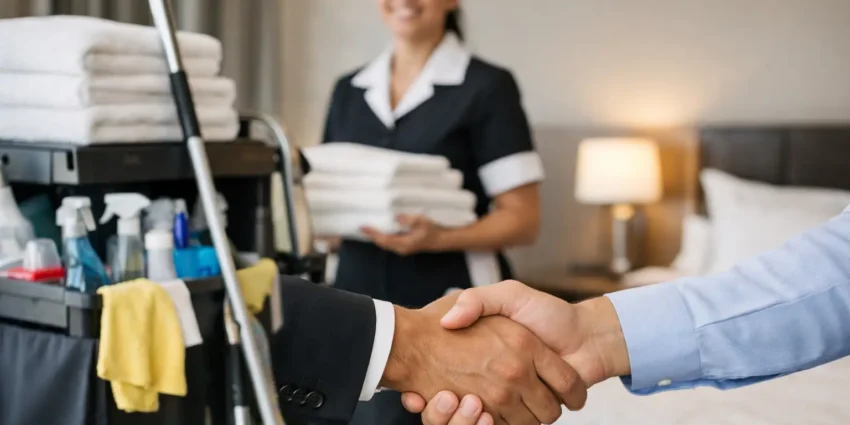
A late room, missed towel delivery, or bathroom that fails a guest’s first inspection can affect more than one review. It can put pressure on the front desk, strain housekeeping supervisors, and weaken confidence in your property. Knowing how to outsource hotel cleaning services means building a dependable operating relationship, not simply hiring the lowest-priced vendor.
For hotels, resorts, and other hospitality properties, cleaning is part of the guest experience. The right commercial cleaning partner helps protect room readiness, common-area presentation, staff productivity, and your brand standards. The wrong partner creates coverage gaps, inconsistent results, and more work for your team.
Start With the Cleaning Scope Your Property Actually Needs
Before requesting estimates, define the work you need performed and when it must happen. A hotel’s needs can range from daily public-area cleaning to overnight restroom service, deep cleaning between high-occupancy periods, event cleanup, and recurring back-of-house sanitation. Guest room turnover may also be part of the contract, although many properties retain an internal housekeeping team and outsource specialty or supplemental work.
Walk the property with your operations, housekeeping, or facilities lead. Identify high-visibility spaces such as lobbies, elevators, hallways, fitness centers, meeting rooms, restaurants, restrooms, and entrances. Then identify the less visible spaces that still affect safety and operations, including staff areas, loading zones, storage rooms, and service corridors.
Be specific about frequencies. “Clean the lobby regularly” leaves too much room for interpretation. A useful scope states what must be cleaned, the expected result, the service window, and how often the task occurs. For example, a public restroom may require checks and restocking every few hours, while carpet extraction may be scheduled quarterly or after a major event.
Your scope should also account for occupancy swings. A 24-hour property may need flexible coverage for busy weekends, conventions, weddings, or holiday periods. A cleaning provider should be able to explain how staffing changes when demand rises without sacrificing the work already scheduled.
How to Outsource Hotel Cleaning Services With Clear Standards
The best cleaning contracts do not rely on assumptions. They set measurable standards that the hotel and cleaning provider can review together. This protects both sides: your team knows what to expect, and the provider knows what quality level is required.
Ask prospective vendors how they document cleaning tasks and conduct inspections. Daily checklists, supervisor walkthroughs, issue logs, and regular account reviews are practical tools when they are actually used. The goal is not paperwork for its own sake. It is a clear way to catch small concerns before they become guest complaints.
Quality standards should address appearance, sanitation, and replenishment. In a lobby, that may mean clean glass, debris-free flooring, orderly furniture, and waste removed before bins overflow. In restrooms, it includes disinfected high-touch surfaces, dry floors, stocked supplies, and prompt attention to odors. For meeting spaces, standards should clarify furniture arrangement, trash removal, floor care, and reset timing between events.
It also helps to establish response expectations. If a spill occurs at the entrance or a restroom needs immediate attention, who calls whom? How quickly should the cleaner arrive? When is the task considered complete? A responsive provider will give you a direct point of contact and a practical escalation process rather than leaving the front desk to track down an unfamiliar crew.
Evaluate Providers Beyond the Estimate
Price matters, but a low monthly number can hide understaffing, limited supervision, poor training, or charges that appear later. Compare estimates against the same written scope so you can see whether each company has included the same frequencies, labor hours, supplies, equipment, and specialty services.
A qualified hotel cleaning provider should be licensed and insured, experienced in commercial environments, and able to work around guests without disrupting operations. Ask whether cleaners are trained for hospitality settings, including safe chemical handling, proper floor-care procedures, privacy expectations, and professional conduct in occupied areas.
You should also discuss staffing stability. Hotels need people who understand the property’s routines and standards. Constantly changing crews may require repeated instruction and lead to uneven quality. Ask who supervises the account, how absences are covered, and whether the same team can be scheduled at the same day and time when recurring service is needed.
During the selection process, look for direct communication. A reliable company should ask detailed questions about your property instead of offering a generic quote after a brief phone call. They should be willing to inspect the site, identify operational concerns, and explain what is included. Transparent pricing with no hidden fees is especially valuable when your property has seasonal needs or after-hours requirements.
Build a Contract That Supports Daily Operations
A cleaning agreement should make service easier to manage, not harder. Include the service schedule, task list, areas covered, supply responsibilities, pricing structure, communication process, and procedures for special requests. If your property needs cleaning after an event, an emergency response, or a periodic deep clean, specify how those services are approved and billed.
Clarify who provides consumables such as paper products, soap, trash liners, and guest-facing restroom supplies. Some hotels prefer to supply branded or approved products, while others want the cleaning contractor to manage inventory. Either approach can work if responsibility, ordering thresholds, and storage access are clearly defined.
Security and access require the same attention. Contractors may need keys, badges, alarm codes, elevator access, or entry to restricted spaces. Establish sign-in procedures, key control rules, lost-key reporting, and expectations for securing rooms and offices after work is complete. For properties with overnight service, identify which manager or security contact is available if an issue occurs.
Finally, make sure the contract allows for review. A 30-, 60-, or 90-day check-in gives both teams a chance to adjust staffing, frequencies, or procedures based on real operating conditions. The original scope should not be treated as permanent if occupancy patterns or guest expectations change.
Prepare Your Team for a Smooth Transition
Outsourcing works best when hotel staff know what the provider owns and what remains in-house. Let front desk employees, maintenance staff, event teams, security, and housekeeping supervisors know the cleaning schedule, main contact, and process for reporting urgent needs. Confusion during the first few weeks often comes from unclear handoffs, not poor effort.
Schedule an onboarding walkthrough before regular service begins. Review the property zone by zone, point out sensitive finishes and approved products, explain guest-facing expectations, and identify known problem areas. This is also the right time to discuss seasonal concerns common in the Puget Sound area, such as wet entryways, tracked-in debris, and increased floor-care needs during rainy months.
For a new provider, consider a brief ramp-up period with more frequent inspections. Early feedback is easier to address when it is specific: describe the location, concern, expected standard, and time it was observed. Positive feedback matters too. When a crew understands what your property values, they can repeat the work that earns recognition.
Watch the Results, Not Just the Schedule
A cleaning company can arrive on time and still miss the mark. Track results through guest feedback, manager walkthroughs, repeat service requests, supply availability, and the condition of public spaces throughout the day. If complaints cluster around a certain shift or area, review the scope and staffing before assuming the issue is simply individual performance.
Regular communication should be short and useful. A monthly review may cover inspection findings, recurring concerns, upcoming events, seasonal changes, and any services that need adjustment. This gives the provider a fair opportunity to correct issues while giving your management team confidence that standards are being maintained.
Armani Janitorial approaches hospitality cleaning as an operational partnership, with dependable scheduling, insured commercial cleaning crews, and clear expectations from the initial walkthrough through recurring service. For a hotel operator, that kind of accountability can reduce daily distractions and help keep the property ready for every guest.
The right outsourced cleaning service should give your team more control over quality, not less. Set the standard clearly, choose a provider that communicates openly, and review performance consistently. When the cleaning operation is handled well, guests notice the care without ever having to think about the work behind it.