
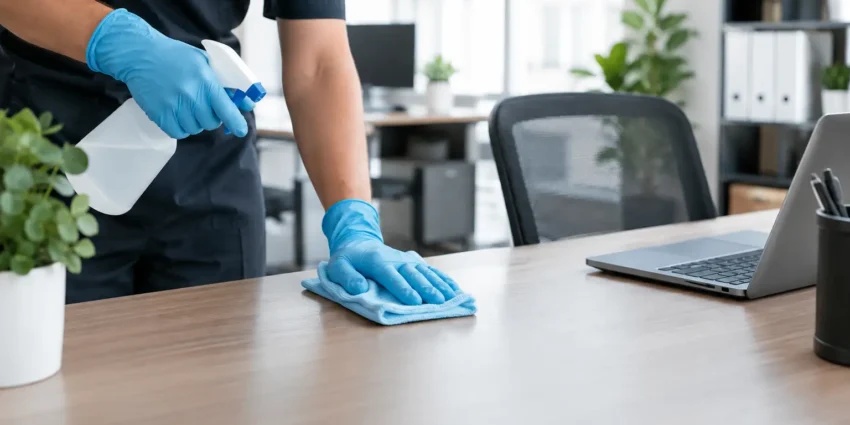
A good office disinfection planning guide starts with a simple reality: disinfecting every surface, every day, is not always necessary or practical. What matters is protecting the places people touch, the areas where people gather, and the spaces that affect how employees and visitors experience your business. A clear plan keeps the work consistent without disrupting operations or creating unnecessary expense.
For office managers and facility coordinators, the goal is not to turn the workplace into a clinic. It is to set dependable standards for routine cleaning, targeted disinfection, supply management, and response when illness or heavy traffic raises the risk. When those standards are documented, staff and cleaning partners know what needs to happen, when it needs to happen, and who is responsible.
Start With a Workplace Risk Review
Disinfection planning works best when it is based on how your office actually operates. A quiet professional office with assigned desks has different needs than a busy customer service center, shared coworking space, medical-adjacent office, or building with frequent public traffic.
Walk the facility during normal business hours and look for contact points, shared equipment, and areas where people naturally gather. Pay attention to entry doors, elevator buttons, reception counters, shared keyboards, breakroom appliances, restrooms, conference rooms, and touchscreens. Also consider less obvious surfaces such as copier controls, light switches, cabinet pulls, water dispensers, and handrails.
Ask a few practical questions: How many people use the space each day? Are desks shared between shifts? Do clients, vendors, or delivery drivers enter the office? Are there food service areas or restrooms with high traffic? The answers help determine where routine attention is needed and where periodic disinfection is enough.
In Bellevue, Kirkland, Redmond, and other active Eastside business areas, offices often see a mix of hybrid employees, client meetings, and shared common spaces. That pattern can change from week to week, so the plan should be flexible enough to increase service after events, seasonal illness, or a heavier-than-usual office schedule.
Separate Cleaning From Disinfection
Cleaning and disinfecting are related, but they are not the same task. Cleaning removes visible soil, dust, food residue, and oils from a surface. Disinfecting uses an appropriate product to kill or inactivate specified germs on a cleaned surface.
This distinction matters because disinfectant does not work as intended on a dirty surface. A breakroom table with crumbs, spilled coffee, or grease needs to be cleaned first. After that, a disinfectant can be applied according to the product label.
The label is part of the plan, not a technical detail to ignore. It identifies approved surfaces, dilution instructions, required contact time, ventilation needs, and personal protective equipment. Spraying and immediately wiping a surface dry may look thorough, but it can prevent the product from remaining wet long enough to do its job.
Avoid relying on a single product for every task. Some materials may be damaged by certain disinfectants, and electronics require special care. For computer monitors, keyboards, touchscreens, and other sensitive equipment, follow manufacturer guidance and use products or methods suited to those surfaces.
Build a Schedule That Matches Traffic
The most effective schedule is based on frequency and use, not guesswork. High-touch areas deserve frequent attention, while low-contact surfaces can be addressed through routine cleaning or scheduled detail work.
A practical office plan usually includes three levels of service. During the business day, staff can wipe down obvious spills and maintain hand soap, paper towels, and sanitizer. Daily service should cover restrooms, breakrooms, entry points, shared equipment, and common touchpoints. Weekly or periodic service can focus on low-touch surfaces, detailed cleaning, and hard-to-reach areas that collect dust and debris.
For example, a reception area may need several touchpoint checks during a busy day, especially if visitors sign in on a shared device. A private office used by one person may only need standard recurring cleaning unless it is used for meetings or shared by multiple employees.
Be specific in the written schedule. “Disinfect common areas” leaves too much room for interpretation. A stronger instruction identifies the room, the surfaces, the frequency, and the expected process. This makes quality checks easier and helps prevent missed tasks when staff changes or a cleaning crew rotates.
Plan for Meetings, Events, and Illness
Recurring service is the foundation, but a reliable plan also includes exceptions. Schedule touchpoint service before and after large meetings, training sessions, recruiting events, or customer gatherings. If your office hosts visitors in a conference room, reset the room after each use when practical, including table surfaces, chair arms, door handles, remotes, and presentation controls.
When an employee reports a contagious illness, avoid broad assumptions or unnecessary closure. Focus on the areas the person used, follow current workplace guidance, and arrange targeted cleaning and disinfection as appropriate. The response depends on the illness, the time since the person was present, the office layout, and the level of exposure.
Choose Products and Tools Carefully
A commercial cleaning plan should name the products and tools approved for each area. Select disinfectants registered for their intended use and use them exactly as directed. Keep Safety Data Sheets accessible, train employees who handle chemicals, and store products securely away from food and unauthorized access.
Cross-contamination deserves just as much attention as chemical selection. Use separate, clearly identified cloths and mop heads for restrooms, breakrooms, and general office areas. Replace or launder microfiber cloths properly between uses. A dirty cloth moved from one workstation to another can spread soil rather than remove it.
Disposable wipes are useful for quick touchpoint service, but they are not a replacement for complete cleaning. They can also create unnecessary waste and become expensive when used as the primary method across a large facility. Reusable microfiber systems are often more efficient for recurring commercial service when they are laundered and managed correctly.
Assign Ownership and Document the Work
A plan only works when ownership is clear. Decide which tasks belong to employees, building management, and the commercial cleaning provider. Employees may be responsible for keeping individual workstations orderly and reporting spills. Your cleaning partner may handle scheduled disinfection, restroom service, floor care, waste removal, and supply checks. Property management may control common-area service in multi-tenant buildings.
Document the scope in plain language. Include service days, arrival windows, access procedures, priority areas, approved products, supply responsibilities, and a contact for urgent requests. This reduces confusion and protects your budget from work that was assumed but never defined.
Quality control should be simple and consistent. Periodic walkthroughs can confirm that touchpoints are being addressed, supplies are stocked, and the facility is meeting the standard you expect. If an issue appears, communicate it quickly with photos or specific details rather than general complaints. A dependable cleaning partner should respond, correct the issue, and adjust the plan when the office changes.
Train Employees on the Parts They Control
Even the best cleaning schedule cannot compensate for poor daily habits. Employees do not need extensive cleaning training, but they should know how to report spills, where to find hand hygiene supplies, and what to do with shared spaces after use.
Set practical expectations for conference rooms, kitchens, and shared desks. Encourage employees to clear food from work areas, clean up obvious spills promptly, and avoid leaving personal items across shared tables. In a hybrid office, a desk reservation policy can also make it easier to schedule cleaning between users.
Keep the message focused on cooperation, not blame. People are more likely to follow procedures when the instructions are easy to understand and the necessary supplies are available.
Review the Plan as Your Office Changes
Your disinfection needs will not remain fixed. A growing team, new office layout, change in occupancy, renovation project, or shift to hoteling can all change what your facility requires. Review the plan at least twice a year and after any major operational change.
Look for recurring concerns: restrooms that run out of supplies, conference rooms that are not reset, entry areas that become dirty between visits, or complaints about inconsistent service. These are operational signals that the scope, timing, or staffing level may need adjustment.
A well-managed office feels cared for before anyone has to mention it. With a realistic schedule, clear responsibilities, and professional follow-through, disinfection becomes a dependable part of keeping your workplace safe, presentable, and ready for business.