
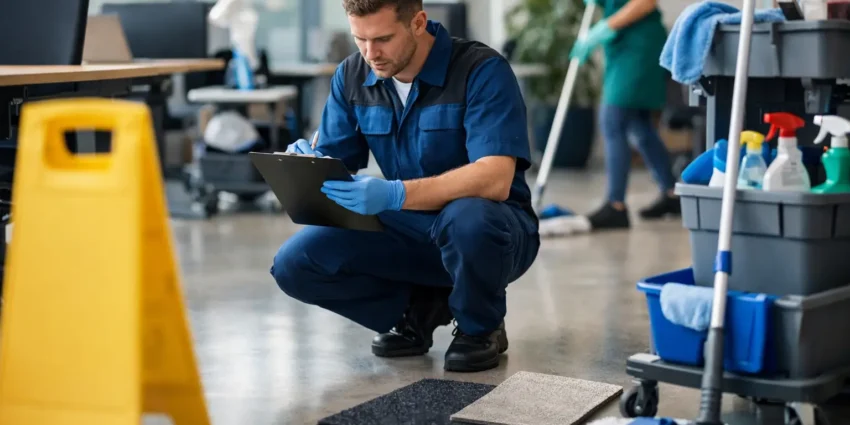
A commercial cleaning estimate should give you a clear picture of the work, the schedule, and the expected cost. But what affects commercial cleaning estimates is more than a building’s square footage. The condition of the facility, the type of business you operate, the areas that need attention, and the service schedule all influence the final price.
For busy property managers, office managers, hospitality operators, and site supervisors, the goal is not simply to find the lowest number. It is to secure dependable cleaning that meets your standards without surprise charges, missed visits, or unclear expectations. A detailed estimate makes that possible.
What Affects Commercial Cleaning Estimates Most?
Commercial cleaning pricing is based on the time, labor, supplies, equipment, and level of oversight needed to complete the agreed scope of work. Two properties with the same square footage can have very different costs when one is a quiet office and the other is a high-traffic restaurant, hotel lobby, or active warehouse.
A reliable cleaning company will ask questions, review the facility, and define the work before providing pricing. That upfront process protects both sides. You know what is included, and the cleaning team can staff the account properly and deliver service on schedule.
Facility size and usable cleaning area
Square footage is a starting point, but it is not the entire calculation. Cleaning 10,000 square feet of mostly open office space requires a different amount of labor than cleaning 10,000 square feet divided among private offices, restrooms, break rooms, hallways, stairwells, and storage areas.
Usable cleaning area matters more than areas that receive little or no regular service. A warehouse may be large, for example, but only its offices, restrooms, entrance, break area, and designated floor zones may be included in a recurring janitorial plan. On the other hand, a smaller medical-adjacent office, restaurant, or hotel property may require detailed cleaning throughout nearly every room.
The layout also affects efficiency. Wide, accessible spaces are generally quicker to service than facilities with multiple floors, narrow hallways, secured rooms, or numerous interior glass partitions.
Cleaning frequency and service timing
How often your property needs service is one of the biggest pricing factors. A facility cleaned five nights a week requires more total labor than one cleaned once or twice weekly. However, more frequent service can sometimes make individual visits more efficient because dust, trash, spills, and restroom buildup do not have as much time to accumulate.
Service timing matters as well. Many businesses need cleaning after employees or customers leave. Evening, overnight, weekend, or holiday access may require different staffing arrangements. A dependable provider should discuss your preferred schedule early, including whether the same day and time each week is important for your operations.
There is a practical trade-off here. Less frequent service can reduce the monthly invoice, but it may increase the amount of work required per visit and allow a facility’s appearance to decline between cleanings. The best schedule is the one that supports your traffic level, business hours, and presentation standards.
Restrooms, break rooms, and high-touch areas
Not all rooms take the same amount of time to clean. Restrooms usually require more detailed labor than standard office areas because they involve disinfecting fixtures, replenishing consumables, cleaning partitions, mopping floors, and managing higher sanitation expectations.
Break rooms and kitchens also affect estimates. Grease, food debris, appliances, sinks, tables, and frequent trash removal add work beyond basic dusting and vacuuming. In hospitality settings, public restrooms, entry areas, elevators, and guest-facing surfaces often need repeated attention to maintain a clean, professional impression.
High-touch points such as door handles, elevator buttons, light switches, shared equipment, and reception counters may be part of the standard scope or an added service. The right approach depends on your facility’s use, occupancy, and internal health and safety requirements.
The Scope of Work Behind a Cleaning Estimate
A strong estimate identifies what will be cleaned, how often each task is completed, and which services fall outside the recurring plan. Vague scopes create problems. A price may look attractive at first, only to leave out the work your building actually needs.
Routine janitorial tasks
Recurring janitorial service commonly includes trash removal, vacuuming, sweeping, mopping, dusting reachable surfaces, restroom cleaning, and cleaning break areas. But the details vary. Is every desk included, or only common areas? Are trash liners supplied? Will interior glass be cleaned at each visit? Are supplies for restrooms included in the price or billed separately?
These are not minor details. They determine the labor required and help prevent hidden fees or disagreements later. A transparent proposal should make clear whether supplies, equipment, supervision, and routine quality checks are included.
Specialty and periodic cleaning
Some work is better scheduled periodically rather than included in every service visit. Carpet cleaning, floor stripping and waxing, high dusting, interior window cleaning, pressure washing, upholstery cleaning, and detailed post-construction cleanup require additional labor, equipment, or products.
Post-construction cleaning is especially dependent on site conditions. A recently completed project may involve fine dust on ledges and vents, adhesive residue, paint splatter, construction debris, or protective film that must be removed carefully. The number of cleaning phases needed, the condition of the site, and whether other trades are still working can all affect the estimate.
Specialty work should not be treated as an afterthought. When it is identified during the walkthrough, you can plan the budget and avoid expecting a regular janitorial crew to complete work that requires separate equipment or more time.
Current condition and cleaning baseline
A building that has been consistently maintained can move directly into a regular cleaning schedule. A property with accumulated dust, stained flooring, full trash areas, neglected restrooms, or heavy construction residue may need an initial deep clean first.
This initial service establishes the baseline. It is often priced separately because the work is more intensive than ongoing maintenance. Once the space is brought up to standard, recurring cleaning can focus on keeping it there.
This is one reason an on-site walkthrough is valuable. Photos and square footage can provide a general idea, but they do not always show floor condition, buildup, access challenges, or the actual volume of work required.
Access, Security, and Operational Requirements
Cleaning teams need reliable access to do their jobs efficiently. Buildings with straightforward entry procedures, available elevators, adequate parking, and a designated place for supplies are easier to service than locations with complicated check-in requirements or limited after-hours access.
Security procedures can add time, especially at offices with multiple locked areas, properties requiring escorts, or facilities with strict sign-in rules. These procedures are often necessary and should be respected, but they need to be part of the service plan.
Facility location can also play a role. Across Bellevue, Kirkland, Redmond, and the broader Eastside, parking availability, building access, loading rules, and traffic patterns can affect crew scheduling. A professional estimate accounts for these operational realities rather than promising a price that cannot support dependable service.
Staffing, Insurance, and Quality Expectations
Commercial cleaning is labor-driven. The number of cleaners needed, the time allotted for each visit, and the experience required for the environment all influence cost. A large property may need a team working simultaneously, while a smaller office may be maintained by one trained cleaner on a consistent schedule.
The lowest estimate is not always the best value if it relies on rushed work, inconsistent staffing, or limited supervision. Businesses should ask whether cleaners are licensed and insured, how quality concerns are handled, and who communicates with the account when needs change.
A fair estimate supports trained staff, proper equipment, dependable scheduling, and enough time to complete the scope correctly. That is what helps a cleaning provider stay on time and within budget over the life of the contract.
How to Get a More Accurate Estimate
The fastest way to receive useful pricing is to share clear information before the walkthrough. Describe your property type, approximate square footage, number of restrooms, preferred cleaning frequency, operating hours, and any areas that need special attention. Mention concerns such as food service, heavy foot traffic, construction dust, floor care needs, or secure-access spaces.
During the walkthrough, review the areas that matter most to your business. A property manager may focus on common-area appearance and tenant satisfaction. An office manager may need consistent restrooms and clean workspaces. A hospitality operator may prioritize guest-facing surfaces and rapid attention to high-traffic areas. Those priorities should shape the scope, not sit outside it.
Armani Janitorial approaches estimates with that level of clarity: defined services, dependable scheduling, and pricing built around the real work required. A careful walkthrough and a detailed scope give you a better starting point than a quick number based on square footage alone, and they make it easier to choose a cleaning plan your facility can rely on month after month.