
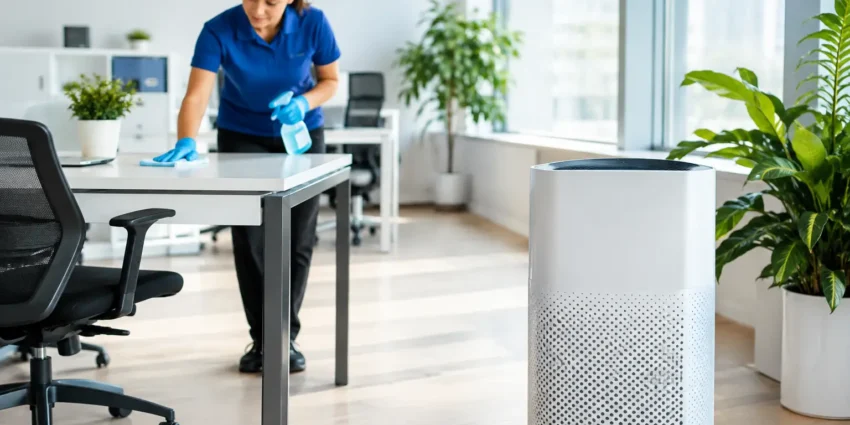
A clean-looking workplace can still hold fine dust, lingering odors, allergens, and construction residue that affect the air employees and visitors breathe. That is why indoor air quality cleaning trends are moving beyond appearance. For commercial properties, the goal is no longer simply to make floors shine or empty waste bins. It is to support a cleaner, more comfortable environment through consistent cleaning practices that address the surfaces where contaminants collect.
For office managers, property managers, and hospitality operators, this shift is practical. Better indoor air quality can help improve occupant comfort, protect a professional first impression, and reduce the recurring cleaning issues that create complaints. The right approach depends on the facility, its traffic level, its ventilation, and the type of work happening inside.
Why Indoor Air Quality Has Become a Cleaning Priority
People spend most of their day indoors, especially in offices, hotels, restaurants, warehouses, and retail environments. When dust and debris are allowed to build up on floors, ledges, upholstery, vents, and high-touch areas, routine activity can send particles back into the air.
The Puget Sound region adds a few local considerations. Wet weather can bring moisture and tracked-in debris into commercial spaces, while seasonal smoke can increase awareness of airborne particles. Construction activity also creates fine dust that settles well beyond the active work area. A building may have a capable HVAC system, but it cannot fully compensate for neglected surfaces, clogged filters, or inconsistent housekeeping.
Cleaning does not replace ventilation or professional HVAC maintenance. It does, however, reduce the material that can be stirred up, tracked through the building, or pulled into the system. The strongest indoor air quality plans coordinate cleaning, facility maintenance, and occupant habits rather than treating them as separate concerns.
The Indoor Air Quality Cleaning Trends That Matter
Not every new cleaning product or device delivers meaningful value. The trends worth adopting are the ones that improve consistency, reduce unnecessary chemical residue, and focus attention on the areas most likely to affect the indoor environment.
High-filtration vacuuming is becoming a baseline
Commercial vacuuming remains one of the most direct ways to remove settled dust, soil, hair, and allergens from carpet and hard-surface flooring. The difference is in the equipment and maintenance. High-filtration vacuums are increasingly preferred because they are designed to capture finer particles rather than releasing them back through exhaust air.
This matters most in carpeted offices, hotel corridors, waiting rooms, and other spaces with steady foot traffic. Vacuuming on a predictable schedule is more effective than waiting until carpet visibly looks dirty. In warehouses or dealerships, entry areas and walkways may need added attention because they collect grit from exterior doors and service areas.
Equipment only works as intended when it is maintained. Full bags, dirty filters, worn brushes, and damaged seals can reduce performance. A commercial cleaning provider should have clear procedures for checking equipment rather than assuming every vacuum delivers the same result.
Microfiber cleaning is replacing dust-spreading methods
Dry dusting with the wrong cloth or feather duster can move particles from one surface to another. Microfiber cloths and mops are now standard in quality-focused cleaning programs because they pick up and hold fine dust more effectively when used correctly.
The benefit is not just a cleaner desk, ledge, or fixture. Regular microfiber cleaning helps control buildup on horizontal surfaces that are easy to overlook, including window sills, baseboards, door frames, cabinet tops, and furniture edges. In hospitality settings, this detail supports both room presentation and guest comfort.
Microfiber programs require discipline. Cloths must be changed between areas as needed and laundered properly. Reusing a dirty cloth throughout a facility defeats the purpose and can spread soils from one space to another.
Entryway cleaning is receiving more attention
A significant amount of indoor dirt starts outside. Rain, mud, pollen, road dust, and debris are carried in on shoes, carts, and equipment. This is why commercial facilities are placing more emphasis on entry mats, vestibules, reception areas, and loading entrances.
A well-maintained matting system can trap soil before it reaches carpet, tile, and common areas. But mats need regular vacuuming, extraction, and replacement when worn. An entryway that looks clean at opening time can quickly become a source of tracked-in debris during a wet afternoon or a busy event.
For facilities with multiple entrances, cleaning schedules should reflect how people actually use the building. The employee entrance, service door, or garage connection may need more frequent service than the main lobby.
Low-residue products are part of the conversation
Many businesses want cleaning products that are effective without creating strong fragrances or leaving residue behind. This is especially relevant in offices, medical-adjacent environments, hotels, restaurants, and properties with occupants who are sensitive to odors.
Low-odor and low-residue products can support a more comfortable environment, but “green” claims alone should not drive the decision. A product still needs to work for the surface, soil type, and required sanitation standard. Using too much of any product can leave residue that attracts dirt, creates slip risks, or causes unpleasant smells.
The practical trend is thoughtful product selection and correct dilution. Cleaning teams should use products according to manufacturer instructions, avoid unnecessary mixing, and match the solution to the job. Stronger is not always better.
More businesses are cleaning beyond what is visible
High-touch cleaning remains valuable, but indoor air quality planning has expanded the focus to include overlooked areas. Dust builds on vents, blinds, partitions, upholstery, light fixtures, and the tops of cabinets. These surfaces may not be part of a daily cleaning route, yet they can affect how quickly a space starts to feel dusty or stale.
Periodic detail cleaning is especially useful after construction, tenant turnover, remodeling, or a high-traffic season. Post-construction cleaning deserves special care because fine dust can settle in unexpected places. A quick wipe-down may improve appearance, but a structured process is needed to remove debris from floors, trim, fixtures, and accessible surfaces before the space is occupied.
What a Practical Cleaning Plan Looks Like
The best indoor air quality cleaning plan is not necessarily the most expensive or complicated one. It is a schedule that matches the property’s needs and is performed consistently. A small professional office may need dependable nightly service and periodic carpet care, while a hotel or restaurant may require frequent attention throughout the day.
Start by identifying where dust and debris enter, where people gather, and which surfaces are missed during routine cleaning. Consider flooring type, occupancy, pets in the workplace, food service, nearby construction, and whether doors are frequently open. These details shape the right service plan.
A strong program usually includes regular high-filtration vacuuming, damp microfiber dusting, hard-floor care, waste removal, restroom cleaning, and attention to entrances. It should also include scheduled detail work for vents, blinds, upholstery, carpet extraction, and other areas that do not need daily service but should not be ignored for months.
Communication matters as much as the checklist. If a facility has an odor concern, recurring dust near a specific area, or changing occupancy patterns, the cleaning schedule should be adjusted. Dependable commercial cleaning is not a one-size-fits-all routine. It is a service that responds to how the building is used.
Cleaning and HVAC Maintenance Work Together
Cleaning crews can remove dust from accessible surfaces, but they should not be expected to diagnose ventilation problems. If a space has persistent musty odors, visible moisture, excessive dust shortly after cleaning, or occupant complaints concentrated in one area, the issue may require HVAC or building maintenance attention.
Facilities benefit when cleaning and maintenance teams share observations. For example, a cleaner may notice repeated dust accumulation near a vent, moisture around an entry, or debris collecting near a mechanical room. Reporting those issues promptly can help property managers address causes instead of repeatedly treating symptoms.
This is also where expectations should stay realistic. Air purifiers, scent products, and surface disinfectants can have a role in some spaces, but they are not substitutes for removing soil, maintaining ventilation, and controlling moisture. A clean indoor environment is built through routine work, not a single product or occasional deep clean.
For businesses in Bellevue, Kirkland, Redmond, and across the Eastside, the most useful trend is simple: treat air quality as part of regular facility care. A consistent cleaning partner, clear scheduling, and attention to the places dust actually collects can make a commercial space feel cleaner every day – not just right after service.